

Table of Contents
- Current State of CS Education
- Challenges in Rural and Low-Income Districts
- State Initiatives and Policies
- Role of Artificial Intelligence in CS Education
- Importance of Early CS Education
- Strategies for Expanding CS Education
- Conclusion
In a world increasingly shaped by technology, computer science education stands as a foundation for preparing students to participate fully in the future workforce. Yet, disparities in access are sharp, especially in rural and low-income regions that often face significant barriers to robust CS instruction. This digital divide not only creates inequalities in education but also impacts students’ ability to compete in a tech-centric economy.
Unequal access to computer science instruction can reinforce existing social and economic divides. As demand grows for tech-savvy graduates, expanding CS education becomes imperative for helping every student realize their potential, regardless of geography or family background.
The journey to equitable CS learning is complex. It hinges on policy shifts, resource investments, and innovative partnerships to ensure all students can develop digital literacy and critical thinking skills that will serve them throughout their lives.
For educators, policymakers, and communities, the challenge is clear: design solutions that bridge the divide and foster opportunity through technology-driven instruction. Expanding support for computer science programs is not only about future jobs, but about ensuring all learners can contribute meaningfully to society.
Current State of CS Education
Momentum behind computer science education has grown steadily, with many districts weaving CS coursework into their curricula and prioritizing digital literacy across grade levels. According to Code.org, more than half of US high schools now offer foundational CS courses, a significant advancement over the past decade. However, growth is not uniform. Students in rural or underserved communities still lag behind their peers in access to CS classes, qualified instructors, and hands-on technology.
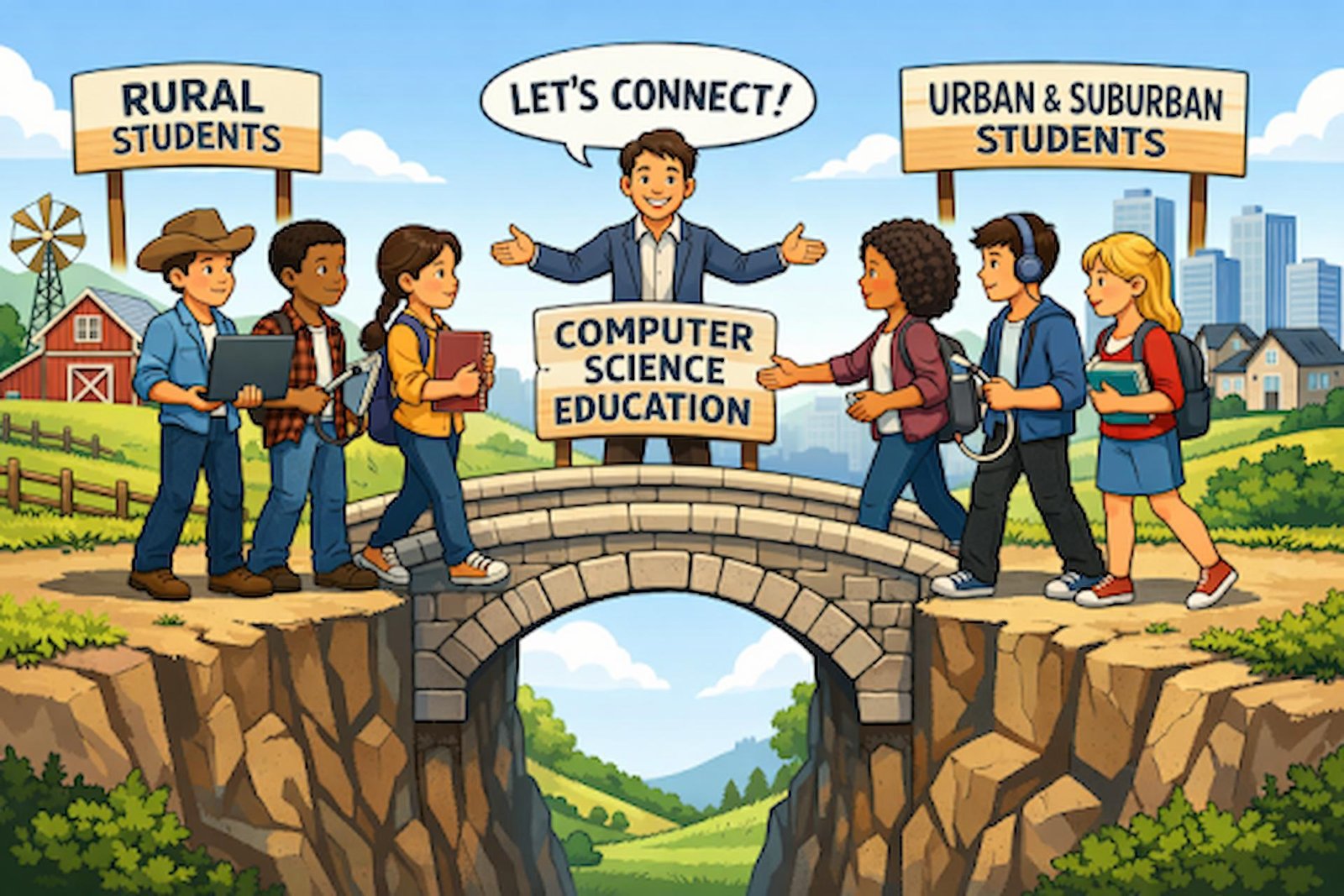
Data from the Illinois Workforce & Education Research Collaborative reinforces this gap. In low-income and rural districts, fewer students participate in CS education compared to their urban or suburban counterparts. These districts frequently struggle to hire teachers with CS endorsements, making consistent course offerings a challenge.
Challenges in Rural and Low-Income Districts
Bridging the digital divide for CS education requires recognizing and addressing several persistent barriers:
- Resource Constraints: Funding shortfalls can prevent schools from purchasing up-to-date computers and software or from maintaining high-speed internet connectivity.
- Lack of Qualified Educators: Many districts struggle to attract and retain teachers certified to teach computer science, often due to remote locations or less competitive salaries.
- Infrastructure Limitations: In some areas, insufficient or unreliable internet access hinders both teachers and students from engaging in meaningful digital learning experiences.
Addressing these obstacles requires sustained investment, targeted teacher training, and creative partnerships that pool resources across schools and districts.
State Initiatives and Policies
States across the country are stepping up with new policies to ensure more equitable access to computer science. For example, Tennessee now requires all high school students to complete at least one CS course before graduation, beginning with the class of 2028. This move reflects a broader push nationwide, as more than 200 CEOs recently urged state leaders to make both computer science and artificial intelligence mandatory for graduation, emphasizing workforce readiness. Their statement underscores the urgent need for today’s education system to reflect the realities of a rapidly evolving tech economy.
Many states are also granting additional funding for professional development and infrastructure to help schools close CS opportunity gaps. Local advocacy groups often play a key role in driving momentum, partnering with education departments to remove barriers for underrepresented learners.
Role of Artificial Intelligence in CS Education
Artificial intelligence is quickly reshaping what is possible in K-12 learning environments. AI-powered platforms can personalize instruction, automate grading, and even offer adaptive learning paths for students working at different skill levels. However, if access to AI technologies remains uneven, these innovations could deepen educational divides.
A recent article in Education Week details how AI adoption is accelerating in affluent districts, while budget-strapped schools are left behind. Equitable implementation is key to ensuring AI-driven solutions help narrow rather than widen the opportunity gap in CS education.
Importance of Early CS Education
Introducing students to computer science concepts early, even in elementary school, builds foundational skills in coding, logic, and computational thinking. Early exposure boosts confidence, reduces stereotypes about who “belongs” in tech fields, and broadens the pipeline of students considering CS careers. Microsoft Education notes that beginning CS instruction early “empowers students to become informed participants in our increasingly digital society,” helping them adapt to a changing world.
For districts facing resource gaps, even basic unplugged activities or low-tech lessons can lay vital groundwork for more advanced CS coursework down the line. Reimagining computer science education for younger learners also helps to break down misconceptions and equips all children with the curiosity and confidence to explore digital fields. These early experiences contribute to a lifelong growth mindset, sparking further interest and continual engagement as technological literacy needs evolve.
Strategies for Expanding CS Education
- Invest in Teacher Training: Robust professional development enables educators to build confidence and expertise in delivering CS lessons. Partnering with colleges, universities, or online certification programs can help overcome local shortages of CS-endorsed teachers.
- Enhance Infrastructure: Expanding internet connectivity and providing devices for both students and teachers helps level the playing field, making digital learning feasible even in remote areas.
- Develop Inclusive Curricula: Courses that reflect students’ cultural backgrounds and prior experiences spark interest and boost engagement, especially among groups underrepresented in tech.
- Foster Partnerships: Collaborations between schools, nonprofits, businesses, and higher education institutions can bring new curriculum resources, guest speakers, and mentorship to students who might not otherwise encounter technology professionals.
Conclusion
Expanding computer science education is a powerful step toward closing the digital divide and ensuring every child can thrive in a tech-forward economy. Through proactive policy, smarter investments, and community collaboration, educators and leaders can give all students the skills they need for meaningful participation and success in our digital future. As more stakeholders become involved, the waves of positive impact will ripple far beyond the classroom and into society at large.