

Key Takeaways
- Understand and adhere to local knife laws to ensure legal compliance.
- Regular maintenance and proper handling techniques enhance safety and longevity.
- Choosing the right knife for your needs improves functionality and comfort.
Table of Contents
- Understanding Local Knife Laws
- Choosing the Right EDC Knife
- Proper Handling and Safety Practices
- Maintenance and Care
- Responsible Carrying Methods
- Conclusion
Whether for utility, preparedness, or outdoor adventures, carrying a knife daily is a practical choice for many people. However, responsible ownership is essential to prevent accidents and to comply with the law. Before adding a knife to your EDC (everyday carry) lineup, you need to know more than just your favorite blade style.
Responsible knife carry is about attention to more than functionality or style; it is about knowing when and how to carry, understanding your local laws, and showing respect to others around you. Approaching knife ownership with this mindset helps ensure that your tool is an asset, not a liability. Educational resources such as Texas knife making can also help enthusiasts better understand craftsmanship, safety principles, and responsible handling practices.
Many knife enthusiasts underestimate how much legal regulations vary, or assume that safety is mostly common sense. In reality, the nuances of safe use and compliance can be complex but are critically important. By learning the best practices and rules, you can use your knife confidently and safely in daily life.
Throughout this guide, you’ll discover simple steps for choosing, carrying, maintaining, and safely using your knife to protect both yourself and those around you. Do not overlook the importance of ongoing education, such as expert articles from established sources like Outside, to stay informed on the latest practices.
 Understanding Local Knife Laws
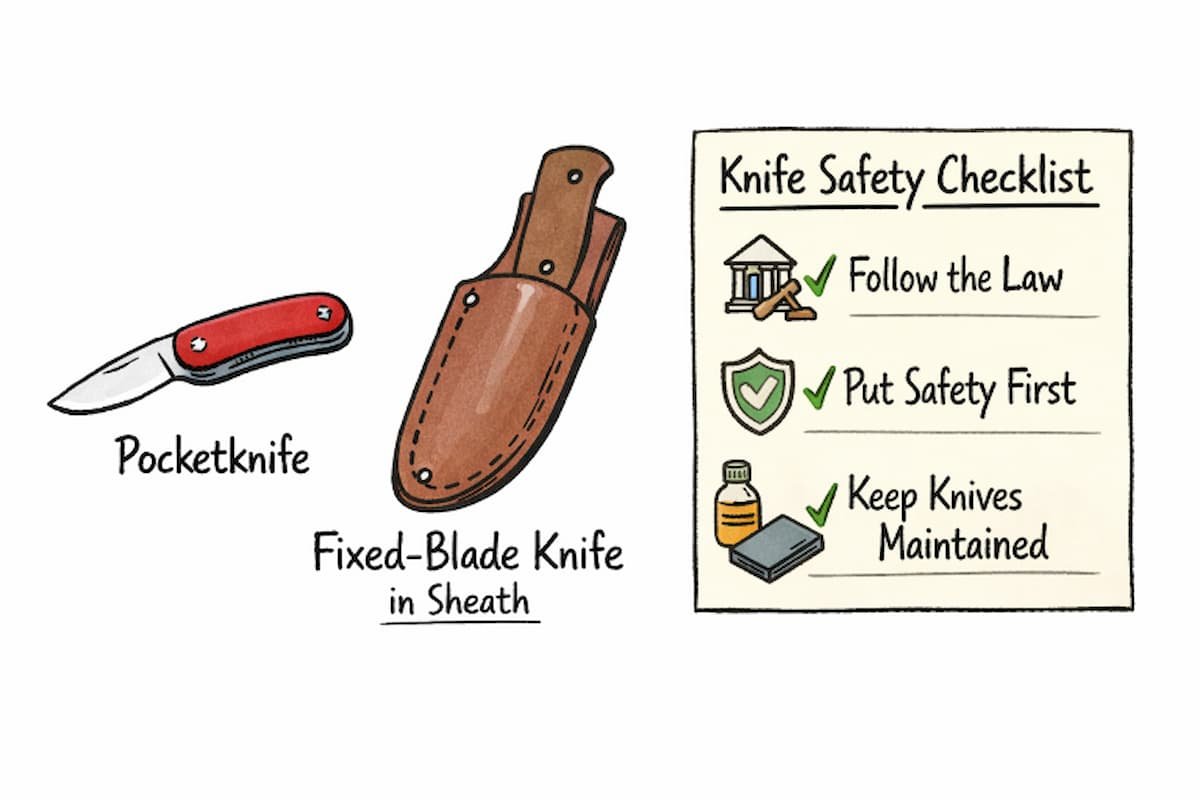
The first principle of responsible knife carry is to be fully informed about applicable regulations. Knife laws can vary dramatically from one city or state to another, with restrictions on blade length, opening mechanisms, and concealment. Some states outlaw automatic knives, while others impose strict rules on carrying knives in schools, government buildings, or public places. Familiarity with legislation prevents unintentional violations and protects your rights as a responsible citizen. It is always advisable to check official local government or law enforcement resources for the most up-to-date legal standards.
Choosing the Right EDC Knife
Selecting the ideal everyday carry (EDC) knife requires consideration of personal needs and preferences. Folding knives are favored for their discretion and portability, while fixed blades are chosen for their strength in heavy-duty or outdoor scenarios. Key factors to evaluate include blade type, straight for clean cuts and serrated for tougher materials; size and weight for comfort and utility; and material, with stainless steel being low maintenance and carbon steel offering better edge retention if properly cared for. Ultimately, daily habits, environment, durability, ease of maintenance, and legal blade-size limitations should guide the decision.
Proper Handling and Safety Practices
Knife safety is fundamentally rooted in consistent practices that prioritize predictability and care. The essential rules are simple yet vital: always cut away from your body and ensure that bystanders remain out of the immediate work area. Respect for the blade is paramount, whether it is closed or sheathed. Cutting away from the body is crucial as it minimizes the likelihood of injury should the blade slip.
Additionally, maintaining sharp blades is essential; dull blades tend to slip more, increasing the potential for accidents. Regular sharpening not only enhances cutting efficiency but also contributes significantly to overall safety. A firm grip on the knife is necessary at all times, and it is important to keep hands dry and free from oil to prevent slipping.
Developing safe knife habits requires ongoing vigilance whenever a knife is used. Furthermore, imparting this knowledge and these practices to others, particularly younger or inexperienced users, is an effective strategy for reducing the incidence of preventable accidents.
Maintenance and Care
Proper knife care is essential for longevity and reliable performance. Regular maintenance includes thoroughly wiping the blade and handle after each use to eliminate moisture and residue, which is particularly important for preventing corrosion in high-carbon steel knives. Cleaning is typically done with a damp cloth, and for tougher debris, mild soap can be utilized, ensuring the knife is thoroughly dried afterward. Lubrication is crucial; applying light oil to pivot points and moving parts helps prevent issues like sticking and rusting. Additionally, sharpening the knife using a quality sharpening stone or system is recommended, as a sharp knife is inherently safer to use. By committing to these maintenance practices, knife owners enhance the trustworthiness of their tools for both emergency situations and regular tasks, thereby protecting their investment and optimizing performance.
Responsible Carrying Methods
A comprehensive understanding of knife transport is essential, taking into account not only the type of knife being carried but also the method of transport. Pocket clips offer quick access and help keep the knife stable in a pocket; however, their appropriateness may vary by location. For fixed-blade knives, sheaths are crucial, as they not only secure the knife but also help prevent accidental use or injury. Furthermore, adhering to local concealment laws is vital, as these regulations can be very strict in certain areas. Therefore, it is important to analyze one’s surroundings and specific daily requirements when selecting the best carrying method. The right choice not only enhances convenience but also ensures the knife is held securely and in compliance with applicable laws.
Conclusion
Carrying a knife every day brings practical advantages, but responsible ownership is essential for both personal safety and respect for the law. Prioritize legal research, select your EDC knife thoughtfully, establish safe handling routines, commit to regular maintenance, and choose carrying methods that balance usability and legal requirements. Responsible knife stewardship signals preparedness, respect for others, and a commitment to personal safety at all times.