For decades, the transition from early years education into primary school has been described by child development experts as a problematic cliff edge. Children aged five to seven often face an abrupt shift from active exploration to formal, desk-bound instruction. This sudden change can damage student engagement, increase early academic anxiety, and place an unnecessary cognitive load on developing minds. However, a significant pedagogical shift is underway globally. Educators are increasingly recognising that the foundational years of schooling require a more nuanced, experiential approach. By adopting progressive methods, schools are preserving the natural curiosity of young learners while still meeting crucial academic milestones.
Moving Away from the Academic Cliff Edge
The traditional rush to formalise learning in early primary education is facing widespread scrutiny. In the UK, the grassroots Play is Learning campaign recently secured over 100,000 signatures on a parliamentary petition. The movement advocated for child-led pedagogy and continuous provision to become statutory requirements for children in their first years of formal schooling.
The concern over rigid early schooling is highly valid, especially considering a 2024 report by the National Literacy Trust showing that fewer than 30 percent of children aged eight to eighteen actually enjoy writing. To prevent early academic burnout, researchers advocate for delaying rigid testing in favour of experiential discovery. Empirical evidence strongly supports this shift. A peer-reviewed study published by MDPI Education Sciences found that utilising an individualised, child-centred pedagogy allowed every child in a foundation-year class to meet, and many to exceed, minimum reading standards by the end of their first year. This confirms that student-led exploration yields superior cognitive outcomes compared to traditional rote methods.
The Core Elements of Progressive Key Stage 1
This educational evolution is particularly visible in premium educational markets around the world. In Thailand, for example, the international school sector has seen immense growth, reaching an estimated value of 95 billion THB in 2025 with over 92,000 students enrolled. The country has positioned itself as a major educational hub in Southeast Asia, attracting highly qualified educators and substantial investments in state-of-the-art facilities. Because British frameworks continue to dominate this local market, the pedagogical evolution of UK early years models is highly relevant to expatriate and domestic families alike.
Top-tier institutions are taking cues from Scandinavian models, which delay desk-bound learning until age six or seven to ensure stronger long-term academic readiness. Finding a real-world example of this careful balance is easy when looking at an international school ks1 curriculum that integrates global citizenship, independent thinking, and structured academic goals through hands-on exploration.
When schools adopt a holistic, play-based approach, the benefits are multifaceted. The core features of a progressive early primary classroom include:
- Play-based literacy: Rebuilding intrinsic motivation through storytelling and active communication rather than immediate formal testing.
- Global citizenship integration: Introducing foundational concepts like social responsibility, diversity, and environmental awareness early on.
- Alignment with global standards: Meeting UNICEF benchmarks that advocate for balancing modern digital tools with essential green skills and emotional development.
- Organic skill building: Developing modern competencies like computational thinking and critical problem-solving naturally through play, as highlighted in the 2024 Power of Play report by the Children’s Alliance.
Embracing Individual Needs and Modern Technology
A key component of this modern framework is the recognition that children develop at wildly different rates. Standardised instruction often leaves some students behind while holding others back. Modern classrooms are solving this by tailoring early learning experiences to the individual. In fact, observing the evolution of personalized learning in private schools reveals how accommodating different student needs and learning speeds significantly improves academic engagement and self-direction.
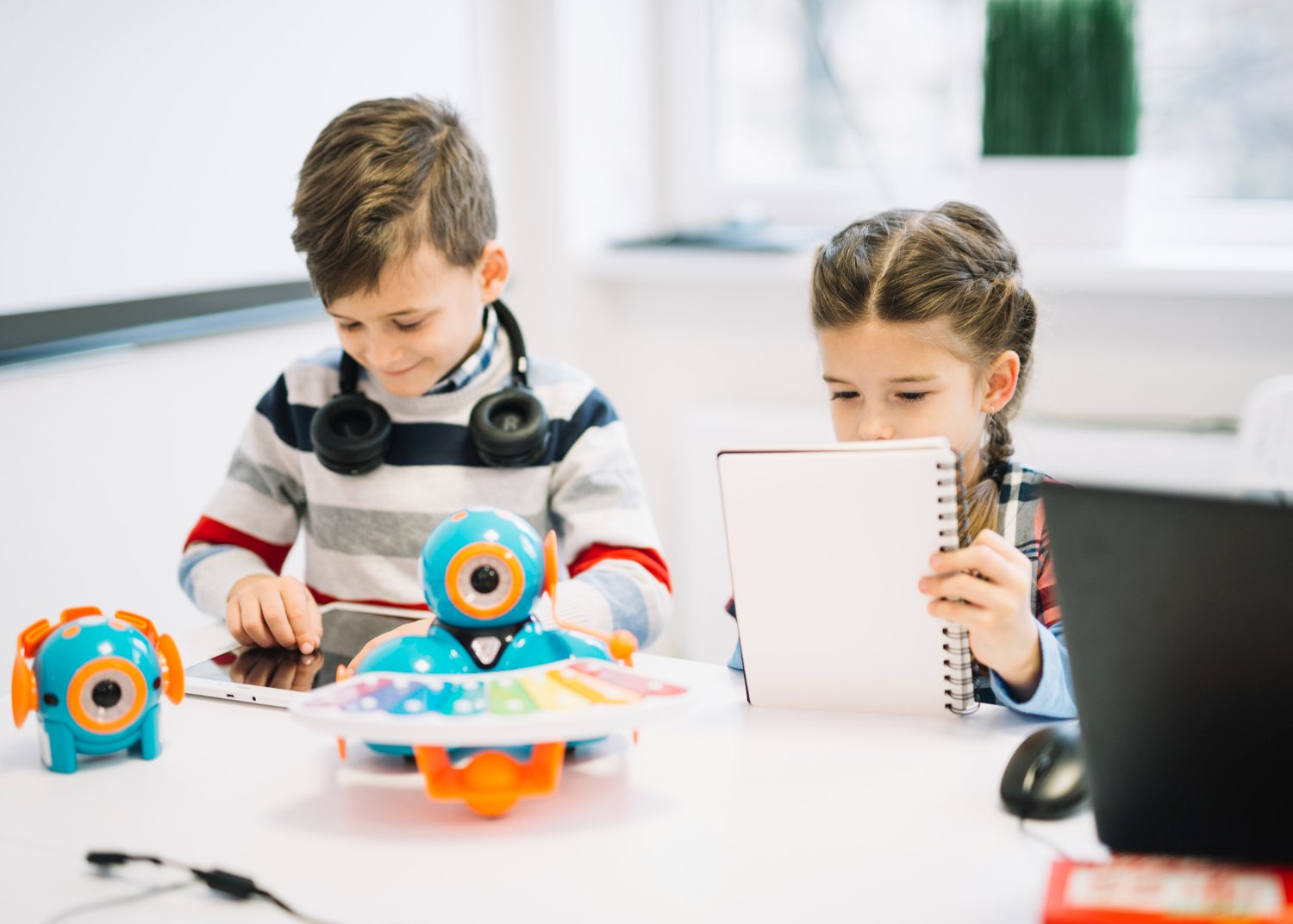
Alongside personalised pacing, the physical spaces and tools used in early education are changing. Today’s future learning spaces deliberately blend physical play areas with seamless digital integration. According to a 2025 academic scoping review, multimodal technology like interactive digital storytelling is highly effective for young learners. However, it only works when deployed through active, play-based instruction rather than passive screen time. For instance, programmable robots designed for early years can teach basic coding logic while children are physically moving around the classroom. This purposeful blend of technology and hands-on discovery helps students concurrently develop fine motor skills and early digital literacy.
The transformation of early primary education reflects a deeper understanding of how young minds actually work. By dismantling the academic cliff edge and replacing it with child-centred, play-based methodologies, schools are setting a new standard for foundational learning. Whether through integrating early global citizenship, adopting personalised learning models, or thoughtfully introducing technology, these progressive strategies share a common goal. They ensure that the crucial transition into formal schooling fosters a lifelong joy of learning, creating confident, capable, and highly motivated students.