
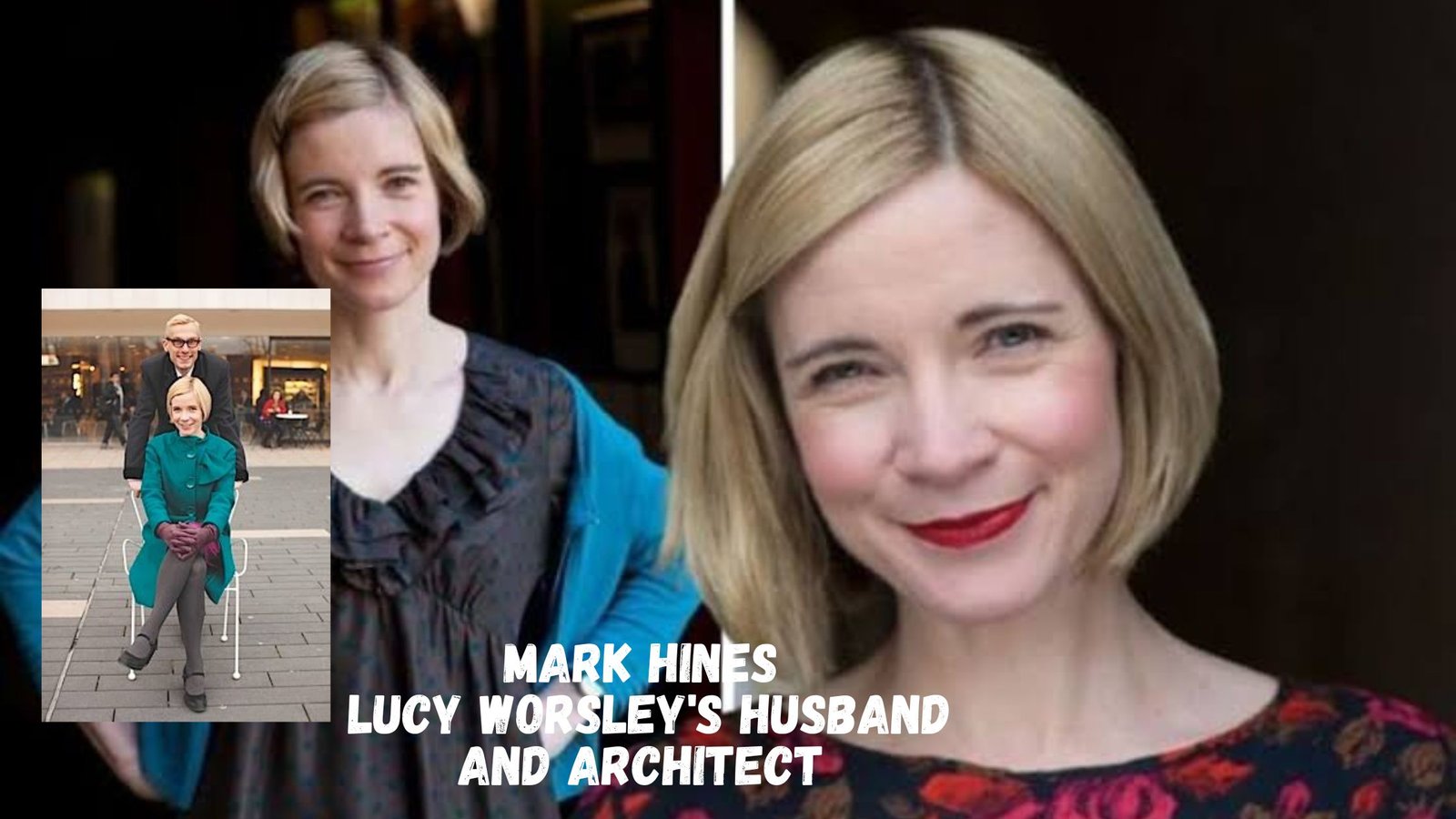
Mark Hines is widely respected within Britain’s architectural community for his work in conserving and adapting historic buildings. Although many people recognise his name because of his marriage to historian and broadcaster Lucy Worsley, his professional achievements stand firmly on their own. Throughout his career, Hines has built a reputation for carefully restoring some of the country’s most important buildings while finding practical ways to adapt them for modern use.
Rather than chasing high-profile publicity, Hines has focused on architecture that respects history without treating it as untouchable. His projects demonstrate that heritage buildings can continue to serve modern communities while retaining the character that makes them historically significant. This thoughtful approach has made him one of the leading voices in conservation architecture and sustainable building design in the UK.
Early Life and Education
Mark Andrew Hines was born in the United Kingdom in June 1967. While relatively little has been published about his childhood or family background, his career clearly reflects a long-standing interest in architecture and the preservation of historic buildings.
After studying architecture in Britain, Hines entered the profession during a period when conservation and modern development were increasingly being debated. Many architects were focused on creating new buildings, while others believed existing structures deserved greater protection and sensitive restoration. Hines would eventually become one of the strongest advocates for finding a balance between these two approaches.
An important step in his career came when he received the prestigious Lethaby Scholarship from the Society for the Protection of Ancient Buildings (SPAB). Founded by William Morris, SPAB promotes repairing and conserving historic buildings rather than replacing them whenever possible. The scholarship introduced Hines to traditional building techniques and reinforced the belief that preserving existing structures is often the most sustainable architectural solution.
His connection with SPAB also proved significant in another way. It was through the organisation that he met Lucy Worsley, who was also involved in conservation work during the early stages of her own career. Their shared interest in Britain’s architectural heritage would later develop into a lasting personal relationship.
Early Career at MJP Architects
Following his studies, Hines joined MacCormac Jamieson Prichard (MJP Architects), one of Britain’s best-known architectural practices. The firm had built a reputation for combining contemporary design with a strong understanding of historic environments, making it an ideal place for Hines to develop his own architectural philosophy.
Over the years, he progressed to the role of Director and became involved in a range of major public projects. During this period, he developed expertise in working with listed buildings and complex conservation schemes where modern requirements had to be carefully integrated into historic structures.
His ability to balance preservation with innovation soon became one of his defining strengths. Rather than seeing historic buildings as obstacles to modern development, Hines viewed them as opportunities to create architecture that respected the past while serving the needs of the future.
Restoring BBC Broadcasting House
One of the most significant projects of Mark Hines’s career was the redevelopment of BBC Broadcasting House in London.
Originally opened in 1932, Broadcasting House is one of Britain’s most recognisable public buildings and has long served as the headquarters of the BBC. As broadcasting technology evolved, the historic building required extensive modernisation while still protecting its Grade II* listed status.
As Project Director at MJP Architects, Hines led the complex redevelopment, overseeing a project that successfully combined restoration with modern expansion. Rather than replacing the original building, the design preserved its distinctive Art Deco features while introducing new facilities capable of supporting twenty-first-century broadcasting.
A major feature of the redevelopment was the addition of the John Peel Wing, connected to the original structure through a striking glass atrium. The new design allowed historic and contemporary architecture to work together, creating a seamless link between the BBC’s past and its future.
The project has since been recognised as one of Britain’s leading examples of successful conservation architecture.
An Architectural Philosophy Built on Conservation
The work at Broadcasting House reflected principles that have guided Mark Hines throughout his career.
The first is respect for heritage. Every project begins with understanding why a building matters and identifying the features that deserve protection.
The second is thoughtful modernisation. Instead of allowing new technology to dominate historic buildings, Hines believes modern systems should be integrated as discreetly as possible, allowing original architectural character to remain the focus.
The third is sustainability through reuse. Long before environmental concerns became central to architectural discussions, Hines argued that preserving existing buildings is often the most sustainable option. Retaining historic structures reduces waste, conserves materials, and protects the cultural value embedded within older buildings.
These ideas have shaped much of his work and continue to influence conversations around conservation architecture across the UK.
Author of The Story of Broadcasting House
In 2008, Hines published The Story of Broadcasting House: Home of the BBC, an illustrated book exploring the history of the famous building and the challenges involved in its restoration.
The publication combines architectural detail with historical context, offering readers an insight into how one of Britain’s best-known landmarks was carefully adapted for modern broadcasting while preserving its original identity.
The book remains a useful reference for architects, conservation professionals, and anyone interested in the relationship between heritage and contemporary design.
Founding Mark Hines Architects
After years of working on major conservation projects, Mark Hines established his own practice, Mark Hines Architects, in 2006. Based in Clerkenwell, London, the studio focused on creating contemporary buildings while carefully preserving the character of existing ones. The practice became known for delivering projects that combined traditional craftsmanship with modern design, proving that historic architecture could continue to meet the needs of present-day living.
Rather than pursuing large-scale commercial developments, the firm concentrated on thoughtfully designed homes, refurbishments, and conservation projects. Every commission reflected Hines’s belief that older buildings should be adapted with care rather than dramatically altered. His work demonstrated that sensitive restoration could be just as innovative as creating something entirely new.
Design Philosophy
Throughout his career, several key principles have shaped Mark Hines’s approach to architecture.
Respecting a Building’s History
Hines believes every historic building has its own story. Instead of removing original features to make way for modern designs, he prefers to understand what gives a building its identity and preserve those qualities wherever possible.
His projects rarely try to compete with the original architecture. Instead, new additions are designed to complement older structures, allowing different periods of history to exist side by side.
Sustainability Through Reuse
Long before environmental sustainability became a major focus within architecture, Hines argued that retaining existing buildings was one of the most effective ways to reduce waste and carbon emissions.
Demolishing buildings consumes large amounts of energy and materials, while restoration allows much of that embodied carbon to remain in use. For Hines, conservation has always been about more than protecting history. It is also about making responsible environmental choices.
His often-quoted philosophy can be summed up simply: the most sustainable building is often the one that already exists.
Honest Materials and Craftsmanship
Another hallmark of Hines’s work is his respect for quality materials and skilled craftsmanship.
Whether working with brick, timber, stone, or glass, he favours materials that age naturally and remain durable over time. Traditional building techniques also play an important role in his projects, not because they are old-fashioned, but because they continue to deliver lasting quality.
Projects Beyond Broadcasting House
Although the BBC Broadcasting House redevelopment remains his best-known achievement, it represents only part of his wider body of work.
Through Mark Hines Architects, he completed a variety of residential and conservation projects, each designed with the same careful balance between heritage and modern living.
His work rarely attracted sensational headlines, yet it earned considerable respect within the architectural profession. Clients valued his ability to improve older buildings without sacrificing the features that made them unique.
This understated approach has become one of the defining characteristics of his career.
The Closure of Mark Hines Architects
After operating for almost twenty years, Mark Hines Architects Ltd. was officially dissolved in 2024.
The closure of the company does not necessarily indicate retirement from architecture. Many experienced architects continue to work independently as consultants, advisers, or collaborators after closing their own firms.
Given Hines’s experience in conservation architecture, many industry observers believe he is likely to remain involved in specialist projects and professional discussions, even without a traditional architectural practice.
Championing Sustainable Conservation
In recent years, Mark Hines has become an influential voice in conversations about heritage conservation and environmentally responsible construction.
One notable example was the debate surrounding Richmond House in Whitehall.
When proposals suggested demolishing large parts of the Grade II* listed building to create temporary parliamentary accommodation, Hines joined other conservation specialists in arguing for refurbishment instead.
His position was based on practical reasoning rather than nostalgia. He believed that adapting the existing building would preserve its historical value while avoiding the environmental cost of large-scale demolition and reconstruction.
This argument reflected principles he has promoted throughout his career, namely that conserving existing buildings is often the most sustainable solution available.
Sharing Knowledge Across the Profession
Alongside his architectural work, Hines has contributed to industry discussions through lectures, public talks, and professional organisations, including the Society for the Protection of Ancient Buildings and the Twentieth Century Society.
Rather than approaching conservation as an emotional issue, he presents evidence-based arguments that balance heritage, sustainability, cost, and long-term usability.
His practical experience gives his opinions considerable credibility within the profession, particularly when discussing the challenges of upgrading historic buildings to meet modern standards.
Marriage to Lucy Worsley
Outside architecture, Mark Hines is perhaps best known as the husband of historian, author, and television presenter Lucy Worsley.
The couple first met through the Society for the Protection of Ancient Buildings, where both shared a strong interest in preserving Britain’s architectural heritage. Their professional interests created an immediate connection that later developed into a personal relationship.
They married in 2011 and have continued to keep their private life largely away from public attention.
Although Lucy Worsley is a familiar face on television, she has occasionally joked that her husband has little interest in appearing on screen himself. Instead, he has always preferred to let his architectural work speak for itself.
The couple live in south London and are known for maintaining a quiet lifestyle centred on shared interests rather than public attention.
A Shared Passion for British History
Although they work in different fields, Mark Hines and Lucy Worsley are united by a common goal.
Lucy explores Britain’s history through books and documentaries, bringing historical stories to a wide audience. Mark preserves that same history through architecture, ensuring that important buildings continue to serve future generations.
Together, their careers reflect different ways of protecting Britain’s cultural heritage, one through storytelling and the other through the careful conservation of historic places.!– 28d70c84debcdd89e76ae10ac12cab29 –>