
Key Takeaways
- Modern fire alarm systems utilize smart technology, IoT, and wireless solutions to enhance safety and efficiency.
- Self-testing detectors and integrated mass notification improve reliability and emergency response.
- Case studies and historical incidents highlight the necessity of staying current with fire safety technology.
Table of Contents
- Introduction
- Integration of Smart Technologies
- Self-Testing Smoke Detectors
- Wireless Fire Alarm Solutions
- IoT-Enabled Fire Alarm Control Panels
- Mass Notification and Integrated Alerts
- Case Studies: Implementing Advanced Fire Alarm Systems
- Lessons from Past Incidents
- Conclusion
The evolution of fire alarm systems has become a cornerstone of modern building safety strategies, as the challenges of ensuring occupant safety grow in complexity. As buildings become more intelligent and increasingly connected, innovative fire prevention measures are transforming how risks are managed and mitigated. For building managers and property owners seeking to stay ahead of safety codes and best practices, choosing the right Next Level fire alarm system can mean the difference between disaster and safety.
Advancements in fire alarm technologies address the needs of commercial, institutional, and residential buildings by integrating with management systems and featuring self-maintaining detectors. As urbanization increases and buildings become more complex, fire alarm systems play a crucial role in ensuring compliance and emergency preparedness. Organizations are adopting AI-enabled sensors and remote diagnostics, shifting towards real-time risk management and enhancing operational efficiency, thereby transforming building safety standards.
Integration of Smart Technologies
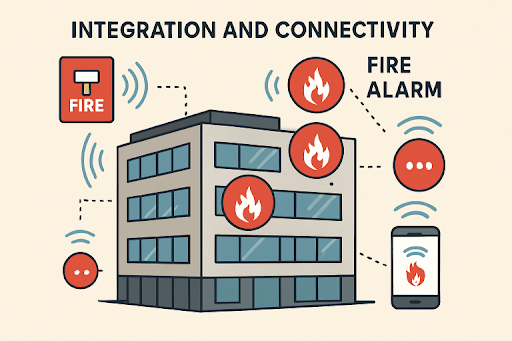
Modern fire alarm systems are rapidly incorporating smart building technology to address evolving security and operational challenges. For example, through a significant partnership with the Charlotte Hornets, Honeywell has enabled one of the smartest facilities in Charlotte with AI-driven automation. This approach merges fire detection with dynamic monitoring systems that optimize response times, integrate with facility management, and provide actionable insights that extend well beyond simple alerting. By combining these systems with integrated building analytics, organizations can enhance security and deliver comprehensive asset protection across large or multi-site locations.
Self-Testing Smoke Detectors
Maintenance remains a fundamental challenge for fire alarm reliability. Traditional systems rely upon scheduled manual testing, which can leave gaps in coverage if not rigorously maintained. Honeywell has developed the industry’s first UL-approved self-testing smoke detectors. These advanced devices run automated diagnostics and performance checks without requiring manual intervention, enabling consistent protection and facilitating easier compliance with safety regulations. This innovation significantly reduces administrative burdens for property managers while providing tenants with added peace of mind.
Wireless Fire Alarm Solutions
The challenges of wiring complex or historic buildings often slow down necessary fire safety updates. Wireless fire alarm solutions offer an appealing alternative for both new construction and retrofitting existing properties. These systems offer fast installation, scalability, and flexibility, enabling them to adapt to unique architectural constraints. Wireless fire alarms can also minimize disruption to existing structures and help reduce labor costs, making high-level safety upgrades more accessible and sustainable for a variety of building types.
IoT-Enabled Fire Alarm Control Panels
The Internet of Things (IoT) has revolutionized how facility teams manage fire safety across multiple sites. IoT-enabled control panels connect fire alarm systems to cloud-based management platforms, providing real-time monitoring, instant notifications, and the capability for remote diagnostics. Facility managers can now supervise diverse portfolios of properties from a single dashboard—accelerating response, improving data-driven decision-making, and simplifying compliance reporting. This technology increases the efficiency and transparency of safety operations while reducing the likelihood of human error.
Mass Notification and Integrated Alerts
Beyond traditional sirens and strobe lights, mass notification systems (MNS) have become an integral component of advanced fire alarm setups. These solutions provide clear, multi-channel alerts—including automated voice announcements, real-time textual alerts throughout facilities, and mobile push notifications to occupants and staff. Integration with other emergency communication systems ensures that everyone in the building receives critical instructions, regardless of their location or level of mobility. This inclusive, omnichannel approach to alerting is integral for meeting modern accessibility and public safety requirements.
Case Studies: Implementing Advanced Fire Alarm Systems
Institutions across sectors are demonstrating the value of these fire alarm innovations. American University, for example, retrofitted all campus buildings with a unified, state-of-the-art fire alarm system designed for seamless expansion and ongoing compliance with evolving codes. The system upgrade unified disparate legacy equipment and centralized monitoring, streamlining emergency procedures and enabling campus safety staff to respond faster and more effectively to alarms. These real-world examples demonstrate the enhanced control, speed, and oversight that modern technologies enable.
Lessons from Past Incidents
Lessons from history reinforce the importance of robust fire safety technology. The devastating 1988 First Interstate Tower fire in Los Angeles exposed the vulnerabilities of older fire alarm and suppression systems. Without adequate detection or comprehensive notification, the incident resulted in extensive property loss and the tragic loss of life. Such cases remind us that staying current with modern technology is not simply a matter of compliance—it’s a moral responsibility to protect lives and property in a changing world.
Conclusion
The transformation of fire alarm systems reflects a broader movement to integrate smart technology throughout building infrastructure. By leveraging AI, automation, IoT, and flexible, user-centric notification systems, modern buildings are equipped to tackle a range of fire safety challenges proactively. These advancements underscore a shift from reactive alerting toward holistic risk management, ensuring greater protection for occupants and greater peace of mind for owners, operators, and community members alike.