

Table of Contents
- The Need for Modernization
- Challenges of Legacy Systems
- Benefits of Upgrading Communication Infrastructure
- Key Components of Modern Communication Systems
- Steps to Modernize Your Business Communication Infrastructure
- Case Study: Successful Modernization
- Conclusion
In the rapidly changing digital world, organizations must move beyond legacy communication systems to maintain efficiency and competitiveness. Upgrading business communication isn’t simply about adopting new technology; it’s about laying a foundation for growth, security, and resilience in an era marked by constant disruption. For a more detailed look at transforming traditional systems and replacing POTS lines, click here. Effective modernization addresses the challenges posed by outdated networks and positions organizations for future success. While businesses have historically relied on analog approaches, shifting to digital and cloud-based platforms is now required for any organization determined to keep pace with technological advances and changing customer expectations. Failing to modernize carries risks beyond technical obsolescence, such as compromised security and missed opportunities for collaboration. Companies embracing modern communication quickly find they can scale operations, adapt to new market needs, and increase reliability, all while lowering costs over time. Major corporations and mid-sized companies alike recognize that these improvements are not optional but vital for long-term viability. According to recent research from Forbes, digital transformation is at the forefront of most corporate strategies, and effective business communication systems are the backbone of that movement. As cloud adoption and hybrid work environments become the norm, only businesses with modern communication systems will be able to deliver the fast, secure, integrated experience customers and employees expect.
The Need for Modernization
Modern businesses operate in environments that demand agility, robust security, and rapid scalability. Traditional communication infrastructures, although reliable in the past, often fail to provide the flexibility and advanced capabilities required today. A recent study by NTT DATA found that nearly three-quarters of IT leaders believe their legacy network assets could become obsolete, emphasizing the urgent call for transformation. A key driver of modernization is the growing reliance on digital collaboration tools, remote work arrangements, and increased customer expectations for instant, reliable service. Businesses now require systems that support seamless voice, video, and data transmission across multiple devices and locations.
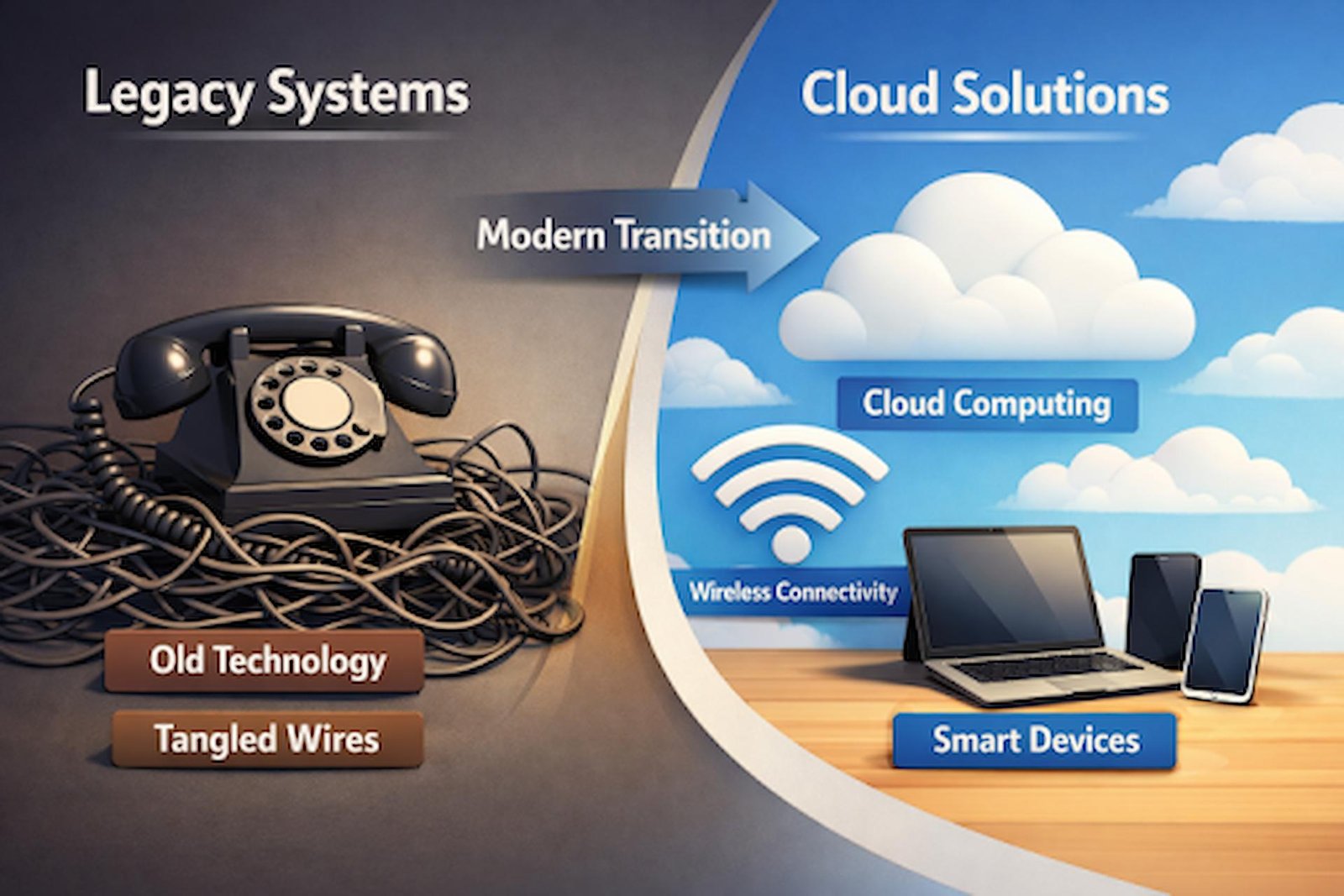
Challenges of Legacy Systems
- Limited Scalability: Traditional on-premise systems struggle to scale efficiently, which impedes growth and expansion initiatives.
- Increasing Operational Costs: Older systems require extensive maintenance and frequent repairs, which drive up expenses.
- Security Vulnerabilities: Outdated protocols fall short against evolving cyber threats, exposing organizations to significant risks.
Obsolete communication platforms also make it difficult to maintain business continuity during unexpected disruptions. Without built-in redundancy and flexible routing, outages can halt operations, eroding both productivity and customer trust. Industry reports from TechRepublic warn that failing to upgrade can lead to a loss of competitive advantage due to reduced adaptability in fast-moving markets.
Benefits of Upgrading Communication Infrastructure
- Enhanced Reliability: Modern networks deliver higher uptime, reducing the risk of costly outages.
- Improved Security: Up-to-date systems incorporate current security standards, helping defend against sophisticated cyberattacks.
- Cost Efficiency: Though an initial investment is required, modern solutions lead to lower operational costs and reduced maintenance burdens over time.
These changes not only empower IT teams to focus on strategic projects but also give employees across all departments the tools needed for effective remote collaboration and customer engagement.
Key Components of Modern Communication Systems
- Cloud-Based Solutions: Cloud platforms provide scalability and resilience. They enable businesses to quickly deploy new capabilities, add users, and reduce physical infrastructure costs.
- Unified Communications: Integrating multiple communication channels, voice, video, and instant messaging on a single platform fosters productivity and streamlines workflow.
- AI Integration: Artificial intelligence automates mundane tasks, enhances customer support via chatbots, and supplies actionable insights for better decision making.
Together, these components drive business efficiency and enable rapid response to changing market conditions. They also make it easier to comply with regulatory requirements by providing centralized control and auditability.
Steps to Modernize Your Business Communication Infrastructure
- Assess Current Infrastructure: Evaluate your existing communication channels, hardware, and software to determine gaps in capability and reliability.
- Define Objectives: Set clear, measurable goals for what the modernization should achieve, including enhanced security, reduced costs, and improved user experiences.
- Choose the Right Technology: Research solutions that fit your needs and can grow with your business, such as scalable cloud services or advanced collaboration platforms.
- Plan for Integration: Map out a strategy for seamless integration with current tools and operational processes so that transitions are minimally disruptive.
- Train Staff: Invest in comprehensive employee training to ensure that new tools are adopted correctly and to their full potential.
Case Study: Successful Modernization
Consider the public works agency that transitioned from outdated landline-based circuits to a resilient network composed of multiple redundant cellular and satellite connections. By modernizing its communication infrastructure, it experienced substantially fewer outages, minimized downtime, and ensured the continued operation of critical public services. This case demonstrates the value of proactive upgrades and highlights how reliability and cost savings can be achieved simultaneously.
Conclusion
Modernizing your business communication infrastructure isn’t just a technical project; it is a strategic investment in your company’s long-term health and growth. By identifying weaknesses in legacy systems, choosing scalable solutions, and prioritizing security, businesses can become more agile, secure, and better prepared for future challenges. The time to act is now so that organizations can enjoy improved collaboration, customer satisfaction, and ultimately, a stronger competitive position in the digital age.