Introduction
Modern industries demand materials that are stronger, lighter, and more durable than ever before. From aerospace components to cutting-edge medical devices, the need for high-performance parts continues to grow. This constant drive has placed advanced composite materials at the forefront of manufacturing innovation.
These materials, especially thermoset composites, offer unique properties. They provide exceptional strength-to-weight ratios, excellent thermal stability, and superior corrosion resistance. This makes them essential for the most demanding applications across various sectors.
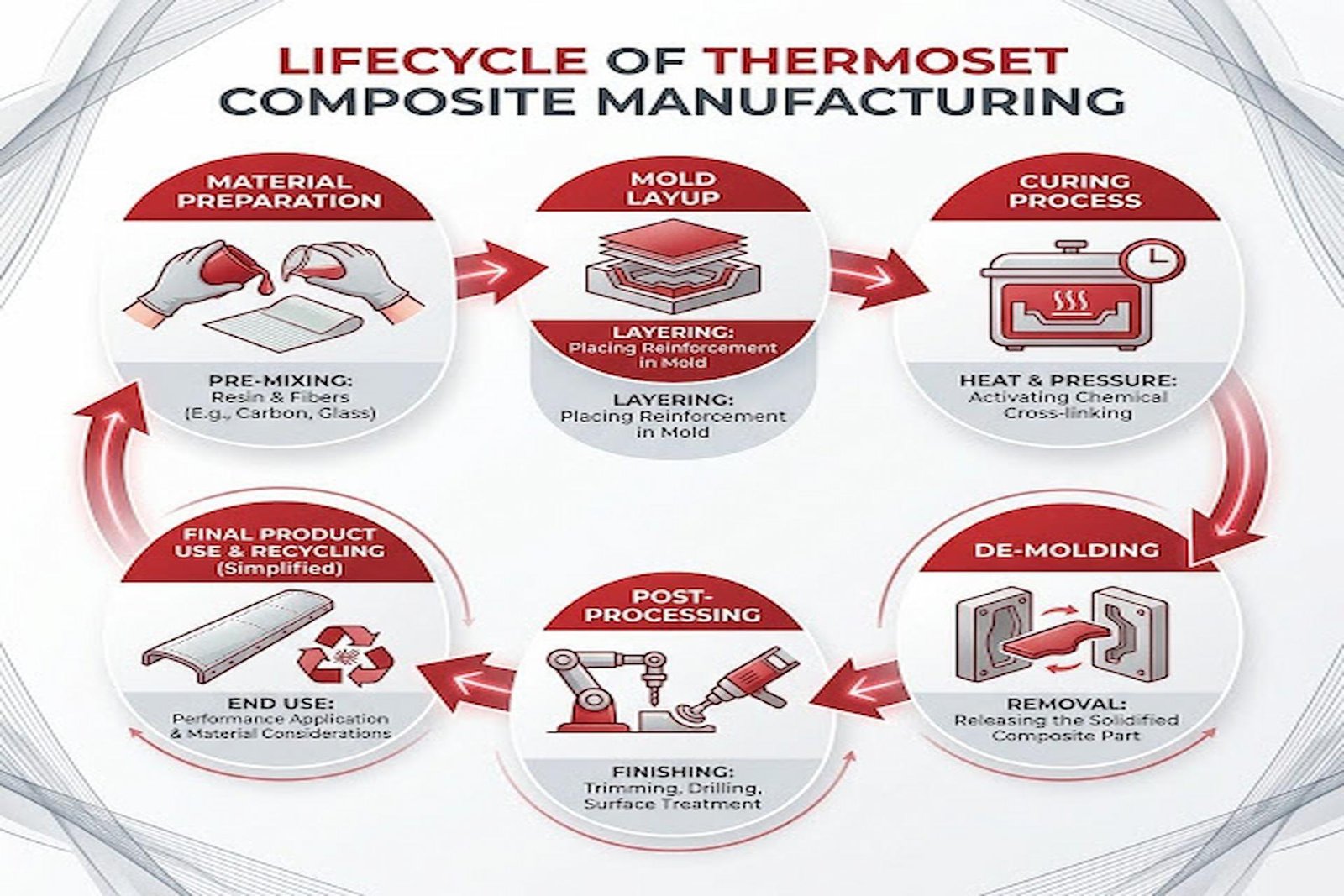
In this extensive guide, we will explore the exciting world of advanced composite materials. We will delve into their evolution, the precision engineering required for their successful application, and the diverse manufacturing processes that bring them to life. Understanding advanced composite materials for molders is crucial for unlocking new possibilities in industrial design and production. Join us as we uncover the innovations shaping the future of manufacturing with these remarkable materials.
The Evolution of Advanced Composite Materials in Industrial Design
The journey of advanced composite materials from laboratory curiosities to indispensable industrial components is a testament to relentless material science innovation. Historically, traditional materials like metals and ceramics dominated manufacturing. However, their inherent limitations in terms of weight, corrosion susceptibility, and specific strength-to-weight ratios paved the way for the rise of composites.
At the core of these materials are polymer matrices, often reinforced with high-strength fibers such as carbon, glass, or aramid. This combination yields materials with properties far exceeding those of their individual constituents. Early applications in the mid-20th century, particularly in aerospace, highlighted the profound benefits of these new materials. The ability to achieve significant weight reduction without compromising structural integrity was a game-changer for aircraft and spacecraft design.
As we move into April 2026, the application of advanced composites has broadened dramatically. Industrial OEMs across diverse sectors now leverage their unique characteristics. For instance, the exceptional strength-to-weight ratio makes them ideal for high-load applications in automotive, marine, and sporting goods industries. Their superior thermal stability ensures performance in extreme temperature environments, from engine components to electronic enclosures. Furthermore, excellent corrosion resistance opens doors for use in harsh chemical processing equipment and infrastructure.
The evolution isn’t just about new materials; it’s also about refining existing ones and developing sophisticated manufacturing techniques. Modern composites are engineered with incredible precision, allowing for tailored properties based on specific application requirements. Aerospace standards and defense specifications, for example, often demand materials that can withstand immense stress, fatigue, and environmental exposure while maintaining exacting tolerances. This continuous push for performance and reliability drives ongoing research and development, ensuring that advanced composite materials remain at the cutting edge of industrial design.
Precision Engineering and Material Selection Strategies
Selecting the right advanced composite material is a critical step in precision engineering, demanding a deep understanding of both material science and application requirements. The choice between thermosets and thermoplastics, for instance, significantly impacts processing, performance, and cost. Thermoset resins, once cured, undergo an irreversible chemical change, resulting in a rigid, stable structure with excellent thermal and chemical resistance. Thermoplastics, conversely, can be melted and reshaped, offering recyclability and faster processing cycles.
Here’s a comparison of their general mechanical properties:
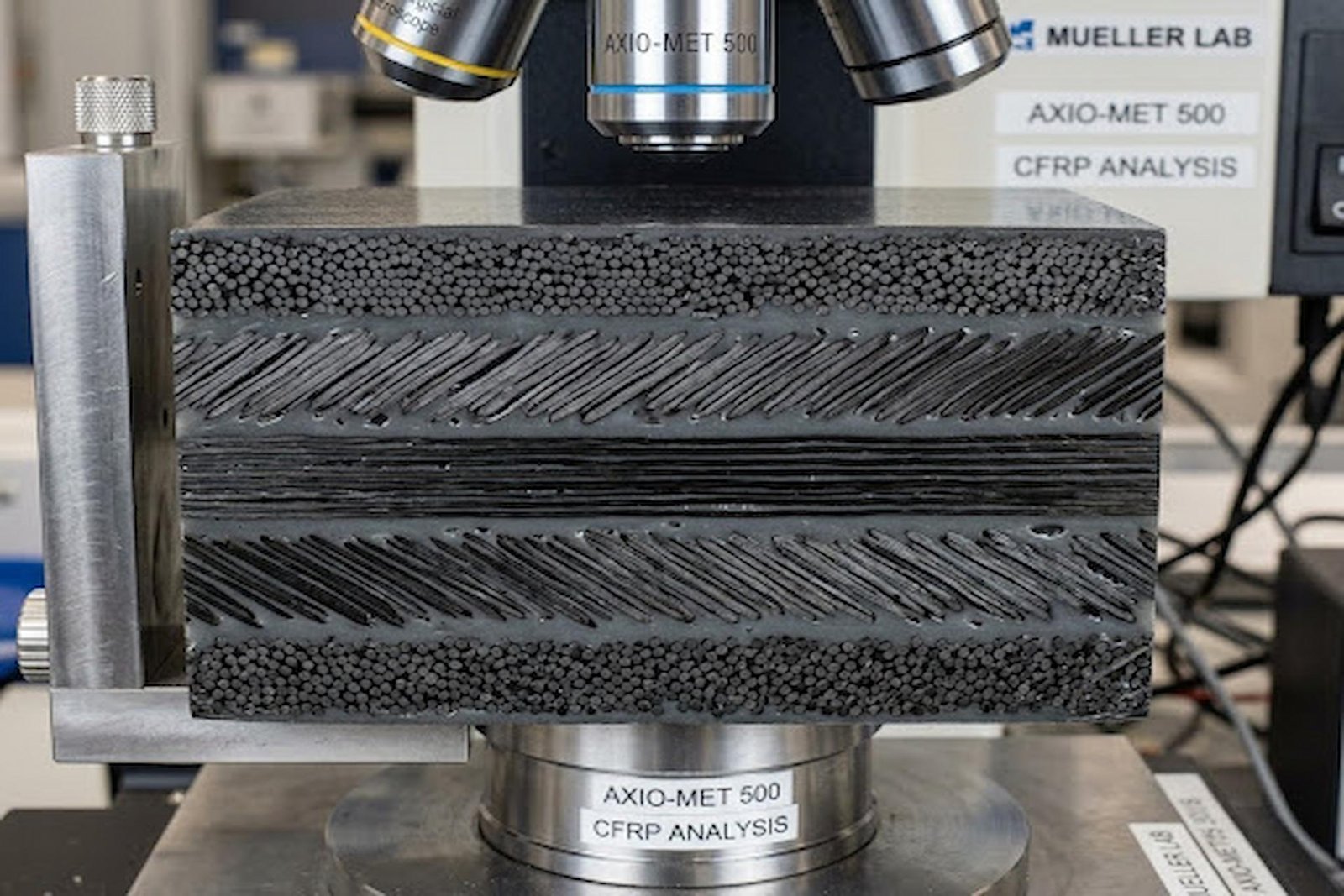
Property Thermosets Thermoplastics Strength & Stiffness Generally higher Good, but often lower than thermosets Temperature Resistance Excellent (maintain properties at high temps) Good (soften at high temps) Impact Resistance Typically lower (brittle) Generally higher (ductile) Chemical Resistance Excellent Varies widely, can be very good Creep Resistance Excellent Good, but can creep under sustained load Processing Irreversible cure, longer cycle times Reversible melt, faster cycle times, reworkable Recyclability Difficult/Limited Generally good Beyond the matrix material, fiber orientation plays a pivotal role in determining a composite part’s mechanical stress response. Engineers meticulously design the lay-up sequence and fiber angles to optimize strength, stiffness, and fatigue resistance in specific directions. Factors such as thermal expansion, dielectric properties, and chemical compatibility must also be carefully considered to ensure environmental resilience and long-term performance, especially in load-bearing capacity applications. For those looking to dive deeper into the specifics of these materials, exploring resources dedicated to advanced composite materials for molders can provide invaluable insights into their properties and applications.
Optimizing Advanced Composite Materials for Electrical Insulation
In many high-performance applications, advanced composites are not just structural components but also critical electrical insulators. Optimizing these materials for electrical insulation requires a focus on specific properties such as dielectric strength, arc resistance, and flame retardancy. Dielectric strength refers to a material’s ability to withstand an electric field without breaking down. For applications like switchgear components or transformer insulation, high dielectric strength is paramount to prevent electrical arcing and ensure operational safety.
Arc resistance, the ability of a material to resist the formation of a conductive path when exposed to an electrical arc, is another vital characteristic. Materials like G-10/FR-4 laminates, a common glass-reinforced epoxy thermoset, are widely used due to their excellent arc resistance and high mechanical strength. These materials are engineered to prevent carbon tracking and maintain insulation integrity even under severe electrical stress.
Furthermore, flame retardancy is often a mandatory requirement, particularly in industrial and public safety applications. Composites can be formulated with flame-retardant additives or inherently flame-resistant resins to meet stringent fire safety standards. Achieving high-voltage reliability and effective thermal management in these insulating components is a complex engineering challenge, requiring a holistic approach to material selection, design, and manufacturing. The careful interplay of resin systems, fiber types, and additives ensures that these composites perform reliably in demanding electrical environments.
Scaling Production with Advanced Composite Materials
Bringing advanced composite parts from prototype to high-volume production requires a strategic approach to manufacturing scalability. A significant tooling investment is often necessary, as molds for composites can be complex and expensive, especially for intricate geometries or high-temperature applications. However, this initial investment is amortized over the production run.
Optimizing cycle time is crucial for cost-efficiency. While thermosets generally have longer cure cycles than thermoplastics, advancements in resin chemistry and processing techniques, such as rapid heating and cooling systems, are continually reducing these times. For instance, the use of automated fiber placement (AFP) or resin transfer molding (RTM) can significantly speed up the manufacturing process compared to traditional hand lay-up methods.
Repeatability and quality control are non-negotiable for scaled production. Implementing robust quality management systems, often guided by ISO certifications (e.g., ISO 9001, AS9100 for aerospace), ensures consistent part quality from batch to batch. This involves rigorous inspection protocols, non-destructive testing (NDT), and statistical process control.
Production scalability also involves strategies for material waste reduction. Efficient nesting of prepreg plies, precise cutting, and closed-mold processes minimize scrap, which is particularly important given the often high cost of composite raw materials. Achieving cost-efficiency at scale involves a careful balance of material selection, process automation, tooling strategy, and an unwavering commitment to quality.
Manufacturing Processes: From Filament Winding to Injection Molding
The versatility of advanced composite materials is matched by the diversity of manufacturing processes used to create them. Each method is tailored to specific material types, part geometries, and production volumes.
Filament winding is a highly efficient process for producing hollow, rotationally symmetrical parts such as pipes, pressure vessels, and rocket motor casings. In this method, continuous fibers, pre-impregnated with resin (prepreg) or wet-impregnated during the process, are wound onto a rotating mandrel in a precise, controlled pattern. This allows for exceptional control over fiber orientation, optimizing the part’s strength and stiffness in specific directions. Convolute winding is a variation often used for cylindrical shapes where layers are wrapped around a mandrel.
Another key process is Resin Transfer Molding (RTM), where dry fiber preforms are placed into a closed mold, and then a liquid resin is injected under pressure to impregnate the fibers. This method offers excellent tolerance control, good surface finish on both sides of the part, and is suitable for producing complex shapes with integrated features. Variants like Vacuum-Assisted Resin Transfer Molding (VARTM) use vacuum pressure to draw resin into the mold, reducing voids and improving fiber wet-out.
For post-molding operations or creating features not achievable during molding, CNC machining plays a vital role. Composites can be precisely cut, drilled, and milled to achieve tight tolerances and custom geometries. However, machining composites requires specialized tools and techniques due to their abrasive nature and potential for delamination.
The goal across these processes is to achieve near-net shapes, minimizing post-processing and material waste. Whether producing structural tubes, rods, or sheets, the chosen manufacturing method directly impacts the final part’s performance, cost, and lead time. The ongoing innovation in these manufacturing techniques continues to expand the possibilities for advanced composite applications.
Design for Manufacturability (DFM) and Prototyping
Design for Manufacturability (DFM) is paramount in advanced composite engineering, ensuring that a part can be produced efficiently, cost-effectively, and to the required quality standards. This iterative process begins early in the design phase, where engineers consider how material properties, manufacturing processes, and tooling will interact.
CAD optimization is a fundamental component of DFM. Using advanced 3D CAD software, designers can simulate material flow, stress distribution, and potential manufacturing defects before any physical tooling is made. Key design considerations for composites include draft angles, which facilitate part removal from the mold, and consistent wall thickness, which helps prevent warpage and ensures uniform material distribution. Neglecting these aspects can lead to costly rework or scrap during production.
Prototyping validation is an essential step in mitigating risks. Physical prototypes, whether produced through rapid prototyping methods or initial tooling, allow engineers to test form, fit, and function in real-world conditions. This validation process helps identify potential design flaws, material performance issues, or manufacturing challenges that might not be apparent in simulations.
Effective tooling design is also a critical outcome of DFM. The mold’s material, geometry, and features must align with the chosen manufacturing process and the part’s specifications. Engineering support throughout this phase, from initial concept to final production, is crucial. This includes material testing to confirm properties, failure analysis of prototypes to understand limitations, and a seamless transition plan to full-scale production. By integrating DFM principles, we can minimize development cycles, reduce costs, and ensure the reliable performance of composite components.
Future Trends in Thermoset Composite Technology
As we look ahead to April 2026 and beyond, the landscape of thermoset composite technology is poised for transformative advancements. One exciting area is the emergence of smart composites, which integrate embedded sensors directly into the material structure. These sensors can monitor critical parameters such as temperature, strain, damage, and even environmental exposure in real-time, providing invaluable data for predictive maintenance and enhanced operational safety, particularly in aerospace and infrastructure.
Sustainable resin systems are gaining significant traction as industries prioritize environmental responsibility. Researchers are developing bio-derived resins, recyclable thermosets (e.g., vitrimers), and processes that reduce energy consumption and waste. This shift aims to lower the environmental footprint of composite manufacturing without compromising performance.
Automated fiber placement (AFP) and automated tape laying (ATL) are becoming increasingly sophisticated. These advanced manufacturing techniques use robotic systems to precisely lay down composite fibers or tapes, enabling faster production rates, greater accuracy, and the ability to create highly complex geometries with minimal human intervention. This automation is key to scaling production and reducing labor costs.
Nanocomposites, which incorporate nanoparticles into the resin matrix, are being explored for their potential to enhance properties like strength, toughness, electrical conductivity, and flame retardancy. While still largely in the research phase for many applications, nanocomposites hold promise for creating next-generation materials with tailored performance characteristics.
The demand for high-temperature performance continues to drive innovation, especially in aerospace and defense. New resin systems and ceramic matrix composites are being developed to withstand extreme thermal environments, pushing the boundaries of material capabilities. Hybrid reinforcements, combining different fiber types (e.g., carbon and glass) or even integrating metallic elements, are also being explored to achieve a synergistic blend of properties.
The 2026 industry outlook points towards greater integration of advanced manufacturing processes, digital twin technology, and artificial intelligence to optimize composite design, simulation, and production. These innovations promise to unlock new applications, improve efficiency, and further solidify the role of thermoset composites as a cornerstone of modern engineering.
Frequently Asked Questions about Advanced Composites
What are the primary advantages of thermoset composites over thermoplastics?
Thermoset composites generally offer superior thermal stability, meaning they maintain their mechanical properties at higher temperatures without softening or deforming. They also tend to have higher strength and stiffness, better chemical resistance, and excellent creep resistance compared to thermoplastics. Once cured, their cross-linked molecular structure provides a rigid, dimensionally stable part. While thermoplastics offer advantages in recyclability and faster processing, thermosets are often preferred for demanding structural applications where high performance under extreme conditions is critical.
How does fiber orientation affect the performance of a composite part?
Fiber orientation is one of the most critical design parameters in composite engineering. The strength and stiffness of a composite material are highly anisotropic, meaning they vary significantly depending on the direction of the applied load relative to the fiber alignment. By strategically orienting the fibers (e.g., 0°, 90°, +/-45°), engineers can tailor the composite’s mechanical properties to resist specific stresses and strains. For instance, fibers aligned with the primary load direction provide maximum tensile strength, while off-axis fibers contribute to shear strength and impact resistance. Incorrect fiber orientation can lead to premature failure or suboptimal performance.
Why is Design for Manufacturability (DFM) critical in composite engineering?
Design for Manufacturability (DFM) is critical in composite engineering because it directly impacts the cost, quality, and production efficiency of composite parts. Composites often involve complex materials and manufacturing processes, and neglecting DFM can lead to significant challenges. For example, poor mold design can cause defects like voids or delamination, while complex geometries without adequate draft angles can make part extraction difficult or impossible. By integrating DFM early in the design process, engineers can identify and resolve potential manufacturing issues, optimize material usage, reduce tooling costs, minimize scrap, and ensure that the final product meets performance specifications reliably and economically.
Conclusion
The world of advanced composite materials is dynamic and continually evolving, offering unparalleled opportunities for innovation across industries. From the fundamental material science that underpins their strength and durability to the sophisticated manufacturing processes that bring them to life, composites are redefining what’s possible in industrial design. We’ve explored their remarkable evolution, the precision engineering required for optimal performance, and the critical role of material selection and DFM in achieving successful outcomes. As we look to the future, trends like smart composites and automated manufacturing promise to push the boundaries even further.
Spaulding Composites brings decades of experience in thermoset composite materials, engineering support, and manufacturing under one roof. From material selection and CAD review to prototyping and production, we help OEMs develop composite parts that perform reliably in the real world. To ensure your next project meets the highest standards of precision and durability, contact our team for a comprehensive material consultation or engineering review.