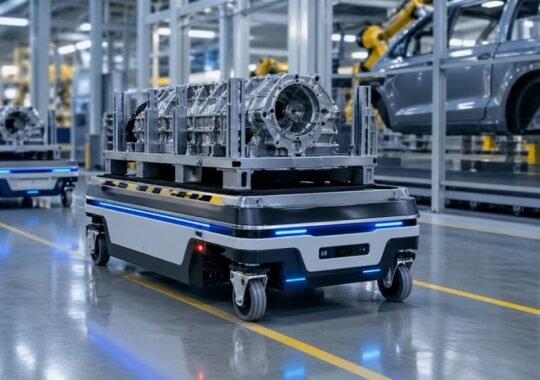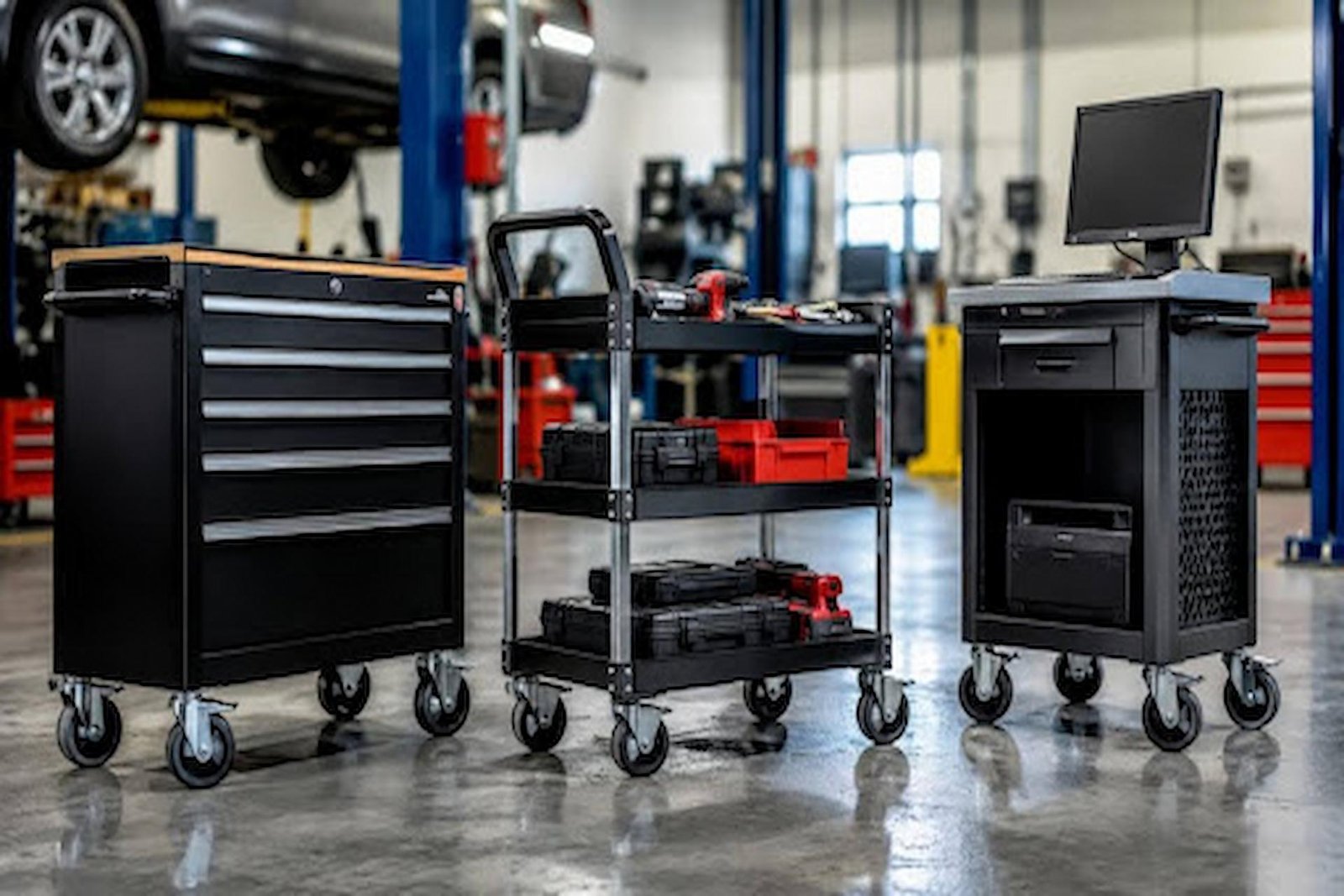
Automotive shops depend on mobile equipment every day. Tool carts, diagnostic stations, parts bins, battery chargers, tire service carts, and mobile workbenches all need to move safely across busy service floors. Casters, swivel casters, and steel casters can all play a role, but the right choice depends on the weight being carried, the floor surface, the movement pattern, the need for control, and the working conditions inside the service department.
Choosing the wrong rolling hardware may seem like a small issue at first. A cart may still move, and a workstation may still roll from one bay to another. However, poor wheel selection can create daily problems for technicians. Equipment may become hard to push, difficult to turn, noisy, unstable, or unsafe under load. Over time, these issues can lead to technician fatigue, floor damage, slower workflows, and more frequent replacement costs.
The goal is not always to choose the strongest or most expensive wheel assembly. The better approach is to match the rolling system to the actual job. Automotive environments are demanding, but each cart or workstation has a different purpose. A light diagnostic cart does not need the same wheel system as a loaded tool chest. A workbench used near a lift has different needs than a parts cart moved between the stockroom and service bays.
Start with the total loaded weight
The first factor to consider is weight. Many buyers check the empty weight of the cart or workstation but forget to include tools, parts, fluids, batteries, diagnostic devices, and accessories. In an automotive service setting, equipment often becomes heavier over time as technicians add more items.
A tool cart that starts with basic hand tools may later carry sockets, impact tools, chargers, specialty tools, and small replacement parts. A mobile workstation may hold a computer, printer, scanner, battery pack, storage drawers, and reference materials. If the wheel assembly is selected only for the original empty weight, it may struggle once the equipment is in daily use.
A practical method is to estimate the full working load and then leave a safety margin. The total weight should be divided across the number of wheel units, but weight is not always distributed evenly. A technician may load heavier tools on one side. A workstation may have a battery or computer tower placed toward one corner. When weight is uneven, one wheel may carry more than expected.
There is a trade-off here. Higher-capacity wheel units often cost more and may be larger. They can also add height to the cart. However, under-rated rolling hardware can wear out quickly, increase push force, and create instability. In most automotive shops, choosing a slightly higher capacity than the bare minimum is usually the safer long-term decision.
Match the wheel material to the floor
Automotive service departments usually have concrete floors, but not all concrete behaves the same. Some shops have smooth, sealed flooring. Others have cracks, expansion joints, drains, rough patches, paint flakes, oil spots, and small debris. The floor condition should guide the choice of wheel material.
Harder wheels tend to roll more easily under heavy loads, but they can be noisy and may transfer more vibration to the cart. Softer wheels may reduce noise and protect floors, but they can create more rolling resistance when carrying heavy weight. Polyurethane wheels are common in many shop settings because they offer a good balance of load support, floor protection, and smoother movement. Rubber-like wheels may work well for lighter carts where quiet movement matters, but they may not be the best option for heavy workstations.
Metal wheels may be useful in rough or high-load environments, but they can be loud and harsh on finished floors. They may also cause floor wear if used in the wrong area. This is why a heavy-duty choice is not always the best choice. The right option must support the load without making movement harder or damaging the shop surface.
Decision-makers should look at where the equipment will actually travel. A cart that stays inside a clean bay may need different wheels than one that crosses thresholds, outdoor apron areas, wash bays, or uneven shop floors.
Think about movement pattern
Not every mobile unit moves the same way. Some carts are pushed in short distances around one vehicle. Others travel across the shop several times a day. Some workstations need to turn tightly between lifts, while others need to track straight through long service lanes.
A cart that needs tight turning may benefit from more pivoting wheel units. This makes it easier to position the cart close to the work area. However, too much free movement can make a heavy cart harder to control in a straight line. The cart may drift or feel unstable when pushed quickly.
A setup with fixed wheel units on one side and pivoting units on the other can offer better straight-line control. This can be useful for longer travel paths or heavier equipment. The drawback is that turning may require more space. For small bays or crowded shop layouts, that can be inconvenient.
The best layout depends on the task. A compact diagnostic cart may need easy turning from every angle. A large mobile workbench may need steadier tracking. A parts cart moved from storage to service lanes may need a balance between steering and straight movement.
Consider technician effort and body strain
Rolling hardware should be selected with the technician’s body in mind. Automotive work already involves bending, reaching, lifting, and standing for long hours. If a tool cart requires extra effort to move, that strain adds up during the day.
The effort needed to start movement is especially important. In service departments, carts are often moved a few feet at a time. A technician may move a cart closer to a vehicle, stop, turn it, pull it back, and reposition it again. Each short movement requires starting force. If the wheel system resists movement, the technician may use awkward shoulder, wrist, or back positions to compensate.
Larger wheels can reduce effort because they roll more easily over small floor imperfections. Better bearings can also make movement smoother. However, bigger wheels can raise the cart height. This may make the work surface less comfortable or affect storage clearance under benches. Again, the best choice depends on the full working setup, not only rolling performance.
Do not overlook brakes and locks
Braking features matter in automotive spaces because equipment is often used near lifts, vehicles, fluid containers, and technicians working in tight positions. A mobile workstation that rolls away during use can cause frustration. A cart that shifts while a technician reaches for tools can create risk. A heavy bench that moves during a repair task can affect both safety and work quality.
Wheel brakes help hold equipment in place, but the style and placement matter. If the brake pedal is difficult to reach, too stiff, or hidden under the frame, technicians may avoid using it. A brake that only stops wheel rotation may not stop the wheel fork from turning. In some cases, a total-locking design may provide better stability because it limits both wheel movement and pivoting action.
There is a balance between security and convenience. More locking features can improve control, but they may slow down frequent repositioning. For a cart that moves constantly, easy foot operation is important. For a heavy workstation that must stay still during use, stronger locking may be worth the extra step.
Account for oil, chemicals, heat, and debris
Automotive service departments expose rolling equipment to tough conditions. Wheels may come into contact with oil, grease, brake cleaner, coolant, water, metal shavings, and cleaning products. Some equipment may be used near hot parts, welding areas, or wash bays.
Not every wheel material handles these conditions well. Some materials may swell, crack, soften, or lose grip when exposed to chemicals. Bearings can collect debris or corrode if not protected. Metal parts can rust if used in wet areas without proper finish or material selection.
For most tool carts and indoor workstations, the environment may be moderate. For specialty applications, such as wash areas, fabrication zones, or heavy repair spaces, the selection should be more careful. In these cases, sealed bearings, corrosion-resistant parts, or specific tread materials may be worth considering.
The challenge is cost. More protective features often increase the price. However, lower-cost units may fail sooner in harsh settings. Shops should decide based on exposure level, not assumptions. A cart used near a clean service desk does not need the same protection as one used near fluids and floor drains.
Check mounting style and fit
Even the right wheel material and load rating will not help if the mounting style does not fit the equipment. Automotive carts and workstations may use plate mounts, stem mounts, threaded stems, or other attachment types. The bolt pattern, plate size, stem diameter, and installation height must match the equipment.
Replacing wheel assemblies without checking these details can lead to poor fitment. A mismatched plate may require drilling, which can weaken the structure if done poorly. A stem that does not fit securely may cause wobble. A taller replacement may change the working height of the cart.
Before ordering replacements, measure the current setup carefully. Check the wheel diameter, tread width, mounting plate, bolt pattern, overall height, and brake clearance. If the cart manufacturer provides specifications, use them as a guide. For custom carts, accurate measurement is even more important.
Balance cost with long-term value
Price is always part of the decision, especially for service departments with many carts and workstations. A shop may need to replace wheel assemblies on dozens of units, so the difference in unit cost can become significant.
However, the cheapest option may not be the most economical. Poor-quality rolling hardware can create higher push effort, more noise, faster wear, and more downtime. It may also need replacement sooner. If technicians lose time fighting with equipment or maintenance teams must keep replacing worn parts, the lower upfront cost becomes less attractive.
At the same time, not every cart needs a premium solution. A light cart used occasionally may not require the same specification as a heavy tool chest used all day. The better approach is to segment equipment by use. High-use and high-load equipment deserves stronger consideration. Low-use equipment can often use simpler options if safety and fit are still adequate.
Consider the effect on workflow and service speed
Rolling hardware affects more than movement. It can shape how technicians use the service bay. When a cart moves easily, technicians are more likely to position tools close to the task. When a workstation is easy to relocate, advisors or technicians can place diagnostic equipment where it is most useful. When parts carts move smoothly, staff can restock bays with less effort.
Poor mobility can have the opposite effect. Technicians may leave carts farther away because moving them is inconvenient. They may carry tools by hand instead of rolling the cart closer. They may avoid using mobile workstations if positioning them is frustrating. These small workarounds can slow service and increase fatigue.
When choosing rolling hardware, managers should consider the effect on daily behavior. The right system should make the preferred workflow easier, not harder.
Common mistakes to avoid
One common mistake is replacing old wheels with the same type without asking why they failed. If the old units wore out quickly, the original choice may have been wrong. Another mistake is focusing only on load capacity while ignoring floor condition, braking, and turning needs.
Some shops also use one standard wheel assembly for every mobile unit. This may simplify purchasing, but it can create poor results. A diagnostic cart, tool chest, and heavy parts rack do not all move the same way or carry the same weight.
Another issue is ignoring technician feedback. The people who push, pull, turn, and lock the equipment every day can often identify practical problems quickly. Their input can reveal whether the cart is hard to start, unstable during turns, too loud, or difficult to hold in place.
Final thoughts
Choosing the right rolling hardware for automotive tool carts and mobile workstations requires more than matching size or buying the strongest available option. The decision should consider loaded weight, floor surface, wheel material, movement pattern, braking needs, mounting style, technician effort, and the conditions inside the shop.
Every choice involves trade-offs. Larger wheels may roll better but raise equipment height. Softer tread may reduce noise but increase rolling effort. Fixed wheel layouts may track well but turn less easily. Stronger materials may last longer but may cost more or be harder on floors.
The best decision is the one that supports the actual work being done. When automotive service departments choose rolling systems based on real shop conditions and technician needs, they can reduce strain, improve control, protect equipment, and support a smoother workday.