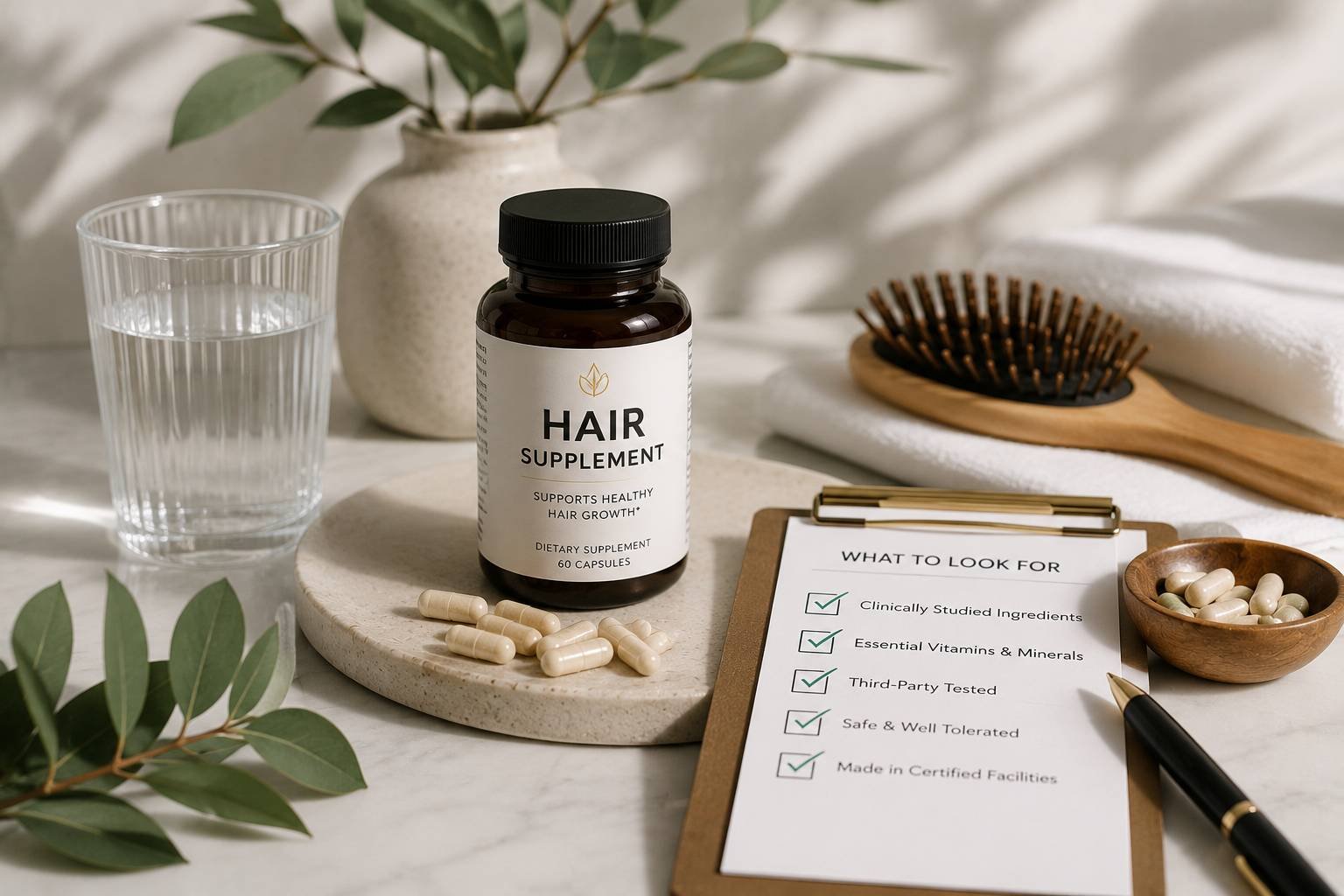
Key Takeaways
- Understand the role of nutrients in hair health.
- Evaluate supplement ingredients and their effectiveness.
- Verify product quality through certifications.
- Be cautious of misleading marketing claims.
- Consult healthcare professionals before starting new supplements.
Table of Contents
- Understanding Hair Health Nutrients
- Evaluating Supplement Ingredients
- Checking for Quality Certifications
- Being Wary of Marketing Claims
- Consulting Healthcare Professionals
- Monitoring Your Progress
- Conclusion
Maintaining healthy hair is a goal for many people, leading them to explore products for hair growth and supplements that can support stronger, fuller locks. The supplement market is filled with choices, each claiming to deliver impressive results. However, approaching this decision with care ensures your safety and improves the likelihood of seeing real benefits.
Efforts to improve hair health should begin with understanding the vital nutrients that support growth and the importance of a balanced approach. Beyond picking a bottle from the shelf, you will want to assess ingredients, research product quality, and avoid falling for misleading marketing. Making informed decisions allows you to protect your health while also investing in your hair’s appearance.
Those considering hair supplements should also look beyond marketing and prioritize their individual needs. Consulting healthcare professionals, monitoring changes, and being mindful of certifications will help you choose trustworthy solutions in this crowded marketplace.
Many authoritative health sources, such as the Mayo Clinic and the American Academy of Dermatology, also emphasize the importance of addressing the underlying causes of hair loss, underscoring the need for careful selection of hair health strategies. For more insights on the broader health benefits of nutrients essential for hair growth, visit the Healthline guide on hair growth vitamins.
Understanding Hair Health Nutrients
Hair requires a balance of essential nutrients to grow and remain strong. Genetics play a major role in how your hair looks and behaves, but your diet and overall wellness are also key influences. The most critical nutrients for supporting hair health include proteins, which are the building blocks of hair; biotin, which assists in keratin production; and iron, which supports healthy blood flow to hair follicles. Vitamins such as A, C, D, and E are crucial for both the scalp and hair structure, while minerals like zinc and selenium help repair and rebuild hair tissue.
Deficiencies in any of these areas can result in thinning or weak hair. However, more is not always better; taking excessive amounts of these nutrients could be harmful. Rely on a varied, balanced diet as your first step in promoting hair health and consider supplements only if you have specific deficiencies or recommendations from your doctor. For more details on hair health fundamentals, check the American Academy of Dermatology’s advice on eating for hair health.

Evaluating Supplement Ingredients
Every supplement label tells a story about what’s inside. It is important to review both active ingredients and any additives used as fillers, colorings, or preservatives. Choose products with natural, clearly listed ingredients and avoid those that list “proprietary blends” without specific amounts, as this obscures what you are taking. Transparent labeling helps you understand exactly what is entering your system and whether each ingredient truly supports hair health.
Look for common, research-backed components like biotin, vitamin E, or saw palmetto. Be wary of supplements loaded with unfamiliar chemicals or those promising a one-size-fits-all cure. Natural, minimal ingredient lists are generally considered a safer bet.
Checking for Quality Certifications
Unlike medications, supplements are not closely regulated by the FDA, so third-party testing becomes essential. Reliable supplements often carry seals from the United States Pharmacopeia (USP), which ensures a product’s purity and consistency, or from the National Sanitation Foundation (NSF), which evaluates good manufacturing standards. Products with these certifications are independently verified and meet higher safety and quality standards. Taking this step reduces your risk of consuming harmful contaminants or ineffective products.
Being Wary of Marketing Claims
The supplement market is filled with impressive claims, and many products promise faster, thicker, or dramatic hair growth in surprisingly short periods. While these advertisements may sound appealing, it is important to approach them with careful skepticism. Focus on supplements supported by published scientific studies, transparent ingredient information, and consistently credible customer feedback. Products that rely on exaggerated marketing or lack verifiable evidence deserve extra scrutiny. Healthy hair growth typically occurs gradually over time, often taking several months of consistent use. Real, sustainable results are usually subtle, steady, and supported by patience.
Consulting Healthcare Professionals
Whether you are experiencing gradual hair thinning, excessive shedding, noticeable breakage, or more significant hair loss, speaking with a doctor or dermatologist before starting new supplements is a smart and important decision. Medical professionals can evaluate potential underlying causes such as hormonal changes, nutritional deficiencies, stress, genetics, or medical conditions that may be affecting hair health. Through proper testing, diagnosis, and a review of your personal health history, they can recommend targeted solutions. This individualized approach supports safer choices, better results, and more effective long-term hair wellness.
Monitoring Your Progress
Beginning a hair growth supplement routine should be viewed as a long-term commitment rather than a single choice. Track your progress consistently by taking clear photos and recording observations about your hair’s texture, density, shedding patterns, and overall growth. These records make it easier to identify meaningful changes over time and determine whether the supplement is delivering expected results. If concerns arise, this information can help your healthcare provider make informed adjustments. Regular evaluation keeps you connected to your body’s responses and supports more personalized, effective hair wellness decisions.
Conclusion
With so many hair supplements available on the market, selecting the right one can quickly become overwhelming. To make an informed choice, focus on products that clearly disclose their ingredients, dosage amounts, sourcing practices, and manufacturing standards. Look for reputable certifications, third-party testing, and brands supported by healthcare professionals or scientific research. Reading customer reviews and consulting a medical provider can also provide valuable insight. Taking these careful steps helps protect your overall health while ensuring you choose a supplement that safely supports stronger, healthier, and more resilient hair growth over time.