

Key Takeaways
- Integrating mobile devices with digital signage enhances tenant engagement and streamlines communication.
- Smart building technologies provide a competitive edge by improving sustainability and reducing operational costs.
- Distributed Antenna Systems (DAS) ensure reliable wireless connectivity throughout commercial properties.
Effective communication is the backbone of successful commercial property management in today’s dynamic business environment. Rapid technological advancements are transforming how building owners, managers, and tenants connect, enabling them to meet expectations for instant information, streamlined operations, and seamless connectivity. To stay ahead, properties need robust digital tools and innovative strategies that enhance day-to-day interactions and long-term engagement, such as those offered by signalsolutions.com, a company specializing in cutting-edge building communication services in major markets.
With commercial properties competing for tenants and striving to improve satisfaction, adopting modern communication solutions is not just a luxury but a necessity. From digital signage integrated with mobile platforms to smart building management systems and advanced connectivity solutions, today’s commercial buildings are rapidly evolving into hyper-connected environments designed to boost efficiency, convenience, and tenant retention.
Enhancing Tenant Engagement with Mobile-Integrated Digital Signage
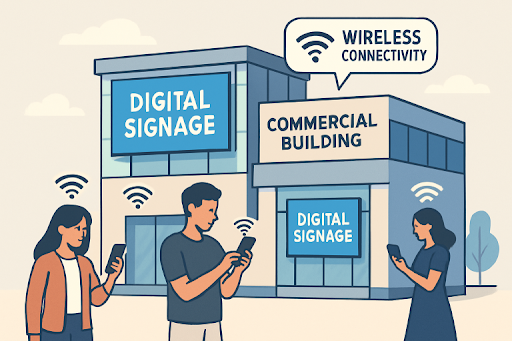
Traditional digital signage has long been a staple of commercial buildings, but it rarely meets the expectations of today’s digitally savvy tenants. Integrating digital signage with mobile devices introduces a new era of interactivity. Tenants can receive push notifications, respond to polls and surveys, and access real-time updates about amenities, events, or emergencies directly on their smartphones. This not only drives up engagement but also fosters a sense of community and participation in building activities.
Mobile-integrated signage systems also ensure that property managers can distribute critical information efficiently, whether it’s maintenance updates or special tenant offers. Such immediacy and convenience are powerful tools for increasing tenant satisfaction in an increasingly competitive real estate market. Furthermore, this integration streamlines message crafting and targeting, making communication more relevant and impactful.
Leveraging Smart Building Technologies for Competitive Advantage
Smart building technology adoption is rapidly becoming the industry standard. According to a recent industry report, over 75% of commercial real estate leaders consider smart buildings crucial for accelerating digital transformation efforts. Features such as intelligent energy management, sensor-integrated security, and automated HVAC systems can significantly reduce operational costs and support carbon-reduction goals, meeting both business and environmental targets.
Additionally, smart building technologies empower real estate stakeholders with powerful data analytics on occupancy patterns, energy consumption, and tenant preferences. This data-driven environment enables proactive decision-making and long-term strategic planning, supporting both operational efficiency and the tenant experience.
Ensuring Reliable Connectivity with Distributed Antenna Systems (DAS)
Reliable wireless coverage is a non-negotiable expectation for today’s tenants. Unfortunately, many commercial properties, especially those constructed with reinforced concrete, metal, or glass, struggle with weak cellular signals inside the building. Distributed Antenna Systems (DAS) offer a proven solution by receiving, amplifying, and redistributing cellular signals throughout the entire property. This ensures tenants can use their mobile devices seamlessly, regardless of which floor or building section they occupy.
The importance of uninterrupted connectivity cannot be overstated, particularly as mobile-first business tools and hybrid work models gain momentum. Building owners who invest in DAS not only improve tenant experience but can also bolster safety by ensuring all occupants can access emergency communications at all times.
Implementing Adaptive Reuse and Flexible Design
Commercial spaces are being reimagined to respond to evolving business and societal needs. Adaptive reuse—converting existing buildings for new purposes—preserves cultural value, reduces construction waste, and reflects a commitment to sustainability. In parallel, flexible design enables spaces to be reconfigured quickly in response to tenant growth, changing workflows, or shifts in market demand. This adaptability not only increases asset longevity but also appeals to a broad spectrum of potential tenants, from startups to established enterprises.
Flexible design is supported by modular interiors, movable walls, and shared amenities that can be scaled as needs change. Building managers who prioritize these design philosophies are well positioned to deliver value across diverse business cycles and industries.
Integrating Augmented Reality (AR) and Virtual Reality (VR)
AR and VR are transforming how tenants interact with their physical environments. These immersive technologies enable landlords and property managers to offer virtual tours for prospective tenants, interactive directories, and on-demand support or training sessions. For specialty spaces, such as laboratories or technical offices, AR overlays can assist in real-time maintenance walkthroughs by displaying hidden infrastructure or step-by-step repair instructions on a technician’s tablet or wearable device.
The use of AR and VR not only elevates the tenant experience but also streamlines building management by reducing the time and resources required for onboarding or routine maintenance.
Utilizing Cloud-Based Connected CMMS
Modern property portfolios, especially those spanning multiple sites, require sophisticated solutions for coordinating maintenance and operations. Cloud-based Computerized Maintenance Management Systems (CMMS) have emerged as a central platform that consolidates property maintenance schedules, vendor management, real-time asset tracking, and tenant communications into one cohesive system. By leveraging connected CMMS, facility managers access actionable insights and predictive analytics, ensuring minimal downtime and improved service for all building occupants.
Cloud-based CMMS tools also promote transparency and faster response times, which are vital for maintaining tenant confidence and supporting continuous improvement in building management.
Conclusion
Modern commercial building communication requires a blend of digital agility, strategic investment, and an eye toward the future. By adopting mobile-integrated digital signage, leveraging smart building technologies, implementing DAS, and embracing flexible design, property stakeholders can position their buildings as leaders in tenant experience and operational efficiency. As these technologies continue to evolve, so will expectations—forging a new competitive standard in commercial real estate for years to come.