
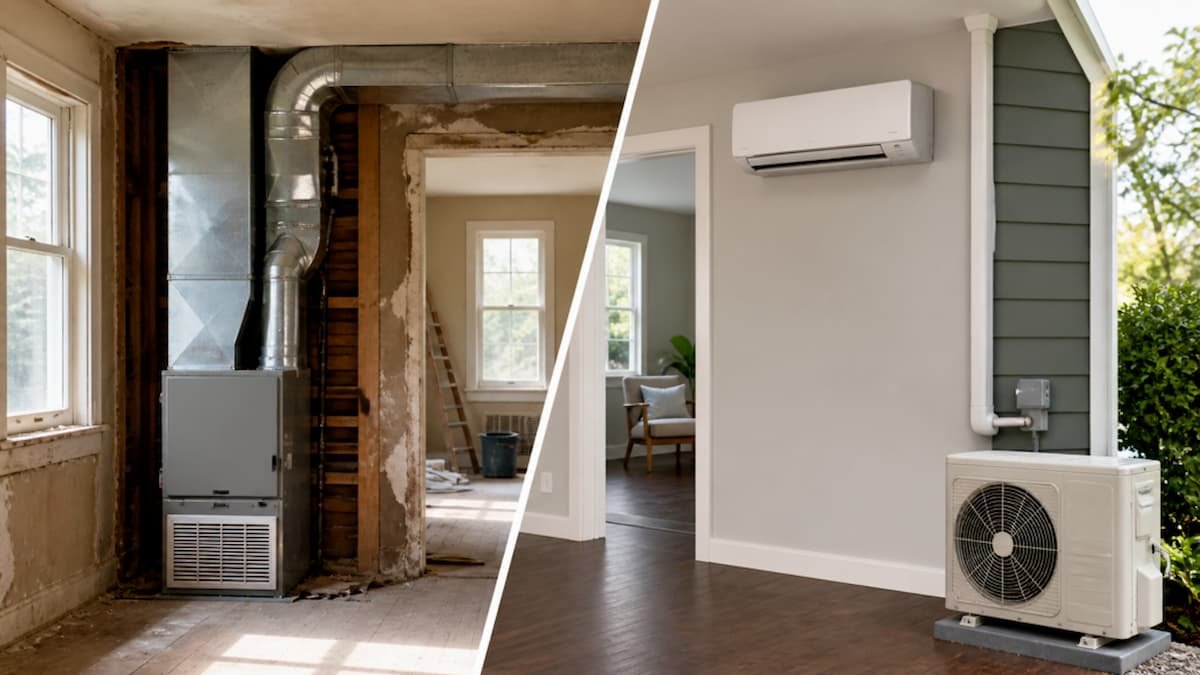
Renovating an older home is about more than restoring its visual charm—it involves making practical upgrades that improve comfort, efficiency, and long-term value. One of the most critical decisions in this process is selecting the right cooling system. Many homeowners find themselves deciding between a traditional air conditioner and a ductless mini split, especially when dealing with homes that were not originally designed for modern HVAC systems.
This decision is rarely simple. Older homes come with structural limitations, design considerations, and budget constraints that can significantly influence the outcome. Understanding these factors—and the trade-offs involved—can help homeowners make a more informed and balanced choice.
Understanding the Unique Challenges of Older Homes
Older properties often lack the infrastructure required for modern cooling systems. Features such as thick plaster walls, limited attic space, and the absence of ductwork can complicate installation. In many cases, adding new systems requires structural modifications that may interfere with the home’s original design.
Additionally, these homes may have outdated electrical systems that need upgrading before supporting a modern AC unit. This adds another layer of cost and complexity to the renovation process. As a result, the cooling system must be chosen not just for performance, but for compatibility with the home’s existing structure.
Installation Considerations: Complexity vs Flexibility
One of the most significant differences between system types lies in installation. A traditional air conditioning unit typically relies on ductwork to distribute cool air throughout the home. In houses without existing ducts, installation can become invasive. Walls may need to be opened, ceilings lowered, and living spaces disrupted.
In contrast, a mini split AC offers a more flexible installation process. It requires only small openings in the wall to connect indoor and outdoor units. This makes it especially suitable for older homes where preserving the original structure is a priority.
However, this convenience comes with trade-offs. While installation is simpler, achieving full-home coverage may require multiple indoor units. This can increase overall costs and introduce additional planning considerations.
Coverage and Comfort: Whole-Home vs Zoned Cooling
A central air conditioning unit is designed to cool the entire home evenly. This can be beneficial for larger properties or open floor plans where consistent temperature control is important.
On the other hand, a mini-split air conditioner operates on a zoned system. Each indoor unit controls the temperature of a specific room or area. This allows for greater customization and can improve comfort for households with varying preferences.
The challenge lies in balancing coverage with efficiency. Zoned systems may leave some areas less consistently cooled unless multiple units are installed, while central systems may cool unused spaces unnecessarily.
Energy Efficiency and Operational Costs
Energy efficiency is a major concern in older homes, which often have poor insulation and air leakage issues. Cooling systems must work harder to maintain indoor comfort, leading to higher energy consumption.
A mini split AC can help address this issue through targeted cooling. By focusing only on occupied areas, it reduces wasted energy and can lower utility bills. This is particularly useful in homes where certain rooms are rarely used.
In contrast, a central air conditioning unit cools the entire house, which may result in higher energy usage if not carefully managed. However, with proper insulation and smart thermostats, central systems can still operate efficiently.
Ultimately, the home’s overall energy performance—including insulation and sealing—plays a crucial role in determining system efficiency.
Aesthetic Impact and Design Preservation
Preserving the character of an older home is often a key goal during renovation. Installing ductwork can interfere with original architectural features such as moldings, ceilings, and wall finishes.
A mini-split air conditioner offers a less invasive alternative, but it introduces visible indoor units that must be mounted on walls or ceilings. While modern designs are more discreet, they still require careful placement to maintain visual harmony.
Homeowners must decide whether they prefer hidden infrastructure with potential structural disruption or visible components with minimal alteration to the building.
Cost Considerations: Upfront vs Long-Term Value
Cost is a major factor in any renovation decision. Installing a central AC unit in a home without existing ducts can be expensive due to labor, materials, and potential structural changes. However, it may increase the home’s resale value, particularly in markets where central cooling is expected.
A mini split AC often has a lower initial installation cost, especially for smaller or phased projects. However, in larger homes requiring multiple units, the total cost can approach or even exceed that of a central system.
Homeowners should also consider long-term operating costs, maintenance, and potential energy savings when evaluating overall value.
Maintenance and Longevity
Maintenance requirements differ between the two systems. A central air conditioning unit typically has a single system to service, which can simplify maintenance routines. However, issues within the ductwork can be harder to detect and resolve.
A mini-split air conditioner requires maintenance for each indoor unit, including regular filter cleaning and system checks. While this may involve more frequent attention, it also allows for easier identification of issues in specific zones.
Choosing between these options depends on the homeowner’s willingness to manage ongoing maintenance tasks.
Impact on Property Value and Market Appeal
Cooling systems play an important role in a property’s marketability. In many real estate markets, central air conditioning units are considered a standard feature, and their absence may affect buyer perception.
However, in certain areas—especially those with older or historic homes—ductless solutions are widely accepted and even preferred for their flexibility and efficiency. A well-installed mini split AC can enhance comfort and appeal to buyers who value energy efficiency and modern upgrades.
Understanding local market expectations is essential when making this decision, particularly for homeowners planning to sell in the future.
Environmental Considerations
Sustainability is becoming an increasingly important factor in home renovations. Energy-efficient cooling systems can reduce a home’s environmental impact, but the overall effect depends on usage patterns and system design.
A mini-split air conditioner’s zoned approach can lower energy consumption, especially in homes with variable occupancy. However, multiple units may increase manufacturing and disposal impacts over time.
Central systems, while potentially less efficient in operation, may have a simpler lifecycle footprint. Homeowners should consider both operational efficiency and long-term environmental impact when making their choice.
Climate and Usage Patterns
Climate conditions play a significant role in determining the most suitable cooling system. In regions with extreme heat, a central air conditioning unit may provide more consistent performance across the entire home.
In milder climates, the flexibility of a mini split AC may be sufficient and more cost-effective. Usage patterns also matter—homes with irregular occupancy may benefit more from zoned cooling, while consistently occupied homes may favor centralized systems.
Balancing Short-Term Convenience and Long-Term Planning
Renovation decisions often involve balancing immediate needs with future goals. A mini split AC allows for phased installation, enabling homeowners to prioritize specific areas and spread costs over time.
In contrast, installing a central air conditioning unit is typically a comprehensive project that requires a larger upfront investment but delivers immediate whole-home comfort.
The right choice depends on budget, renovation timeline, and long-term plans for the property.
Conclusion: Choosing the Right Solution for Your Home
Selecting the right cooling system for an older home is a complex decision that involves multiple factors, including structure, cost, efficiency, and design. There is no one-size-fits-all solution.
A central air conditioning unit may offer consistent, whole-home comfort and strong resale appeal, but it often comes with higher installation complexity. A mini-split air conditioner provides flexibility, energy efficiency, and easier installation, but may require careful planning to achieve full coverage and maintain aesthetics.
Ultimately, the best choice is the one that aligns with the home’s unique characteristics and the homeowner’s renovation goals. By carefully weighing the trade-offs and considering both immediate and long-term impacts, homeowners can make a decision that enhances comfort, preserves value, and supports the overall success of their renovation project.