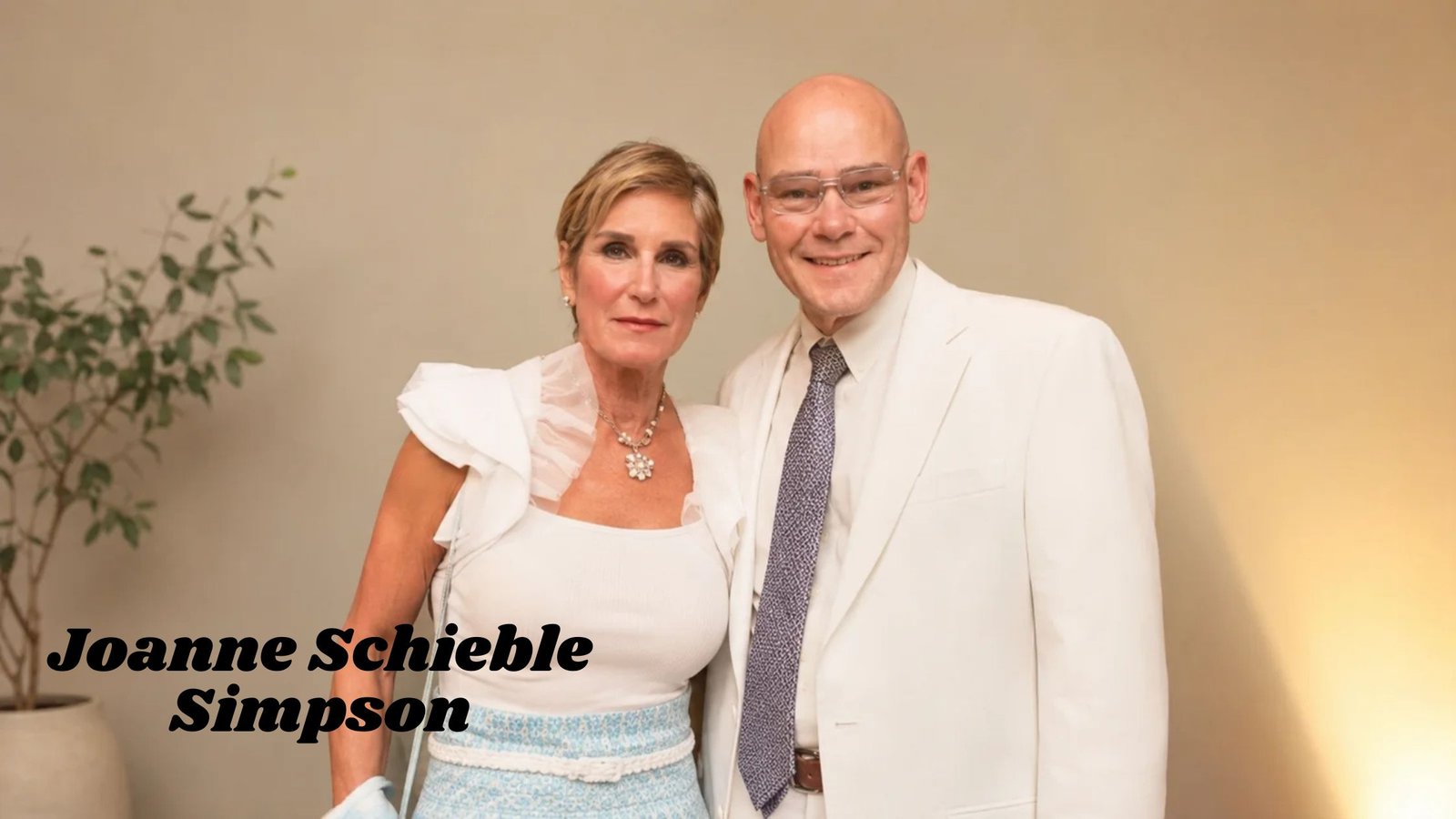
Long before the world heard the name Joanne Schieble Simpson, there was a young girl attempting to follow her heart and living under tight family laws. Many people know the story of Steve Jobs in 2026. But few actually understand the emotional trip Joanne Schieble Simpson had to take, and the tough decision she had to make.
This is not a narrative about fame or fortune. It’s about love and fear and family pressure and quiet power. In the 1950s, Joanne Schieble Simpson made a decision that would change the future of modern technology. That one choice transformed not only her life. But the globe.
This essay contains early life, education, love story and the agonising decision that made Steve Jobs adopted by Joanne Schieble Simpson. So let’s get going.
Who Was Joanne Schieble Simpson?
Joanne Schieble Simpson was an American speech-language pathologist best known as the biological mother of Steve Jobs. However, her life story extends far beyond her connection to one of the world’s most influential entrepreneurs.
Born in 1932 in Green Bay, Wisconsin, Joanne grew up in a traditional Catholic household that placed great importance on education, family values, and personal responsibility. Throughout her life, she remained a private individual who preferred dignity and simplicity over public attention.
Although Steve Jobs became a global icon, Joanne lived quietly, dedicating herself to her career, family, and personal values. Her life reflects courage, sacrifice, and resilience during a time when societal expectations often limited women’s choices.
Early Life and Family Background
Joanne was raised in a middle-class family with German-Swiss heritage. Her parents, Arthur and Irene Schieble, followed strict Catholic traditions and believed strongly in discipline and moral values.
Growing up during the 1940s and early 1950s meant living in a society where expectations for young women were very different from today. Family reputation often carried tremendous weight, and personal choices were closely scrutinised.
Despite these limitations, Joanne was intelligent, ambitious, and eager to pursue higher education. She believed that learning could create opportunities and provide a pathway to a meaningful life.
These early experiences helped shape the determination and strength she would later rely on during some of the most difficult moments of her life.
Education and Career
After graduating from high school, Joanne enrolled at the University of Wisconsin–Madison, an achievement that was less common for women during that era.
While studying, she developed an interest in communication sciences and eventually pursued a career as a speech-language pathologist. Her work involved helping children and adults overcome communication challenges, allowing them to speak and express themselves more effectively.
The profession suited her patient, caring, and compassionate nature. Education remained one of the most important values in her life, influencing many of the decisions she would later make as a parent.
A Life-Changing Relationship
While attending university, Joanne met Abdulfattah Jandali, a graduate student from Syria pursuing advanced studies in political science.
Despite coming from different cultural and religious backgrounds, the two developed a strong relationship. However, their romance faced significant opposition.
Joanne’s family, particularly her father, strongly disapproved of the relationship due to religious and cultural differences. During the 1950s, interracial and interfaith relationships often faced intense social pressure and family resistance.
Caught between love and family expectations, Joanne found herself in an increasingly difficult situation.
The Difficult Decision That Changed History
Not long after, Joanne became pregnant.
At the time, having a child outside of marriage was considered highly controversial. Social stigma was widespread, and unmarried mothers often faced judgement and rejection.
Without support from her family, Joanne travelled to San Francisco, where she stayed in a Catholic residence for unwed mothers. There, she prepared for the birth of her child while facing an uncertain future.
Although the circumstances were emotionally painful, Joanne remained focused on one goal: ensuring her baby would have every possible opportunity in life.
Believing she could not provide the future she wanted for her child, she made the heartbreaking decision to place him for adoption.
The Adoption of Steve Jobs
On February 24, 1955, Joanne gave birth to a son who would later become known around the world as Steve Jobs.
Before agreeing to an adoption, she established one important condition: the adoptive parents had to value education. She wanted her child to grow up in a household where learning and personal development were priorities.
Initially, a prospective adoptive family withdrew from the arrangement, creating uncertainty. Eventually, Paul Jobs and Clara Jobs stepped forward.
Although neither had completed a university education, they promised Joanne that they would ensure the child attended college. After receiving that commitment, she agreed to proceed with the adoption.
The decision would ultimately influence the future of technology, business, and innovation in ways nobody could have imagined.
Life After the Adoption
Following the adoption, Joanne returned to Wisconsin and focused on completing her education and establishing her career.
She later married Abdulfattah Jandali, the man she had fallen in love with during university. However, their marriage eventually ended in divorce.
Rather than dwelling on the past, Joanne dedicated herself to building a stable and meaningful life. She continued working as a speech-language pathologist and remained committed to helping others through her profession.
Her ability to move forward with grace and resilience became one of the defining characteristics of her life.
Marriage to George Simpson
After her divorce, Joanne found lasting companionship with George Simpson.
Their marriage brought stability and happiness, allowing Joanne to create the family environment she had long desired. Together, they shared a commitment to education, personal growth, and family values.
The couple had two children:
- Mona Simpson
- John Simpson
This period represented one of the most peaceful and fulfilling chapters of Joanne’s life.
Mona Simpson and Family Legacy
Mona Simpson would eventually become a respected novelist and university professor.
Known for works such as Anywhere But Here and A Regular Guy, she built a successful literary career that reflected the intellectual values encouraged by her mother.
For many years, Mona was unaware that she had an older brother. When she and Steve Jobs eventually met as adults, they developed a close sibling relationship that lasted for years.
Their connection highlighted the lasting influence of family, even when separated by circumstances beyond their control.
Wealth and Lifestyle
Unlike her famous son, Joanne never accumulated extraordinary wealth.
Her career provided financial stability, but she lived a relatively modest lifestyle focused on family, education, and professional fulfilment.
There is no public evidence suggesting that she sought financial benefits from Steve Jobs’ success or from his connection to Apple Inc..
Instead, she remained committed to living a quiet and meaningful life away from public attention.
Final Years and Passing
Joanne Schieble Simpson passed away on January 19, 2018, at the age of 85.
By then, Steve Jobs had already transformed the technology industry and become one of the most influential business leaders in history.
Despite the public fascination with her story, Joanne never sought media attention. She continued living privately, allowing her actions and values to speak for themselves.
Today, she is remembered not only as Steve Jobs’ biological mother but also as a woman who faced difficult choices with courage, compassion, and dignity.
Conclusion
Joanne Schieble Simpson’s life is a powerful reminder that history is often shaped by deeply personal decisions.
Her choice to place her son for adoption was made during an era of intense social pressure and limited options for unmarried mothers. While the decision was undoubtedly painful, it reflected her desire to give her child the best possible future.
Beyond her connection to Steve Jobs, Joanne’s story is one of education, resilience, sacrifice, and quiet strength. She lived with integrity, dedicated herself to helping others, and remained true to her values throughout her life.
Her legacy is not defined solely by the success of her famous son but also by the courage she displayed in navigating life’s most difficult challenges.
Frequently Asked Questions
How old was Joanne Schieble Simpson when she died?
She passed away in 2018 at the age of 85.
What was Joanne Schieble Simpson’s profession?
She worked as a speech-language pathologist, helping individuals improve their communication abilities.
Who was Steve Jobs’ biological father?
Steve Jobs’ biological father was Abdulfattah Jandali, a Syrian-born political science student.
How many children did Joanne Schieble Simpson have?
She had three children: Steve Jobs, Mona Simpson, and John Simpson.
Was Joanne Schieble Simpson wealthy?
No. She lived a modest and private life focused on family and professional service rather than wealth or public recognition.
Why is Joanne Schieble Simpson remembered today?
She is remembered as the biological mother of Steve Jobs and for the courage she showed while navigating difficult personal circumstances during a challenging period in American society.