
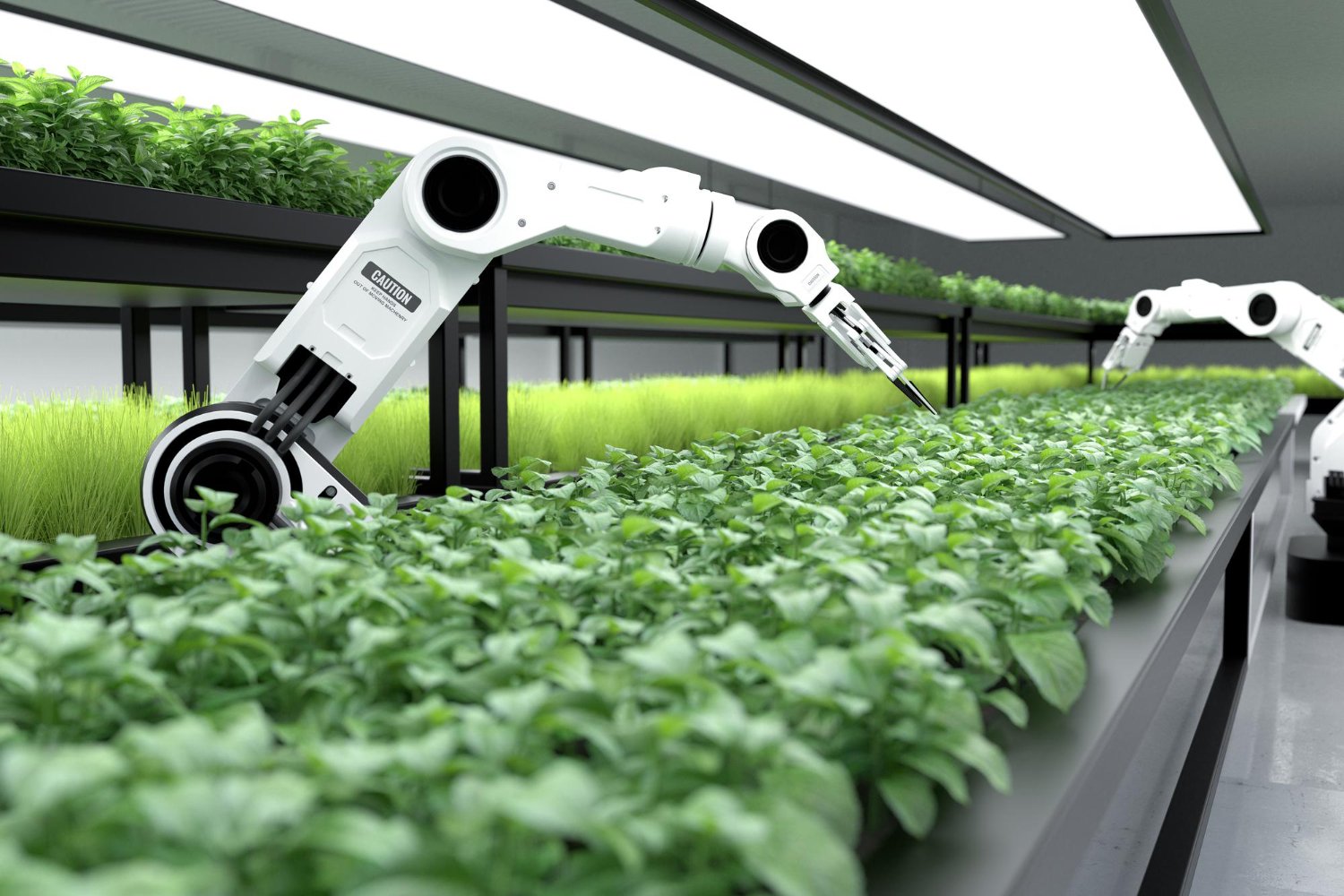
The economics of big operations have evolved as fast as technology itself. The only sustainable profit drivers left are data and insight generated from a farm’s operations. Implementing the right mix of technology, with return on investment in mind at single machine, agronomy, and business insight levels will determine which farms sink or swim.
The Economics Stopped Being Forgiving
Farm machinery operating costs, including fuel, lubrication, and repairs, rose almost 27% in 2022, on top of a 13% increase in 2021 (USDA ERS). When costs rise sharply like that, the lift is often too abrupt to be passed along to the customer, and so lands directly on the producer’s bottom line. That is a structural shift in the cost base, not a blip, and as we all know it’s exceptionally difficult to recover margin after prices have been raised, even when costs come back down. It’s just the newest strain in an age-old problem in the agriculture business: inputs go up in lockstep with outputs and nobody ever seems to be able to get ahead.
Scale Changes The ROI Calculation Entirely
A 5% reduction in fertilizer overlap sounds like a rounding error on paper. If you’re farming 200 hectares, it probably is. If you’re north of 1,000, that same percentage is a six-figure saving over a season, every season, compounding as input prices rise further. This is the part smaller operations don’t fully grasp and larger ones can’t afford to ignore: precision agriculture doesn’t scale linearly with farm size, it scales exponentially in dollar terms.
Which is why the “will this pay off” question looks different depending on your hectares. On a small farm, a VRT system might take years to justify against the purchase price. On a large one, the input savings alone can pay for the hardware inside a single season. Economies of scale aren’t just a nice side effect here – they’re the entire reason large growers should be moving faster than everyone else, not slower.
The Base Layer Is Already Cost-Neutral
GNSS guidance technology, autosteer, section control, and automatic shutoff on overlaps – if you are not already using these tools, it’s late enough in the game that it’s probably not about risk. It’s likely because you have not crunched the numbers with a sufficiently sharp pencil. The rate of adoption for this base set of precise technologies has been remarkable not just because of the per-acre positive ROI benefit. But because that return comes from doing exactly what you already do … only doing it precisely, with no waste. No changes to when or what you plant or spray or spread. Just where.
How else to explain why, ten years after the first commercially installed light-bar on a tractor, over half of you reading this are still opening yourself up to that calloused joke about driving straight?
Yield Data Is Becoming The Most Valuable Asset On The Balance Sheet
Once you’re running yield monitoring and mapping alongside variable rate input application, something changes. You stop making input decisions off intuition or last year’s rough average and start making them off zone-level data that gets more accurate every season. A three- or four-year yield map isn’t just a farming record anymore. It’s a dataset that informs input planning, weather risk modeling, and increasingly, land valuation itself.
This is the part that gets underplayed in most conversations about agtech. The equipment matters, but the equipment is replaceable. The multi-year dataset it generates is not. A grower who started mapping yield variability five years ago has a resource a new entrant – or a slower-moving neighbor – simply cannot buy or replicate quickly. Every season you delay is a season of data you don’t get back. That’s the real cost of waiting, and it’s larger than most growers assume when they’re weighing whether this year is “the right time” to start.
A Phased Roadmap Is The Financially Sound Path, Not A Compromise
None of this needs to happen in one capital outlay, and frankly it shouldn’t. The sensible sequence runs guidance and section control first, then telematics, then variable rate application, then the analytics layer that ties yield data, weather data, and cost data together. Each phase pays for a portion of itself before the next one begins, which keeps the balance sheet honest.
The one thing that can’t be phased is the underlying data architecture. If you buy guidance systems now and telematics-ready hardware later from incompatible platforms, you’ll spend years untangling data silos that a bit of upfront planning would have avoided. This is exactly why the equipment source matters as much as the equipment itself. Retrofitting an existing fleet with telematics-ready hardware is usually the right starting point for growers who already have solid machinery but no data layer, and sourcing that upgrade path through an established supplier of farm machinery western australia growers already trust for servicing and support means the hardware and the data infrastructure behind it are handled by the same relationship, rather than juggled across multiple vendors who each disclaim responsibility when something doesn’t sync.
Telematics Solves A Labor Problem, Not Just An Efficiency Problem
Equipment telematics systems send fuel burn, engine hours, location, and machine health data to one control room. It gets sold as an efficiency play. And it is. But for big farms or contractors with a real shortage of skilled machine operators, telematics coupled with farm management software is something more: a way of ensuring that fewer people can operate more machines.
One operator keeping an eye on a fleet from afar, noticing a machine idling too long or drifting off course, and making an adjustment from one control room is a direct response to a labor gap that shows no sign of tightening. This one is worth pondering for a minute. Efficiency tech and labor tech are usually separate conversations. On a large farm, they are the same check.
Interoperability, Not The Technology Itself, Is The Real Barrier
Many farmers face issues with the new technologies they adopt not being able to communicate with each other. For example, a great piece of equipment, a great sensor network, and a great software platform are unable to connect. Data interoperability is the downfall of agtech adoption. A tractor from one manufacturer, soil sensors from another, and farm management software from a third can all be excellent individually and still leave you manually exporting spreadsheets to reconcile.
The solution is to prioritize purchases from manufacturers and platforms that commit to open API standards, rather than closed ecosystems where your data is locked into one brand’s software for life. Before you buy, shoot an email to the sales rep asking point-blank whether this equipment’s data can be pulled into third-party farm management software with no “workaround.” If you get a vague response, that’s a red flag, not a highly technical footnote.
Benchmarking Turns A Hunch Into A Number
One of the more overlooked features of all this once the system is up and going is you can benchmark. People don’t remember how, even once you had all the data pulled together, running these sorts of comparisons used to require a hired gun and as much time as it took for the grower to make coffee and relax.
Between agronomic tools now available, you can compare your yield/acre against regional averages instead of just your yield/acre against your historical average. The first lets you know if you are getting better. The second only lets you know if you are not. Maybe you aren’t keeping up even when you are keeping up; maybe you are keeping up but everyone else is getting worse.
Predictive Maintenance Protects The Windows That Actually Matter
Machine data goes beyond monitoring and mapping. It plays a massively important role in predictive maintenance as well. This kind of maintenance uses factory data, typically about things like engine temperatures or hydraulic pressure, to spot not problems but likeliest sources of future problems. Clutches show ten hours more use than average on Thursdays, for instance. Or cooling fans at 2/3 power tend to give out around 150 operating hours shy of the manufacturer’s warranty limit.
These are the kinds of connections human experience can tease out of the data.
Connectivity Is The Hidden Line Item
None of the above is possible without a good data connection, and in remote rural areas, this is still an issue, and not just a problem. A cellular signal amplifier, satellite alternative links, edge computing that can temporarily store data that is then forwarded when the connection is reestablished – are all real costs in addition to the machinery. If farmers underestimate this, they’ll purchase a bunch of shiny new sensors and telemetry gear, only to discover that while they work just fine when they can make a connection, none of the data gets through because they failed to allow for the black-spots between paddocks. A full year of data that doesn’t sync generally goes a long way to write down the first year’s return on investment.
The Real Risk Isn’t The Tech, It’s The Delay
The real question is, what will you do with the savings these technologies will bring – because they’ll bring them. Will you allocate them toward the land base it will take to double the farm size in 5 years? Will you earmark them to secure the necessary labor force? Maybe they’ll be needed to increase wages and benefits to attract and keep that labor? Or, will you redirect them to bring even more precision into your operation? Too much data is better than not enough.