Menu design may well bring customers in the door, but it’s the durability of the menu itself that determines how much money that influx will actually make you or cost you. It’s worth spending more on the printing to maximize your returns (not to mention save on lost labor costs training new employees to navigate menu substitutions on the fly).
The real cost is per use, not per print
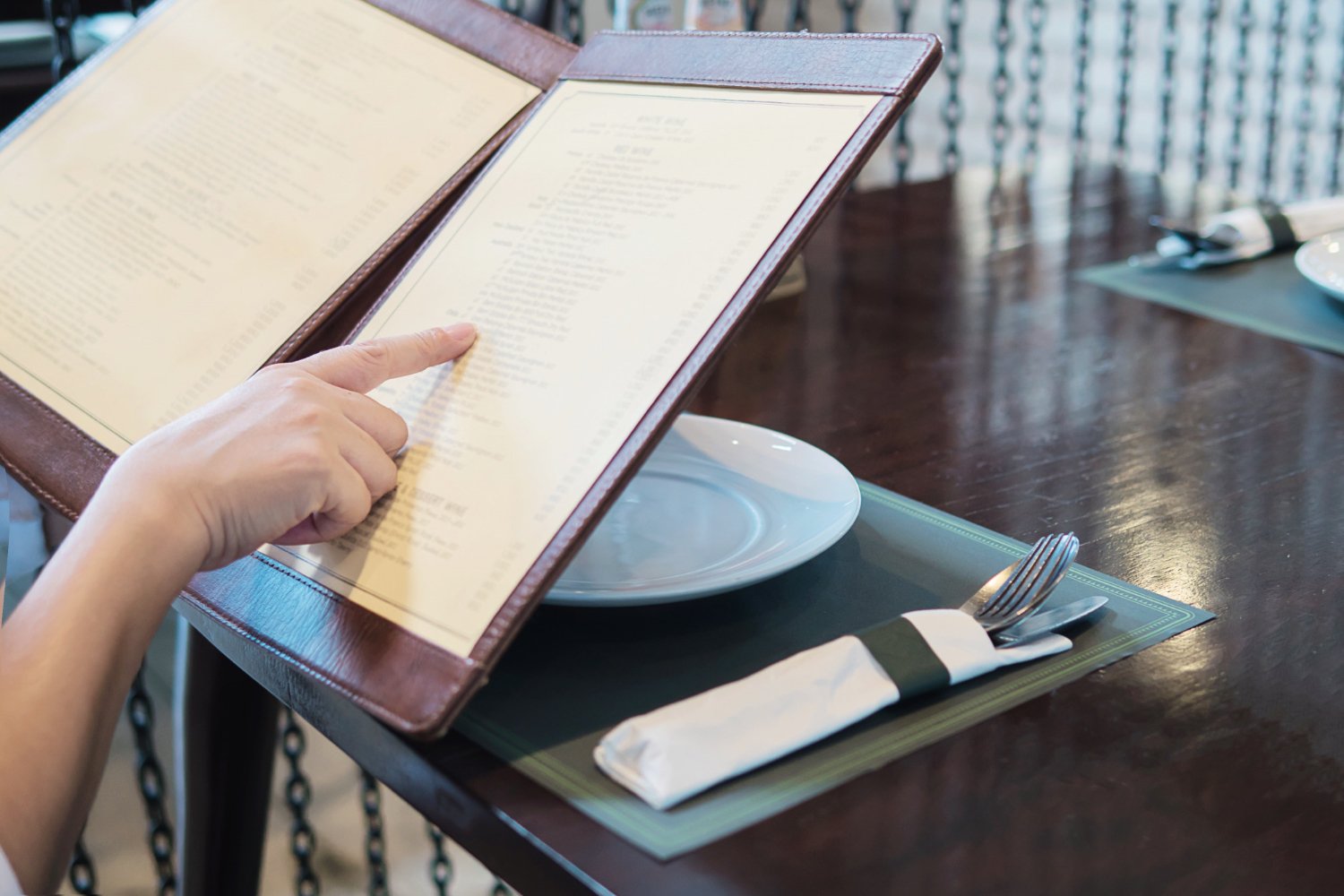
A 50 cent menu that’s replaced every ten days isn’t a cheap menu. Do the year-long math and you’ll discover that floppy card stock is more expensive than a sturdy substrate that retains its good looks over a full season. The real question isn’t “what does this menu cost to print.” It’s “how many touches will this menu survive before it looks unprofessional.” One well-used, handheld diner-style menu may be touched by 40-60 pairs of hands a day. Do the math for a month. The upfront price is the wrong metric to apply.
Menu costs vary wildly based on a couple of basic design decisions. For all that variability, though, the choice is almost never between expensive menus and inexpensive menus. The real choice is between expensive menus and cheap menus. Because cheap menus are the most expensive menus you can have.
And the germiest. Remember that menus are one of the highest-contact surfaces in your client’s dining room. A SafeHome.org study found that your average paper menu has 185,000 bacteria per square centimeter. That often-cited and truly terrifying statistic probably gets repeated in publications like Business Insider and Reader’s Digest for one simple reason: it’s terrifying. As ugly as it is, though, it’s the truth. You can’t wipe down paper. You can wipe down most plastic-based menu covers.
Synthetic paper is the material most restaurants should default to
Synthetic paper, largely composed of polypropylene or materials such as Tyvek, is the most all-purpose solution for high-touch menus. It’s waterproof and greaseproof and when somebody wads up a piece to keep a restless child busy, it doesn’t tear. Ready to run through a standard digital or offset press, your printer probably already has all the necessary equipment. So design changes are minimal.
The true benefits become apparent after a month of use. Give it a wipe and it’s new again. There’s no fading, edge fray, or absorbed sauce stains coming back to haunt you. For a full-service restaurant where you’ve got a 4-page menu and everybody’s got to have a cocktail list, this is what stands up to what your dining room does to paper.
Lamination is a compromise, not a fix
Hot and cold lamination are often sold as the budget-friendly way to add longevity, and they sort of do. A laminated 14pt card stock menu is less likely to be immediately ruined by a spill than an uncoated paper menu. But lamination creates a seam at the edge of the media and paper is, intrinsically, a sponge. That means if the seam is exposed to moisture and/or oil, which it will be in any environment that has a kitchen, you start to delaminate. Shortly after you delaminate, you start to bubble. Shortly after you start to bubble, you start to peel.
And now you’ve got a menu with a grimy edge, loose sealant, and a flappy corner that looks like total garbage and is impossible to clean. It’s hit its failure point in months rather than years. Lamination also tends to crack over repeated rough-handling, and essentially peel itself off the surface. It’ll hang together better than nothing in a low-use situation like a cover, but not that much better, and once one corner starts to go, you’re done. Encapsulated lamination insulates the edges to resist this better, but if any part of the media edge is exposed, the paper will still wick in moisture and oil.
Vinyl and plastic inserts for outdoor and quick-service settings
Fast dining formats encounter a separate kind of abuse – condensation, rain, and rough handling from quick table turnover and carrying baskets rather than from the menu holder itself. The rigid plastic and vinyl options are great for these because they can be tough, low cost, and designed for single page rather than a booklet style. A wipe-down and they can look brand new again, and they’re also easily wiped dry if they get rained on. They don’t easily warp from moisture, so they hold up well in every type of restaurant situation.
Design still matters as much as the substrate
Durability solves half the problem. A waterproof synthetic menu with a cluttered, cramped layout still reads as unprofessional, even if it wipes clean. Material choice keeps the menu physically intact, but the design has to hold up too – clear hierarchy, legible pricing, and enough white space that guests aren’t squinting at eight items crammed into one column. This is where working with a team like Menu Zaddy makes the difference between a menu that just survives and one that actually sells food while it does.
Matching material to your actual environment
Instead of a cookie-cutter answer, consider 3 variables: How greasy is the kitchen? How often is the menu changed? How often is the menu itself redesigned? Greasy kitchen and high handling, synthetic paper, done. Seasonal menu that gets redesigned every 8 weeks or so likely doesn’t justify premium substrate at all, as you’ll be reprinting before enough time passes for wear and tear to even be the issue. Outdoor and quick-service, you’re best off going with vinyl or plastic and likely just single pages. Buy the material your menus need, and your reprint budget kinda handles itself.