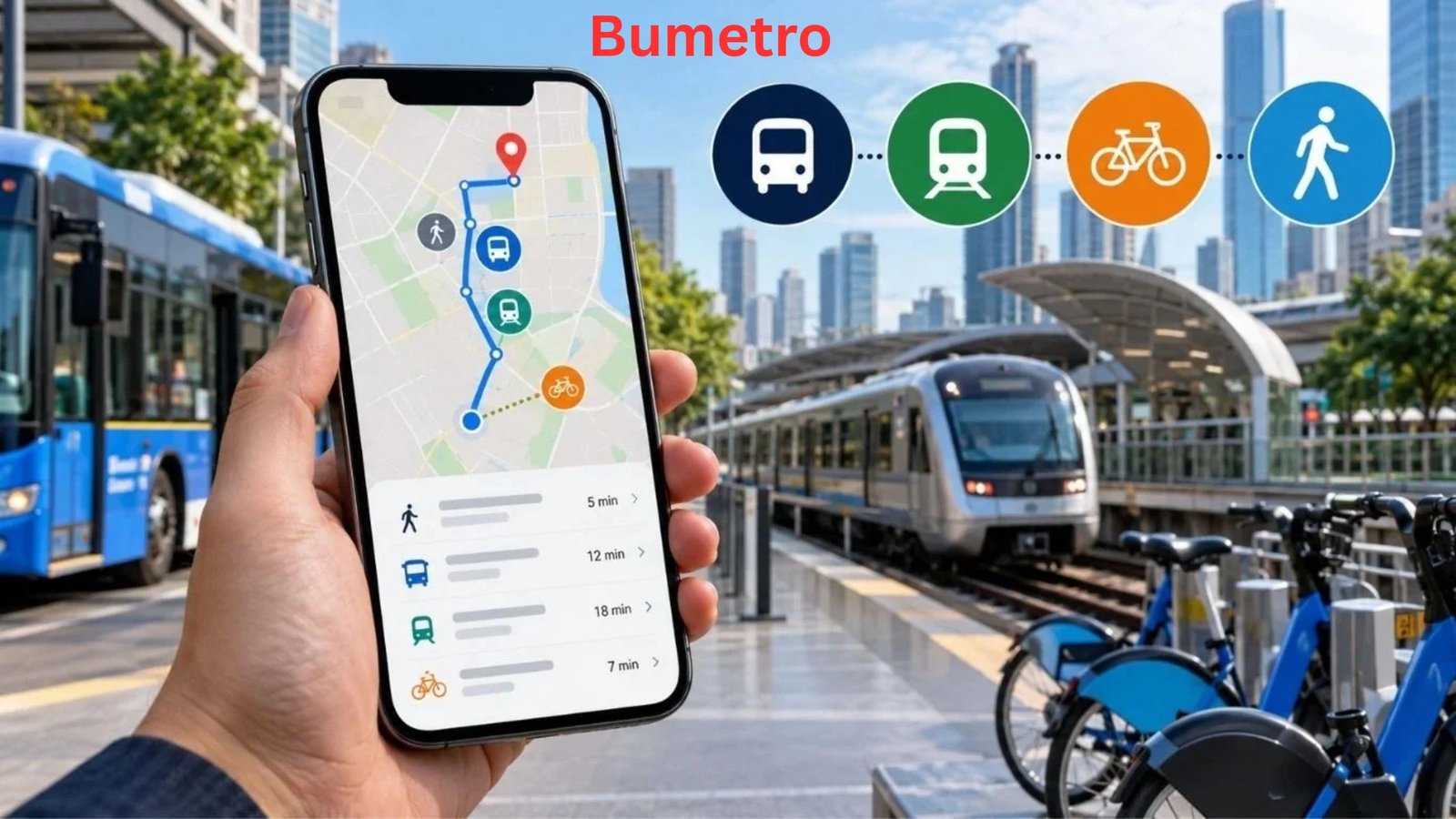
Travelling around a busy city can sometimes be difficult. A short journey may involve a bus, train, taxi or even a bicycle. Finding the best route can take time, especially when every transport service has a different website or app.
This is where Bumetro comes in. The name is linked online with smart city travel and connected transport. The main idea is to bring different travel options together so people can plan their journeys more easily.
However, there is not much confirmed information about Bumetro as an official transport service. It is better to understand it as a term linked with modern travel ideas rather than a well-known travel app.
Let’s look at how connected transport works and how it could make daily journeys easier.
What Is Bumetro?
Bumetro is a name linked with the idea of making city travel easier through digital technology.
People often use more than one type of transport to reach a place. For example, someone may walk to a bus stop, take a bus to a train station and then travel by train.
Planning each part separately can be confusing.
A connected travel system aims to show different transport choices in one place. Users could enter their starting point and destination and compare possible routes.
The main aim is to make the whole journey easier to plan.
Why Is Smart City Travel Important?
Cities have many ways to travel, including buses, trains, trams, taxis, bicycles and electric scooters.
Although having more choices is helpful, it can also make planning difficult.
Before travelling, people may want to know:
- Which route is the quickest?
- Which option costs less?
- Are there any delays?
- Can they use a bicycle?
- Is there a route with fewer changes?
- Which journey involves less walking?
A connected travel platform could bring this information together and help people make better choices.
What Is Mobility as a Service (MaaS)?
Mobility as a Service, also called MaaS, is a way of bringing different transport services together through digital platforms.
Instead of using separate apps for buses, trains and other services, people can find different travel options in one place.
For example, a person going to work might walk to a station, take a train and then walk to their office.
A MaaS platform aims to show all these steps as one complete journey.
This makes travel planning easier and saves time. MaaS is already a recognised idea in modern transport, although its services differ from one city to another.
How Does Connected Journey Planning Work?
A connected journey planner usually needs two details: the starting point and the final destination.
It then shows different ways to complete the journey.
For example, someone travelling across a city may see these options:
- A taxi that takes around 35 minutes but costs more.
- A bus and train journey that takes a little longer.
- A cycling route for people who prefer riding a bike.
Travellers can compare the options and choose the one that suits them best.
Unlike a basic route planner, a connected system looks at different types of transport together.
What Is Multimodal Travel?
Multimodal travel means using more than one type of transport during a single journey.
For example, someone may walk to a bus stop, take a bus to the railway station and then catch a train.
Another person may cycle to a station before continuing by underground train.
A connected travel system could show all these steps in one route. It may also show where to change, how long each part takes and the estimated arrival time.
This is especially useful in large cities where people often need more than one transport service.
Why Are Live Travel Updates Useful?
Travel plans can change quickly. A bus may be late, a train may be cancelled or traffic may slow down the journey.
Live travel updates help people understand what is happening before and during their trip.
A smart transport system may show:
- Updated bus and train times.
- Delays and cancelled services.
- Changes to travel routes.
- Other ways to reach the destination.
If a planned route is no longer suitable, the system could suggest another option.
However, the accuracy of these updates depends on the information shared by transport companies.
Comparing Travel Time and Costs
The fastest route is not always the best one.
Someone going to the airport may prefer a taxi, while a student may choose a cheaper bus or train.
A useful travel platform should allow people to compare different choices.
Some important things to consider include:
Fastest route: Helpful when saving time is important.
Cheapest option: Suitable for people who want to spend less on travel.
Fewer changes: Better for those who prefer a simple journey.
Less walking: Useful for people carrying bags or travelling with children.
Greener travel: Helps people find options that may have a lower impact on the environment.
Travel prices should be treated as estimates unless they are confirmed by the transport provider.
How Can Smart Transport Help the Environment?
The way people travel affects the environment. Too many cars on the road can lead to traffic, higher fuel use and air pollution.
Buses and trains can carry many people at the same time. Walking and cycling are also good choices for shorter journeys.
Smart travel platforms could help people find these options more easily.
For example, someone who normally drives to work may discover that taking a train and walking for a few minutes is a cheaper and easier choice.
However, public transport also needs to be affordable, safe and reliable before people can use it every day.
Who Can Benefit from Connected Travel?
Connected travel systems could be useful for many people.
Daily Commuters
People travelling to work every day can use route planners to find other ways to reach their office.
If a train is cancelled or a bus is delayed, they could compare different routes instead of searching through several websites.
Students
Students often need to keep their travel costs low.
Comparing bus, train, walking and cycling options could help them find a route that fits their budget.
Sometimes, taking a slightly longer journey can save money over the month.
Tourists
Travelling around a new city can be confusing, especially when visitors do not know the local transport system.
A connected travel planner could help them find stations, hotels and popular attractions.
Clear directions can make exploring a new place much easier.
What Are First-Mile and Last-Mile Journeys?
The first-mile and last-mile problem is a common issue in public transport.
It means getting from home to a transport station and travelling from the final station to the actual destination.
For example, someone may live far from the nearest railway station. Even if the train journey is quick, reaching the station can take extra time.
Walking, local buses and shared bicycles can help solve this problem.
A connected travel planner could include these smaller parts when showing the full journey.
Can Bikes, Scooters and Taxis Be Included?
City travel now includes more than buses and trains.
Many places offer shared bicycles, electric scooters, taxis and car-sharing services.
These options can work together with public transport.
For example, someone could cycle to a train station and use the train for the rest of the journey. Another person may take a train and book a taxi for the final part.
However, these services are not available everywhere. Their use depends on local transport options.
Making Travel Easier for Everyone
Different people have different travel needs.
Someone using a wheelchair may need a station with step-free access. Older passengers may prefer routes with fewer changes and shorter walks.
Parents with pushchairs may need lifts, while people carrying heavy bags may want to avoid stairs.
This is why travel planning should not focus only on journey time.
Good transport information should also include details about access, comfort and available facilities.
Privacy and Safety When Using Travel Apps
Some travel apps collect personal details to help users plan their journeys.
This may include location information, saved places and payment details.
Before using an unfamiliar app, it is important to check a few things:
- Who owns and runs the app?
- Does it have a clear privacy policy?
- What personal details does it collect?
- Is payment information handled safely?
- Is the app available through a trusted app store?
Only share information with services you trust.
Is Bumetro an Official Travel Service?
There is limited public information confirming Bumetro as an official transport company or a well-known travel app.
The name appears online in discussions about smart city travel, but its actual services and features are not clearly confirmed.
Some features linked with Bumetro, such as route planning, live travel updates and digital tickets, are already used by modern transport systems.
However, this does not mean that a platform called Bumetro offers all these services.
Before using a website or app with this name, check who runs it and what it actually provides.
Is Bumetro Connected to a VU Meter?
Bumetro and VU meter are not the same thing.
A VU meter is a device used to show sound levels. It is commonly found in audio equipment, speakers and music systems.
It has no direct link with buses, trains or city transport.
The meaning depends on the topic being discussed. Bumetro is linked online with transport, while a VU meter belongs to the world of sound and music equipment.
Benefits and Problems of Smart City Travel
Connected transport can make journey planning easier, but it also has some limits.
| Benefits | Limitations |
|---|---|
| Brings travel options together | Needs correct travel information |
| Makes route comparison easier | Some companies may not share data |
| Helps compare travel costs | Prices can change |
| Makes public transport easier to understand | Cannot fix poor services |
| Supports walking and cycling | Shared services may not be available |
| Gives access to useful travel details | Some access information may be missing |
For these systems to work well, transport companies need to share correct and updated information.
Can Smart Transport Reduce Car Use?
Smart transport may encourage more people to use buses, trains and bicycles instead of driving.
Some people use cars because they find public transport difficult to plan.
A connected travel planner could make other options easier to understand.
For example, a person may find that taking a train and walking for a few minutes takes almost the same time as driving to work.
If it also costs less, they may choose public transport more often.
However, people still need good and reliable transport services before they can depend on them every day.
Making different travel choices easier to find is a useful first step.
What Is the Future of Connected City Travel?
City transport is changing as technology improves.
In the future, travel platforms may bring buses, trains, bicycles, taxis and walking routes together in one place.
Some systems may also allow users to book tickets and make payments through a single service.
The main aim is to make journeys easier from start to finish.
Instead of searching for different transport services, people could plan their complete journey in one place.
These ideas are already part of Mobility as a Service and other modern transport plans.
It is still unclear whether Bumetro will become an established service, but connected travel is likely to remain an important part of future city transport.
What Should You Check Before Using Bumetro?
If you find a website or app using the Bumetro name, take a few minutes to check its details.
Look for the company name, contact information and list of supported cities.
You should also:
- Read the privacy policy.
- Check what the app actually offers.
- Confirm ticket prices with transport companies.
- Check payment methods before buying anything.
- Look for the app on a trusted app store.
These steps can help you understand whether the service is genuine and suitable for your needs.
Final Thoughts
Bumetro is a name linked online with smarter city travel and connected transport.
The main idea is to bring different travel options together so people can plan their journeys without using several separate services.
This approach could help commuters, students and tourists compare routes, travel times and costs more easily.
However, there is not enough confirmed information to describe Bumetro as an established international travel platform.
The wider ideas behind it, including live travel updates, multimodal journeys and Mobility as a Service, are already part of modern transport.
In the future, these systems could make city travel easier and give people more reasons to choose public transport, walking or cycling.
Frequently Asked Questions About Bumetro
1. What is Bumetro?
Bumetro is a term linked online with smart city travel. It is mainly associated with bringing different transport options together to make journey planning easier.
2. Is Bumetro an underground train service?
There is no clear evidence that Bumetro is the name of a specific underground train network. It is more commonly discussed in connection with wider transport ideas.
3. Is there an official Bumetro app?
There is limited information confirming an official Bumetro travel app. Always check the developer and website before downloading an app with this name.
4. Can Bumetro combine bus and train journeys?
Combining different types of transport is part of the idea behind Bumetro. However, this feature has not been confirmed for a specific service.
5. What is multimodal travel?
It means using two or more types of transport during one journey. For example, someone may walk, take a bus and then catch a train.
6. What does MaaS mean?
MaaS stands for Mobility as a Service. It brings different travel options together through digital platforms.
7. Can Bumetro show live train and bus times?
Live travel updates are common in modern transport apps, but there is not enough confirmed information to say that Bumetro offers this feature.
8. Can smart travel help save money?
Yes. Comparing buses, trains and taxis can help people find cheaper ways to travel.
9. How does smart transport help the environment?
It makes public transport, walking and cycling easier to find. This may encourage people to use their cars less often.
10. Is Bumetro the same as a VU meter?
No. A VU meter is used to show sound levels in audio equipment. It has no connection with city transport.
11. Who can use connected travel systems?
Commuters, students, tourists and local residents can all benefit from easier access to different travel options.
12. Is it safe to share my location with a travel app?
It depends on the app. Check its privacy policy and company details before sharing your location or other personal information.
13. Can smart travel systems include bicycles and scooters?
Yes. Some connected transport systems can include shared bicycles and electric scooters along with buses and trains.
14. What is the main aim of smart city travel?
The aim is to make different transport services easier to find, compare and use so people can travel around cities more easily.