
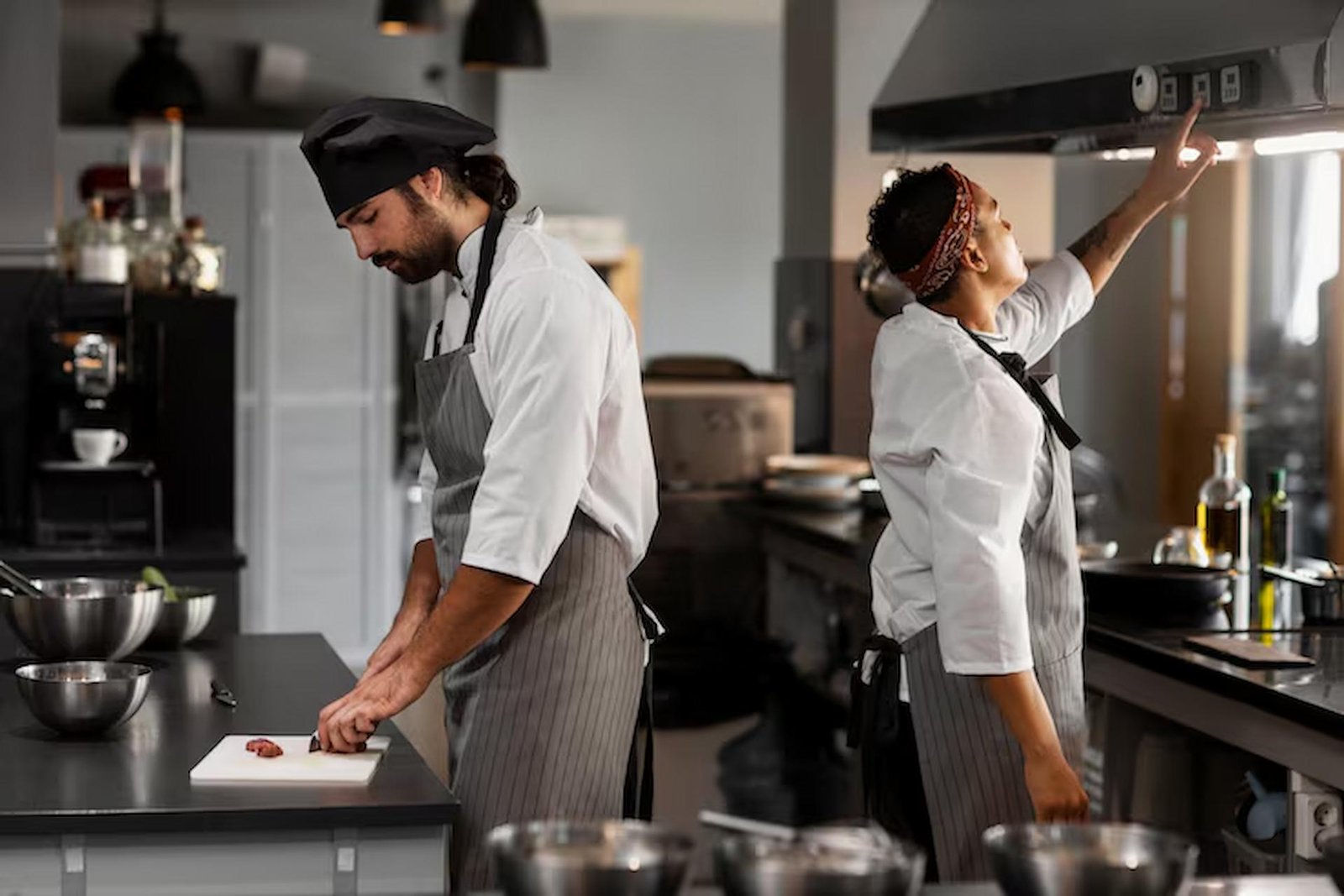
The quality of kitchen equipment directly affects the profitability of an establishment, but most restaurateurs underestimate this connection. The difference between professional and domestic appliances is not only in price, but also in performance, reliability, and impact on the final result. Properly selected equipment significantly increases service speed and reduces operating costs.
Speed as a competitive advantage
Kitchen throughput
Kitchen productivity determines a restaurant’s maximum revenue. Professional stoves heat up much faster than their domestic counterparts. Convection ovens cook faster than conventional ones, maintaining a uniform temperature. Every minute saved during peak hours translates into additional orders.
Combi ovens allow you to cook several dishes at the same time without mixing flavors. One appliance replaces an oven, steamer, and grill, saving space and staff time. Restaurants that use such equipment serve significantly more customers with the same number of chefs.
During rush hour, every second counts. Professional equipment not only cooks faster, but also allows you to maintain a consistently high pace of work without compromising quality. Conventional household appliances cannot withstand the intense workload of commercial kitchens, which leads to downtime at the most critical moments.
Stability of results
Professional equipment provides more stable temperature conditions compared to domestic appliances. Stability is critical for reputation: customers should receive the same dish every time they visit.
Induction cooktops respond instantly to changes in settings, allowing chefs to precisely control the cooking process. This is especially important for delicate sauces and haute cuisine techniques, where a second’s delay can ruin a dish.
The economic efficiency of professional equipment
Long-term investments versus short-term savings
Investments in professional restaurant equipment pay off through reduced operating costs. The average service life of commercial equipment significantly exceeds that of household equivalents. Professional models consume less energy while offering significantly higher performance.
Commercial equipment is much easier to repair. Its modular design allows individual components to be replaced without shutting down the entire system. Spare parts have been available for years, and service support is available around the clock.
Impact on staff productivity
High-quality equipment reduces the physical strain on chefs. Ergonomic work surfaces, comfortable control handles, and automated processes all reduce fatigue and increase precision. Professional refrigerators are equipped with rapid cooling systems, which are critical for maintaining sanitary standards when working with perishable products.
Modern induction surfaces not only save energy but also create more comfortable working conditions — they emit less heat into the room, reducing the load on air conditioners and improving the microclimate in the kitchen.
List of benefits for staff:
- Significant reduction in the risk of workplace injuries;
- Increased speed of operations;
- Reduced training time for new employees.
Technological innovations are changing the rules of the game
Smart appliances for smart kitchens
Modern combi steamers are equipped with humidity and temperature sensors that automatically adjust cooking modes. Vacuum cooking machines (sous-vide) provide accuracy to 0.1°C, which is unattainable with traditional methods.
IoT solutions allow remote monitoring of equipment status. The system warns of the need for maintenance before breakdowns occur. Usage analytics help optimize workflows and plan kitchen workload.
Energy efficiency as a trend
The new generation of professional equipment consumes significantly less energy while maintaining the same performance. Induction technologies, improved insulation, and heat recovery are innovations that significantly reduce electricity bills.
Restaurants with energy-efficient equipment receive incentives from municipalities, participate in green certification programs, and attract eco-conscious customers. The ENERGY STAR program certifies commercial equipment that can save operators approximately $4,000 per year in energy costs.
Smart energy management is becoming the industry standard. Modern systems automatically put unused equipment into standby mode, analyze peak loads, and optimize the entire kitchen as a single energy system.
Safety and compliance with standards
Sanitary standards and equipment
Professional equipment is designed with sanitary requirements in mind. Stainless steel surfaces are easy to disinfect, and the design eliminates hard-to-reach areas where dirt can accumulate. Compliance with HACCP standards is not an option, but a necessity for successful operation.
Commercial-grade ventilation systems remove not only smoke and odors, but also pathogenic microorganisms. Improper ventilation leads to fines from health inspectors, closure of the establishment, and damage to reputation.
Fire safety
Automatic fire suppression systems built into professional hoods activate within seconds when grease catches fire. Insurance companies offer discounts to restaurants with certified fire suppression equipment.
Critical fire safety elements:
- Automatic fire suppression systems;
- Temperature and smoke detectors;
- Emergency gas shut-off.
These integrated safety systems not only protect property and lives but also ensure uninterrupted restaurant operations while maintaining insurance compliance and regulatory standards.
Equipment tailored to the concept of the establishment
Select format
Steak houses require powerful grills with temperatures up to 800°C. Pizzerias need stone-bottom ovens that heat up to 500°C. Sushi bars require refrigerated display cases with precise humidity control. Versatile equipment rarely provides optimal results for specialized dishes.
Asian restaurants use wok stations with powerful burners that are significantly more powerful than home stoves. This temperature is necessary for the authentic “wok breathing” technique, which creates the characteristic aroma of the dishes.
Layout as a system
Proper equipment placement significantly increases kitchen efficiency. The “work triangle” between the refrigerator, stove, and sink should minimize the chef’s movements. Linear organization of workstations speeds up the preparation of complex dishes.
Hot and cold cooking areas are separated to maintain temperature control. Incorrect layout forces chefs to take unnecessary steps, reducing productivity and increasing the risk of errors.
Financial planning and ROI
Payback calculation
The average cost of professional equipment for a restaurant kitchen with 80 seats is a significant investment. However, the payback calculation shows a positive result after a few years due to increased throughput, reduced energy costs, and lower maintenance costs. It is important to consider not only the initial cost but also the total cost of ownership throughout the equipment’s life cycle.
Equipment leasing allows you to open a restaurant with less initial investment. Monthly payments include maintenance and replacement of outdated models. Tax breaks on leasing reduce the real cost.
Phased modernization
Priorities for equipment modernization:
- Cooking equipment (stoves, combi steamers);
- Refrigeration equipment (freezers, display cases);
- Ventilation and air conditioning systems.
Modernization should begin with the equipment that has the greatest impact on food quality and cooking speed. Replacing a single combi oven can have a greater effect than upgrading all small appliances.
Conclusion
Professional kitchen equipment is not an expense, but a strategic investment in the competitiveness of a restaurant. High-quality equipment increases throughput, guarantees consistency in dishes, and reduces operational risks.
Restaurants that skimp on equipment pay twice: first for cheap appliances, then for lost profits due to downtime, defects, and inefficiency. The right investment in professional equipment pays off in quality service, customer loyalty, and stable profits for years to come.