
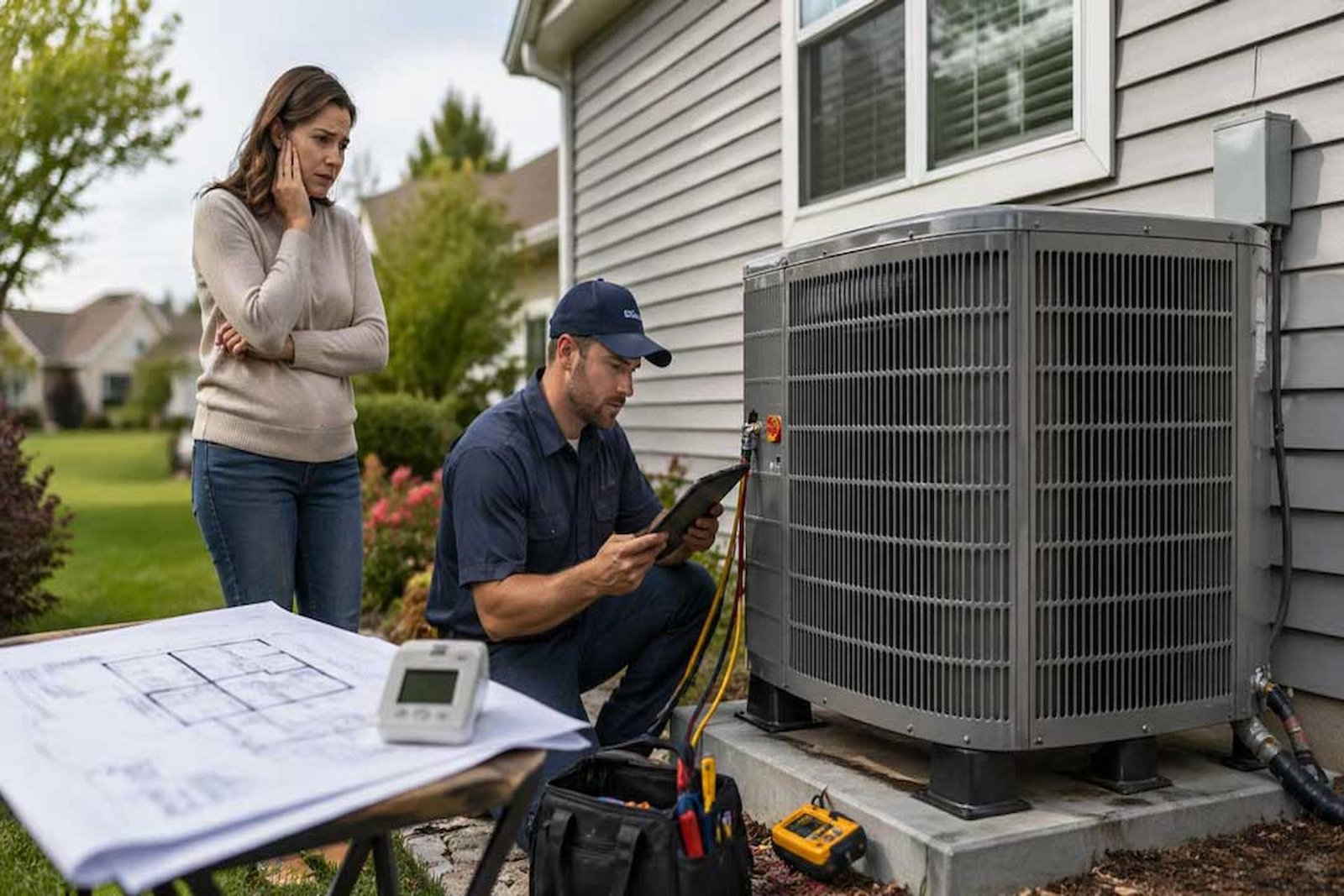
Choosing a new air conditioner is one of the biggest HVAC decisions a homeowner will make. Yet many people focus on brand, price, or efficiency ratings while overlooking the factor that has the greatest impact on performance: proper sizing. An air conditioner that is too large or too small can create comfort problems, increase energy costs, and shorten equipment lifespan. Understanding AC unit sizing can help homeowners avoid costly mistakes and ensure long-term comfort, efficiency, and reliability.
Why AC Size Matters More Than Most Homeowners Realise
When replacing an air conditioning system, many homeowners assume that a larger unit will cool their home faster and perform better. While this sounds logical, it is one of the most common misconceptions in the HVAC industry.
Air conditioning systems are designed to operate within a specific range based on the cooling needs of a home. If the equipment is not properly matched to the property’s requirements, performance suffers. Whether the system is oversized or undersized, the result is often higher energy bills, reduced comfort, and unnecessary wear on expensive equipment. Correct AC sizing is not about installing the biggest unit available. It is about finding the system that precisely matches the home’s cooling load.
Common Problems Caused by Incorrect AC Sizing
An improperly sized air conditioner can create a wide range of issues that affect both comfort and efficiency. When an air conditioner is oversized, it often cools the home too quickly and shuts off before completing a full cooling cycle. This frequent short cycling can lead to uneven temperatures, poor humidity control, increased wear on system components, and higher energy consumption despite the unit’s larger capacity. As a result, rooms may feel cool but still uncomfortable due to excess indoor moisture.
An undersized air conditioner creates a different set of challenges. Because the system lacks sufficient cooling capacity, it may struggle to reach the desired thermostat setting, especially during periods of extreme heat. The unit often runs for extended periods without adequately cooling the home, placing additional strain on components and increasing energy costs. Over time, this constant workload can reduce equipment lifespan and lead to more frequent repairs.
Whether the system is too large or too small, incorrect sizing can negatively affect comfort, efficiency, operating costs, and long-term system reliability. Proper sizing is essential for achieving consistent indoor temperatures and optimal HVAC performance.
Why Bigger Is Not Better
Many homeowners believe a larger air conditioner will simply cool the house more quickly. While an oversized system may lower the temperature rapidly, it often creates a new set of problems. Air conditioners do more than cool the air. They also remove humidity. Effective humidity control requires longer operating cycles that allow moisture to be extracted from indoor air.
An oversized unit reaches the thermostat setting too quickly and shuts off before completing a full cooling cycle. This process, known as short cycling, prevents proper dehumidification. The result is a home that feels cool but still uncomfortable because humidity levels remain high. Rooms may feel damp, sticky, or unevenly cooled despite the system running frequently. Short cycling also increases wear on motors, compressors, and electrical components, often leading to premature breakdowns.
Understanding Manual J Load Calculations
The HVAC industry’s most trusted sizing method is called a Manual J load calculation. Rather than relying on simple square footage estimates, Manual J evaluates the actual cooling requirements of a home. This detailed assessment helps determine the correct air conditioning capacity needed for optimal performance.
A professional load calculation takes multiple factors into account, including the home’s size and layout, insulation levels, window placement and orientation, ceiling height, local climate conditions, air leakage rates, occupancy levels, and even the heat generated by appliances and electronics. By analysing these details together, HVAC professionals can accurately determine how much cooling a home truly requires.
Because every property has unique characteristics, two homes with identical square footage can have very different cooling needs. This is why a proper Manual J calculation is considered essential for selecting the right air conditioning system and ensuring long-term comfort and efficiency.
Why Square Footage Rules Often Fail
Some contractors still rely on rough sizing formulas based solely on square footage. While these shortcuts may save time, they often lead to incorrect recommendations.
Modern homes are built with varying insulation standards, window designs, building materials, and energy efficiency features. These factors significantly affect cooling requirements. For example, a well-insulated home with energy-efficient windows may need a smaller system than an older home of the same size. Without a proper load calculation, there is no reliable way to determine the ideal AC capacity.
How to Verify a Contractor Is Sizing Correctly
Homeowners should not hesitate to discuss the sizing process before approving an HVAC installation. A reputable contractor should be able to clearly explain how the recommended system size was determined and provide evidence that a Manual J load calculation was performed. This evaluation should consider factors such as insulation levels, window placement, ceiling height, local climate conditions, air leakage, and overall home layout. Contractors should also assess the condition and capacity of the existing ductwork to ensure the entire system operates efficiently. If a recommendation is based solely on square footage or simply matches the size of the current unit without a detailed analysis, homeowners should consider seeking a second opinion. Proper sizing requires careful calculations, not estimates, and taking the time to verify this process can prevent comfort issues, high energy bills, and premature equipment failure.
What If Your Existing AC Is the Wrong Size?
Many homeowners discover sizing problems only after years of discomfort. If an oversized or undersized system is already installed, several options may help improve performance. These include upgrading insulation, sealing air leaks, improving ductwork, installing smart thermostats, or replacing the system with properly sized equipment when necessary. A professional HVAC evaluation can determine whether modifications can improve efficiency or whether replacement is the most cost-effective solution.
Understanding AC Capacity Ratings
Air conditioner capacity is typically measured in tons. In HVAC terminology, one ton equals 12,000 BTUs of cooling capacity per hour. Residential air conditioning systems are commonly available in capacities ranging from 1.5 tons to 5 tons, with each size designed to serve homes with different cooling requirements. However, selecting the right capacity is not simply a matter of choosing a larger unit for better performance. The ideal system size depends on the home’s specific cooling load, which is influenced by factors such as insulation, window placement, ceiling height, climate, and overall energy efficiency. Choosing a larger unit without proper load calculations often leads to short cycling, poor humidity control, higher energy costs, and unnecessary wear on the equipment. Proper sizing ensures optimal comfort, efficiency, and long-term reliability.
Frequently Asked Questions
What happens if an AC unit is too large?
An oversized AC cools too quickly, causing short cycling, poor humidity control, uneven temperatures, and increased equipment wear.
What happens if an AC unit is too small?
An undersized AC struggles to cool the home, runs continuously, increases energy usage, and experiences excessive strain.
What is a Manual J load calculation?
Manual J is an industry-standard method used to determine a home’s exact heating and cooling requirements based on multiple building characteristics.
Can two homes of the same size need different AC units?
Yes. Insulation, windows, climate, ceiling height, occupancy, and air leakage all affect cooling requirements.
Should I replace my current AC if it is incorrectly sized?
Not always. A professional assessment can determine whether system adjustments, duct improvements, or replacement will provide the best solution.
Conclusion
Proper AC unit sizing is one of the most important factors affecting comfort, energy efficiency, humidity control, and equipment longevity. While many homeowners assume that a larger system will deliver better performance, oversized units often create the very problems they are meant to solve. Likewise, undersized systems struggle to keep up with cooling demands and place unnecessary stress on equipment.
The best way to ensure optimal performance is through a professional Manual J load calculation that evaluates the home’s actual cooling needs. By understanding how sizing works and asking the right questions during the installation process, homeowners can avoid costly mistakes and protect their investment for years to come. A correctly sized air conditioner delivers consistent comfort, lower energy bills, improved indoor air quality, and reliable performance throughout every cooling season.