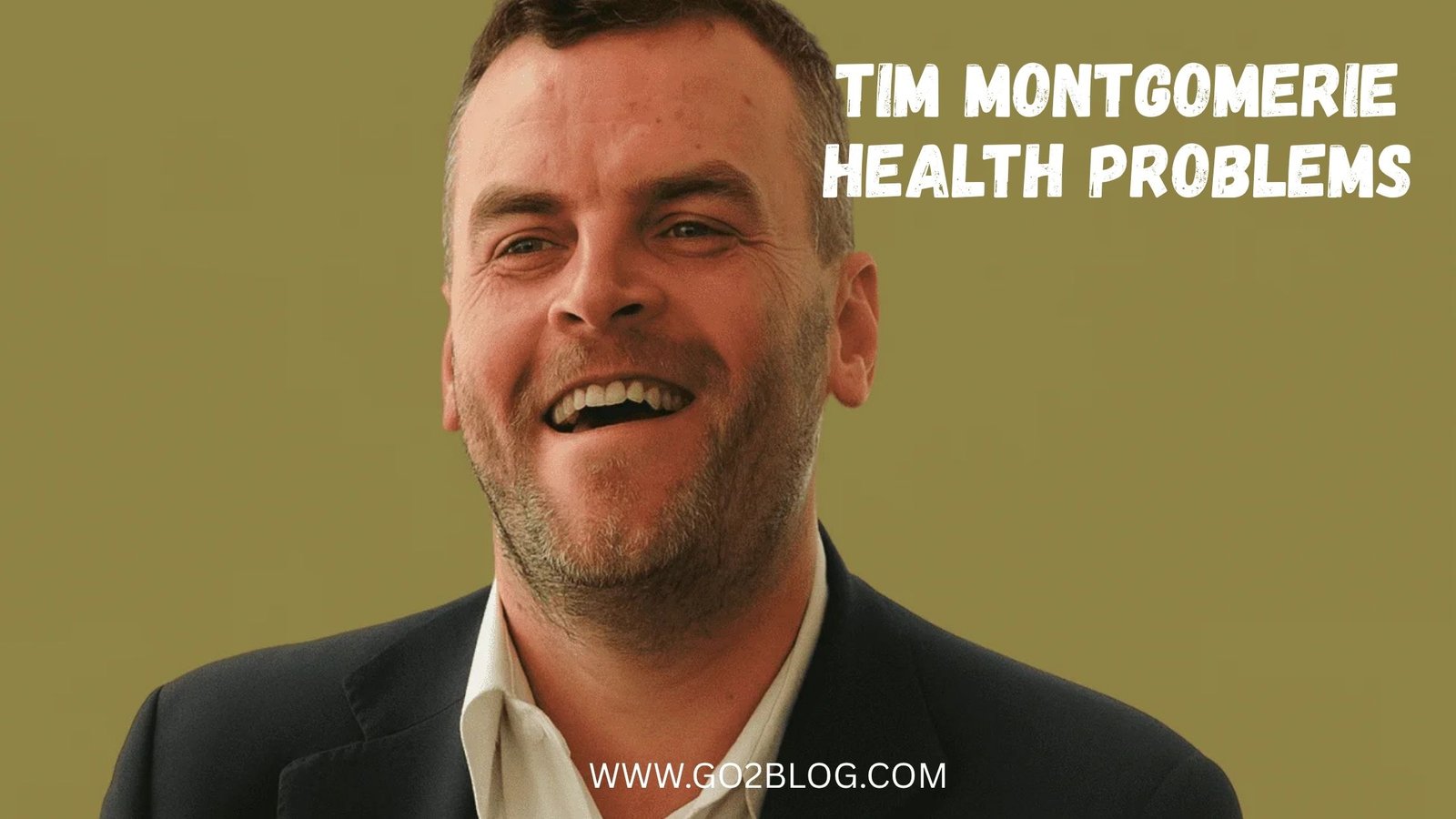
In political circles the name Tim Montgomerie generates a cocktail of respect, curiosity and conflict. Montgomerie, for years a leading voice in British conservatism, is known for his incisive political criticism, powerful blog ConservativeHome and his shifting ideological beliefs.
But recently a different kind of curiosity has been appearing online: searches for “Tim Montgomerie health problems”. Some of this interest is due to real worry. Some of it is due to misinformation, exacerbated by the echo chamber that is social media.
This article seeks to distinguish fact from rumour and give a detailed, factual biographical account of Tim Montgomerie that tackles what is known about his health notably his open disclosure of mental health issues without conjecture or embellishment.
Early Life and Education
Tim Montgomerie was born on 24 July 1970 in Barnstaple, Devon, and spent much of his childhood in a military family. Growing up in an Army household meant experiencing a structured environment where discipline, service and responsibility were everyday values. Those early influences would later shape both his political outlook and his approach to public life.
He went on to study Economics and Geography at the University of Exeter, where his interest in politics became more defined. Alongside his academic studies, he developed a strong interest in public policy, social issues and political philosophy. During this period, his Christian faith also became an important influence on his thinking, helping to shape the values that would guide his future career.
Beginning a Career in Politics
Montgomerie’s involvement in politics began while he was still at university. Eager to combine his political beliefs with his faith, he co-founded the Conservative Christian Fellowship (CCF) during the early 1990s.
The organisation aimed to encourage greater discussion of social responsibility and Christian values within the Conservative Party. Rather than focusing solely on economic policy, Montgomerie argued that conservatism should also address issues such as poverty, family life and community wellbeing.
This early work established him as a distinctive voice within Conservative circles, bringing together traditional conservative principles with a stronger emphasis on social reform.
Creating ConservativeHome
A defining moment in Montgomerie’s career came in 2005 when he founded ConservativeHome, an online platform dedicated to news, opinion and discussion about Conservative politics.
At a time when political blogging was still relatively new, the website quickly became one of the most influential voices on the British right. It gave grassroots party members a platform to express their views while offering commentary, polling and analysis on national political developments.
Montgomerie became known for supporting Conservative principles while also being willing to challenge party leadership when he believed it was necessary. His independent approach earned respect from supporters and critics alike and helped establish ConservativeHome as a major influence within Westminster.
Policy Work and the Centre for Social Justice
Alongside his publishing work, Montgomerie played a key role in establishing the Centre for Social Justice (CSJ) with Sir Iain Duncan Smith.
The think tank focuses on tackling some of Britain’s most complex social challenges, including poverty, family breakdown, addiction and welfare reform. Through this work, Montgomerie promoted the idea that effective conservatism should combine economic responsibility with practical solutions to improve people’s lives.
His contributions helped shape debates around social policy and reinforced his reputation as a commentator interested in both economic and social issues.
Journalism and Broadcasting
As his profile grew, Montgomerie expanded into journalism and broadcasting. In 2013, he joined The Times as a comment editor, where he wrote extensively on politics, public policy and current affairs.
Over the years, he has also contributed to a range of national newspapers and appeared regularly on television and radio programmes, including BBC News, Sky News and GB News. His analysis has covered subjects ranging from general elections and Brexit to economic policy and the changing political landscape in Britain.
His measured style and willingness to engage with different viewpoints have made him a familiar figure in British political commentary.
Speaking Openly About Mental Health
One aspect of Tim Montgomerie’s public life that has attracted significant attention is his openness about mental health.
Following the COVID-19 pandemic, he spoke publicly about experiencing periods of depression and the emotional challenges brought on by lockdowns and isolation. Rather than avoiding the subject, he chose to discuss it openly, encouraging more honest conversations about mental wellbeing.
His comments were widely welcomed by many people who appreciated seeing a senior political commentator acknowledge that mental health difficulties can affect anyone, regardless of their profession or public profile.
By sharing his own experiences, Montgomerie helped challenge the stigma that still surrounds depression and anxiety, particularly among men working in politics and the media.
Understanding the Health Rumours
Online searches for “Tim Montgomerie health problems” have increased in recent years, leading to speculation across various websites and social media platforms.
However, there is no credible public evidence that Tim Montgomerie has been diagnosed with any serious or ongoing physical illness.
Most of the discussion appears to stem from his own openness about mental health, particularly his experiences with depression during and after the pandemic. There have been no verified reports indicating that he has publicly disclosed a chronic physical condition or significant medical diagnosis.
Several factors have contributed to the spread of these rumours. As with many public figures, changes in appearance or public activity can sometimes prompt unnecessary speculation. In addition, unverified claims are often repeated across multiple websites, giving the impression that they are factual when they are not.
Some confusion has also arisen because of the similarity between the names Tim Montgomerie, the British political commentator, and Tim Montgomery, the American former sprinter. This has occasionally resulted in inaccurate information being shared online.
Based on the information available, the only health issues Montgomerie has discussed publicly relate to his mental wellbeing. His willingness to speak honestly about depression has been widely viewed as an important contribution to raising awareness and encouraging more open conversations about mental health.
Balancing Public Life and Personal Wellbeing
Working across politics, journalism and public commentary brings constant pressure. Tight deadlines, an always-on news cycle and intense public scrutiny can take a significant toll on anyone, particularly those whose work is regularly debated in the public eye.
Tim Montgomerie has acknowledged the importance of looking after his mental wellbeing and recognising when it is necessary to pause and regain perspective. Rather than viewing this as a weakness, he has described the value of maintaining a healthy balance between professional commitments and personal life.
His Christian faith, relationships and sense of community have all played an important role in helping him navigate demanding periods. These personal foundations have shaped his belief that resilience comes not from ignoring challenges but from facing them honestly.
A New Political Direction
One of the biggest developments in Montgomerie’s recent career came when he announced that he was leaving the Conservative Party and supporting Reform UK.
The decision attracted considerable attention because of his long-standing association with Conservative politics. He explained that the move reflected his changing political views and his belief that Reform UK better represented his priorities on issues such as national identity, culture and political reform.
Following the announcement, some online speculation attempted to link the decision to his health. However, there is no evidence to support those claims. His decision was presented publicly as a political and ideological choice rather than one connected to any medical condition.
Faith and Personal Values
Faith has remained a consistent influence throughout Montgomerie’s life and career. As a practising Christian, he has often spoken about the importance of integrity, compassion and personal responsibility, both in politics and everyday life.
Although he keeps much of his private life out of the public eye, he has explained that his beliefs provide stability during difficult periods. His reflections on faith and mental wellbeing have offered a more personal perspective than many people associate with political commentators.
Public Reputation
Over the years, Tim Montgomerie has earned a reputation as an independent political thinker who is willing to challenge established views. Supporters value his willingness to question party leadership and contribute thoughtful analysis, while critics have sometimes disagreed with his changing political positions.
Regardless of differing opinions, he remains an influential voice in British political debate. His willingness to discuss both political issues and personal wellbeing has added another dimension to his public profile, showing that public figures can speak openly about mental health without diminishing their professional credibility.
Respecting Privacy
Interest in the lives of public figures is understandable, but discussions about health should always be based on verified information rather than speculation.
In Tim Montgomerie’s case, the publicly available facts are straightforward. He has spoken openly about experiencing mental health challenges, particularly during the pandemic, but he has not disclosed any serious or ongoing physical illness. Claims suggesting otherwise are not supported by credible public evidence.
Current Work
Tim Montgomerie continues to contribute to political discussion through interviews, opinion writing, broadcasting and digital media. His commentary regularly focuses on British politics, public policy and cultural issues, and he remains an active participant in national debate.
His recent work reflects an emphasis on thoughtful discussion, personal integrity and the importance of open conversation, both in politics and in wider society.
Final Thoughts
Public interest in Tim Montgomerie’s health has largely centred on comments he has made about his mental wellbeing. Beyond those personal reflections, there is no verified public evidence that he has been diagnosed with a serious physical illness.
His career is better understood through the impact he has made on British politics and journalism. From founding influential political platforms to contributing to national debate, he has built a reputation based on conviction, independent thinking and a willingness to discuss difficult subjects openly. His honesty about mental health has become one part of that wider story, highlighting the importance of resilience, self-awareness and responsible public discussion.