Key Takeaways
- The best upgrade depends on how the truck is used each day.
- Power, suspension, wheels, tires, and brakes should be considered as connected systems.
- Added engine output does not increase factory payload, axle, hitch, or towing ratings.
- Tire limits, alignment, braking performance, and steering control deserve attention before major modifications.
- A staged plan can make it easier to control costs and identify results.
Drivers use trucks for very different purposes, from weekday commutes on busy corridors to hauling gear, towing trailers, and heading toward hilly backcountry roads. The right truck performance upgrades begin with the truck’s actual job, not simply the largest advertised horsepower number or tire size.
A balanced plan considers power delivery, ride quality, braking, tires, steering, cooling, and the vehicle’s original ratings. That approach can help owners choose changes that suit hot-weather conditions, stop-and-go driving, work demands, and occasional travel beyond paved roads.
Start With How The Truck Is Used
Before buying parts, identify the main problem to solve. A daily-driven truck may benefit most from dependable tires, correct alignment, and smoother response. A truck that regularly carries tools or tows may need greater attention to load control, cooling, hitch setup, and braking condition. An off-road-focused vehicle may prioritize clearance, traction, underbody protection, and suspension travel.
For example, a commuter that rarely leaves pavement might be poorly served by heavy, aggressive tires that add noise and weight. A frequent tow truck, on the other hand, may value stable handling under load more than a modest acceleration gain.
Changes to truck suspension should be evaluated alongside tire size, wheel offset, alignment needs, and intended cargo. Ride height alone does not show whether a setup is appropriate for towing, long highway drives, or uneven terrain.
Choose Power Upgrades With A Clear Goal
Power modifications are most useful when they address a specific need, such as better low-speed response, steadier pulling power, or improved drivability with a loaded bed. More peak horsepower is not automatically the most meaningful result for a truck. Usable torque, transmission behavior, engine temperatures, and reliability may matter more in normal operation.
- Decide whether low-speed pulling power or highway passing response is the priority.
- Consider whether the cooling system and transmission are suited to added demand.
- Verify compatibility with the exact engine, drivetrain, and model year.
- Review emissions requirements and inspection rules before modifying related equipment.
Factory ratings remain important after an engine modification. Extra output does not change the maximum weight specified for the truck’s payload, axles, hitch, or trailer capacity.
Compare Airflow And Exhaust Changes
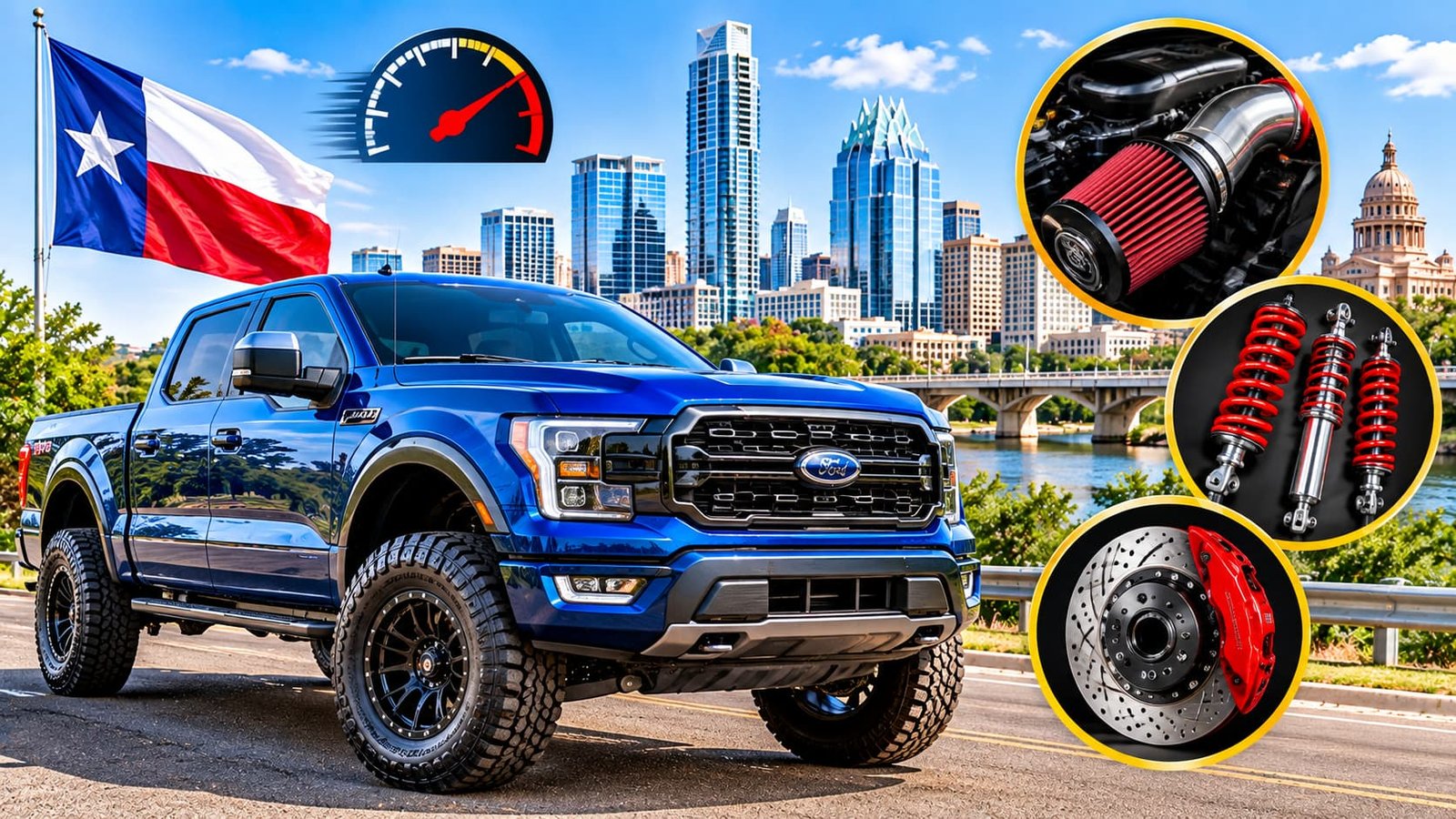
Intake and exhaust changes can influence engine sound, airflow, and response, but results vary by vehicle and component design. Some changes may primarily alter sound, while others are intended to support a broader performance plan. Fitment, sensor protection, water exposure, heat management, and emissions compliance should all be considered before installation.
A complete, compatible setup is generally easier to evaluate than a collection of unrelated parts. Check whether a component is designed for the exact vehicle configuration, whether it creates unwanted cabin noise, and whether it requires later maintenance or calibration.
Match Suspension, Wheels, And Tires
Suspension, wheel, and tire choices affect steering, ride, stopping behavior, clearance, and load handling. A taller truck may gain ground clearance, but it may also have a higher center of gravity and require careful attention to alignment, tire clearance, and steering geometry.
- Leveling changes: Can alter stance and front-end alignment settings.
- Lift changes: Can increase clearance while changing handling and suspension geometry.
- Load-support components: Can help manage rear sag under certain loads but do not create a higher payload rating.
- Larger tires: Can improve clearance but may increase rotational weight and alter effective gearing.
- Different wheel offsets: Can change fender clearance, steering feel, and component loading.
Use the tire’s load rating, inflation guidance, condition, and intended driving surface when selecting replacements. The tire safety information for drivers from NHTSA also emphasizes checking pressure, tread, maintenance, and recalls.
Plan For Towing And Payload
Before towing, review the door-label ratings and owner’s manual. Payload is the weight the truck can carry, while gross vehicle weight rating and gross axle weight rating describe important vehicle and axle limits. Trailer tongue weight, passengers, cargo, tools, and accessories all count toward the load the truck carries.
Suggested Towing Checklist
- Confirm payload, axle, tire, hitch, and trailer ratings.
- Estimate the combined weight of passengers, cargo, and tongue weight.
- Inspect tire condition, inflation, brakes, cooling components, and trailer connections.
- Use an appropriate trailer-brake setup where required.
- Test the loaded combination carefully before a long trip.
Protect Handling And Safety Systems
Modern trucks are designed around connected braking, steering, suspension, tire, and electronic systems. After changing the ride height, wheels, tires, or steering components, inspect for tire rubbing, brake-line clearance issues, loose fasteners, vibration, pulling, and uneven tire wear. Cameras, parking sensors, and driver-assistance equipment should also remain unobstructed and functional.
When vehicle ratings are established, braking, tires, suspension, steering, drivetrain components, weight, and intended use are among the factors considered in evaluating gross vehicle and axle weight ratings. That is a useful reminder that a single upgraded component should not be treated as proof that the entire truck can safely carry more weight.
Build A Smart Installation Plan
Whenever practical, make one major change at a time. Record current mileage, tire wear, ride height, fuel use, and the concern being addressed. Then verify fitment, install components according to their instructions, complete any necessary alignment or calibration, and test the truck unloaded before asking it to tow or haul.
Set A Realistic Budget
The purchase price is only part of the cost. A complete budget may include installation, wheel balancing, alignment, replacement tires, fluid service, supporting brake or cooling work, and future inspections. Safety-critical maintenance should take priority over appearance-focused changes or small performance gains.
Avoid Common Upgrade Mistakes
- Choosing parts based only on appearance.
- Skipping exact model-year and drivetrain fitment checks.
- Adding heavy wheels and tires without considering their effects.
- Assuming a lift improves every aspect of truck performance.
- Ignoring alignment after a suspension-height change.
- Exceeding tire, axle, payload, hitch, or trailer ratings.
Common Questions
What Is The Best First Upgrade For A Truck?
The best first step depends on the complaint. Maintenance, tire condition, alignment, brakes, and load management may provide more useful improvement than a high-cost power modification.
Do Performance Upgrades Improve Fuel Economy?
Results vary. Larger tires, added vehicle weight, aggressive tread, and harder acceleration can reduce fuel economy, even if an engine-related part is intended to improve airflow or efficiency.
Can Suspension Upgrades Increase Towing Capacity?
Suspension parts may improve ride height or load control, but they do not automatically raise the manufacturer’s towing or payload ratings.
Final Thoughts
A well-planned truck setup is practical, balanced, and matched to real use. Start with the truck’s job, then choose upgrades that support power delivery, ride quality, tires, braking, load handling, and safe operation as a single, cohesive system.