
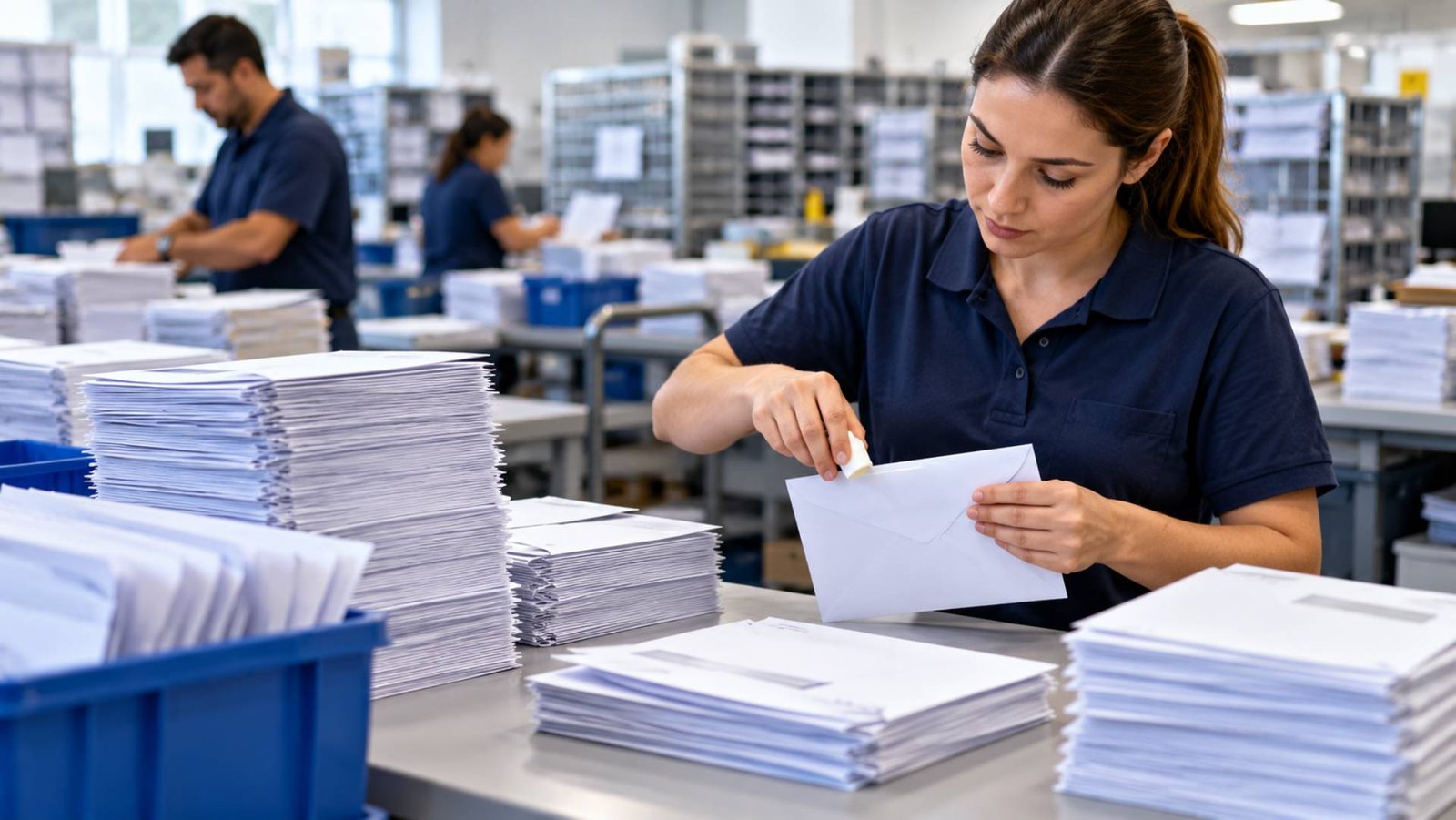
Busy mailrooms rarely lose time through one major breakdown. Instead, the process of folding, checking alignment, handling adhesive, and making corrections consumes more time. One piece may take little time, yet thousands of small pauses can delay dispatch deadlines. Hand sealing also produces uneven pressure, inconsistent folds, and fatigued staff during extended runs.
For teams handling invoices, payroll documents, notices, or direct mail, the central concern is workflow capacity, not employee effort. Here’s a guide to the reasons manual sealing slows down high-volume mailrooms and what to do about it.
Why Hand Sealing Creates Hidden Delays
High-volume mailrooms handle invoices, notices, payroll documents, checks, and direct mail in changing batches. Each hand-folded sheet adds seconds. Poor folds can lead to rework, jams, or envelopes requiring inspection. A comparison of commercial pressure sealer equipment helps managers match feed capacity, fold settings, and controls with daily demand. That decision makes sealing a repeatable part of production.
Hand work also creates variation from one operator to another. One person may apply more pressure, while another may position the document differently. Some pieces need a second pass before mailing. Others leave the station with bent edges, open seams, or uneven alignment. Staff must then sort, correct, and sometimes replace defective pieces.
These issues become harder to spot when batches move quickly. It may take a minor misalignment to influence multiple parts before anybody pays attention. Once mixed with correctly sealed documents, defective items require additional sorting. The delay then spreads beyond one workstation and interrupts the mailing schedule.
Labor Costs Extend Beyond the Sealing Station
Manual sealing affects more than just the employee working at the table. Upstream staff are also affected while waiting for completed batches. Downstream teams may need added checks before postage, sorting, or dispatch. If a mailroom handles 2,000 pieces each day, four extra seconds per piece adds more than two hours of handling.
Fatigue also brings another measurable cost. Repetitive folding and pressing can slow production during longer runs. The decline often appears late in a shift, when deadlines are closest. Supervisors may add temporary workers, extend hours, or reassign staff from other duties to handle the situation. These measures raise costs without addressing the source of the delay. Many times, the pattern goes unnoticed until the last minute approaches.
What Changes with Automated Pressure Sealing
Pressure sealing equipment feeds, folds, and presses documents in a controlled sequence. The machine replaces several separate hand movements with consistent timing and alignment. Operators load a batch, monitor progress, and move completed pieces to the next stage.
Consistent Feeding
Controlled feeding reduces gaps between documents and limits double feeding. This matters for forms with multiple pages or different paper weights. A steady feed also supports reliable staffing and dispatch planning.
Accurate Folding
Operators can adjust fold settings for common document sizes and formats. Consistent positioning keeps panels aligned throughout a batch. Fewer uneven folds reduce rework and improve the finished piece.
Better Quality Checks
A standard output makes defects easier to spot. When a problem appears, staff can check the machine setting or paper supply instead of examining every item. That approach narrows the likely cause and speeds correction.
Choosing Capacity for Daily Demand
A right machine should fit average volume, peak demand, document size, and available floor space. A compact desktop model may suit occasional batches. A higher-capacity unit can support regular production. Though feed speed also matters, it should not determine the choice alone.
Mailroom managers should also review setup time, fold flexibility, touchscreen controls, paper handling, and service access. A speedy machine that needs frequent adjustments can create fresh delays. Capacity should be judged across the full workflow, from loading and sealing through inspection and dispatch.
Conclusion
Manual sealing slows busy mailrooms through small interruptions that repeat throughout each shift. Hand folding, uneven pressure, corrections, fatigue, and inspection work can consume many hours each week. Automated pressure sealing provides controlled feeding, consistent folds, and predictable output for routine document batches.
By matching capacity with actual demand and checking setup needs, managers can reduce rework, protect deadlines, and give staff more time for tasks requiring judgment rather than repetitive handling.