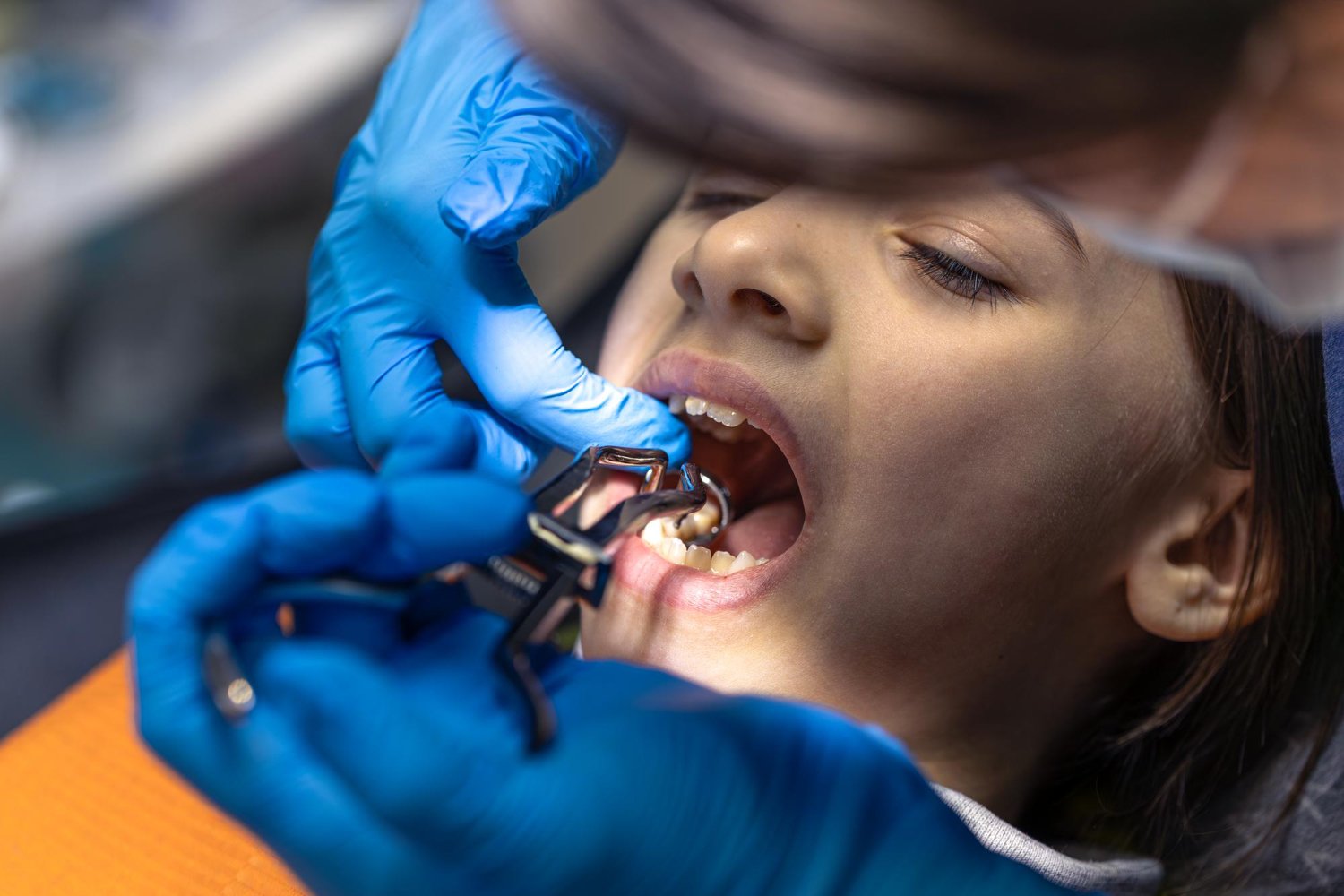
A child can brush every morning and night while decay quietly develops where two back teeth touch. Those narrow contact points are difficult to see during a routine look inside the mouth. Parents in Overland Park may therefore hear about a hidden cavity even when no dark spot was visible at home.
A pediatric dentist overland park, ks, can examine these tight spaces and determine how far the decay has progressed before choosing treatment. The American Academy of Pediatric Dentistry notes that radiographs can help detect disease that cannot be identified through a clinical examination alone. The process usually moves from locating the hidden area to judging its depth, treating the damage, and reducing the chance of another cavity.
Why Touching Molars Can Hide Decay
Two molars that sit tightly together create a narrow space that a toothbrush cannot clean completely. Food debris and plaque can remain along these contact surfaces even when the visible tooth looks healthy. Bacteria use sugars from foods and drinks to produce acids that attack tooth enamel. Early damage between molars may therefore develop without an obvious hole that parents can see.
Bitewing Images Reveal the Hidden Area
A visual examination comes first, but touching molars can block the dentist’s view between neighboring teeth. Bitewing radiographs can show the contact surfaces and help reveal decay that remains hidden from direct sight. Current dental radiography recommendations indicate bitewing images for posterior proximal cavities that are not clinically visible.
Dentists prescribe these images according to clinical findings, dental history, development, and individual cavity risk rather than automatically for every child. The image also helps show whether damage remains in enamel or has reached the softer dentin beneath it. That depth becomes an important checkpoint when the dentist decides what care the molar needs next.
Early Decay May Need Preventive Care in Overland Park
A very early lesion does not always require the same treatment as a deeper cavity. The dentist first considers whether the tooth surface remains intact and how far mineral loss has progressed. Some early lesions may receive preventive care aimed at slowing or stopping further mineral loss.
Fluoride exposure, diet habits, plaque control, and the child’s cavity risk can influence that plan. Parents should follow the recommended review schedule because early damage can progress if conditions around the tooth remain unchanged. Regular checks give the dental team a chance to see whether preventive measures are controlling the affected area.
Deeper Cavities May Require a Filling
Decay that has created a cavity may require removal of the damaged tooth structure and placement of a restoration. The dentist first isolates the area and keeps the child comfortable throughout the procedure. Damaged material is removed carefully while healthy tooth structure is preserved whenever clinically possible.
The prepared space then receives a suitable restorative material that helps restore the molar’s shape and function. A deeper lesion may require a different treatment approach when decay has reached or affected the tooth’s pulp. Finding interproximal decay earlier can therefore reduce the chance that a small problem develops into more extensive treatment.
Parents Can Watch for Useful Clues
Parents should avoid waiting for severe tooth pain because discomfort may appear after decay has already progressed.
- New sensitivity when the child eats something cold, sweet, or hot
- Food that repeatedly becomes trapped between the same two back teeth
- Tenderness or discomfort when the child chews on one side
- Floss that catches, tears, or causes discomfort at one contact point
A cavity between touching molars can remain unnoticed until an examination reveals what is happening beneath the contact point. Families working with a pediatric dentist in overland park, ks, can receive an assessment based on cavity depth, tooth condition, and the child’s individual risk. Parents in Overland Park can also ask what preventive steps should continue after treatment to protect other tight contacts. Finding hidden decay at an earlier stage can preserve more healthy tooth structure and simplify the care a child may need.