Key Takeaways
- The most meaningful wedding films reflect the couple’s real personalities, not a staged version of the day.
- Clear vows, speeches, laughter, and ambient sound give the video emotional staying power.
- A relaxed timeline creates space for candid reactions and unexpected moments.
- Sharing personal context with your filmmaker helps them recognize the people and details that matter most.
- A polished film can still include imperfect, funny, emotional, and unscripted footage.
A great wedding film should bring you back to the feeling of the day, not simply show you what happened. Years later, the most powerful clips may be a parent taking a breath before a toast, a private laugh during portraits, or the sound of your guests cheering after the ceremony. When planning with a team such as Adam Gorham Films, the goal is to create enough structure for beautiful coverage while leaving room for the real moments that cannot be scheduled.
In 2026, couples have more options than ever, from cinematic highlight films and full ceremony edits to casual guest-shot footage. The best choice is not necessarily the trendiest format. It is the approach that feels honest to you and preserves the voices, relationships, traditions, and energy that made your celebration yours.
Why Real Moments Matter More Than Perfect Poses
Genuine reactions are essential for creating an emotionally resonant wedding video, as mere perfect poses lack depth. Key moments, such as a nervous hand squeeze before the ceremony, siblings interacting during preparations, grandparents observing the first dance, and a child sleeping at the reception, collectively enrich the narrative. Adopting a documentary-inspired filmmaking approach does not compromise visual quality; instead, it emphasizes authentic movement and interactions while still capturing the venue, intricate details, flattering portraits, and cinematic lighting. This style prioritizes capturing the event as it naturally unfolds, allowing participants to engage genuinely rather than perform for the camera.
Choose the Feeling Before Choosing the Style
Before comparing packages or highlight reels, decide how you want the completed film to feel. Each partner can choose three words that describe the mood you want to revisit. Compare your answers and look for shared themes.
- Classic and refined: Elegant imagery, measured pacing, and timeless music.
- Natural and documentary-style: Real-time moments, natural audio, and candid interactions.
- Fast-paced and modern: Energetic editing, celebration-focused footage, and short social clips.
- Warm and nostalgic: Soft color, meaningful voiceovers, and family-centered storytelling.
- Fun, colorful, and guest-focused: Dancing, personality, surprise moments, and a lively reception.
Use those words when speaking with prospective filmmakers. They are more useful than saying you want something “cinematic,” because cinematic can mean very different things to different people.
Build a Timeline That Leaves Room to Breathe
A packed schedule can make a wedding feel rushed and can limit candid footage. Build realistic travel time between locations, allow extra minutes for getting dressed, and avoid placing every important activity back-to-back. A small buffer can protect both your experience and your footage when weather, traffic, family photos, or wardrobe adjustments take longer than expected.
Helpful Timeline Steps
- List the moments that absolutely need coverage, including letters, first looks, ceremony entrances, dances, and speeches.
- Add travel, parking, setup, and transition time between locations.
- Schedule 10 to 15 quiet minutes together after the ceremony if possible.
- Leave breathing room around the ceremony and reception entrances.
- Share the final timeline with your filmmaking team, planner, photographer, DJ, and venue coordinator.
Plan for Natural Audio, Not Just Beautiful Video
Audio is often what makes a wedding film feel personal. Your vows, an emotional toast, applause, music drifting through the room, and even a few seconds of ambient sound can bring viewers directly back to the day. The Professional Photographers of America notes that important wedding moments benefit from redundant audio recording, particularly for vows and speeches.
Ask specific questions before booking: How will vows be recorded? Is there a microphone on the officiant or the groom? Will the filmmaker connect to the DJ’s sound system for speeches? What backup method is used? Outdoor ceremonies also need a plan for wind, traffic, and unpredictable background noise.
Give the Filming Team Useful Personal Details
Your filmmaker cannot automatically know every relationship or tradition that carries meaning. Provide a short, practical list before the wedding, but do not turn it into a rigid script. The list should help the team recognize important people and anticipate meaningful moments.
- Family members who should receive extra attention.
- Private letters, vows, or gifts.
- Cultural or religious traditions.
- Family heirlooms, special songs, or sentimental locations.
- Surprise performances, dances, or announcements.
- Guests who have traveled a long distance or played a major role in your relationship.
Balance Cinematic Shots With Unscripted Footage
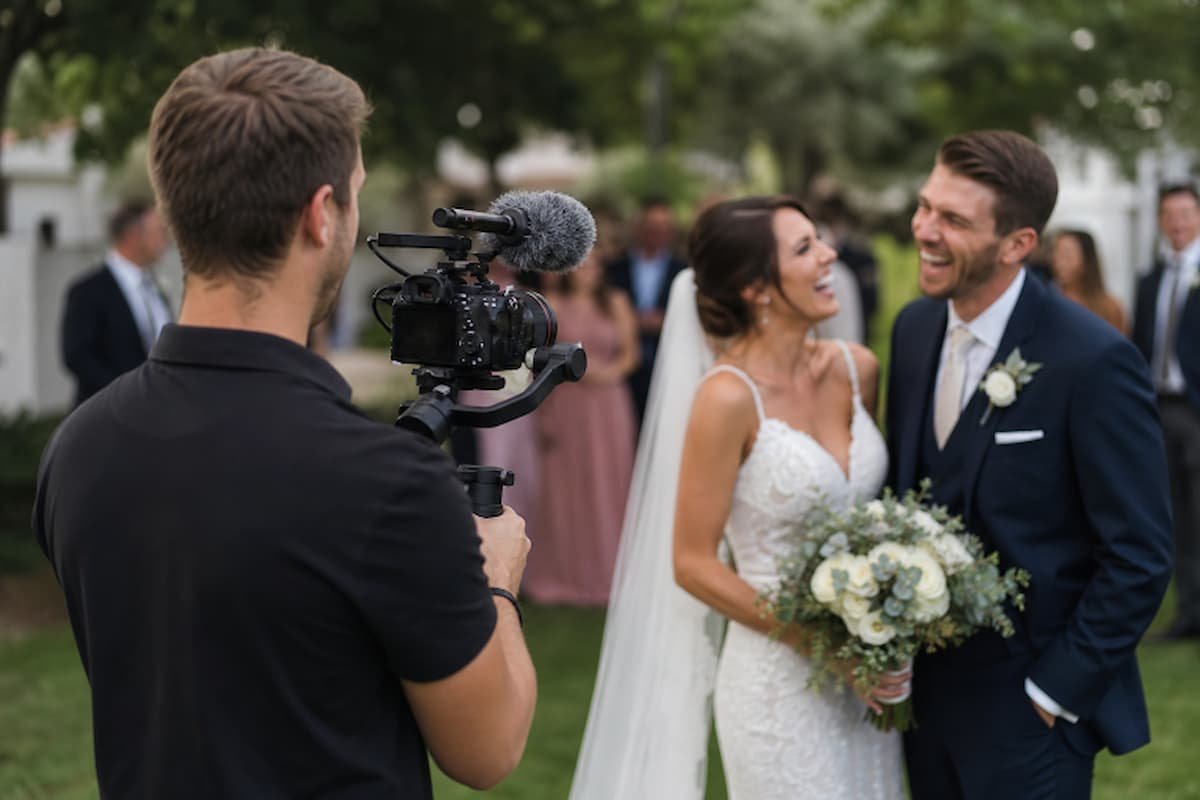
The strongest wedding films use a range of footage. Wide shots establish the venue and setting. Close-ups show emotion. Detail shots of hands, flowers, attire, invitations, food, and décor add texture. Most importantly, reactions from guests give major events a sense of scale and connection.
Do not be afraid of footage that is slightly imperfect but emotionally true. A laugh in the middle of a portrait session, a tear during a parent dance, or a messy dance floor can become the scene you replay most often. Good editing creates a cohesive story without removing the day’s personality.
Consider Guest-Filmed Footage as a Supporting Layer
Informal camcorder and phone footage can add intimacy, especially for behind-the-scenes clips and guest messages. The growing interest in wedding camcorders reflects how much couples value footage that feels immediate, personal, and less polished.
Guest footage works best as a complement to professional coverage. Assign one trusted person to manage a device or collect memory cards, ask guests not to block the aisle during key events, and set boundaries around private moments. A professional team should remain responsible for the ceremony, speeches, and other once-only events.
Ask Better Questions Before Booking
- What parts of the day are included in coverage?
- Are vows and speeches captured, and are full edits available?
- How many cameras and audio sources are used for the ceremony?
- How long is the highlight film, and what is included in it?
- Can certain family members, traditions, or surprises be prioritized?
- Are teaser clips or short social videos included?
- When will the finished films be delivered, and how will they be stored or downloaded?
Think About the Final Film as a Family Keepsake
A short highlight is ideal for sharing, but longer edits preserve more of the voices and events you may value later. Consider requesting a combination of formats: a teaser, a highlight film, a longer feature edit, a full ceremony, full speeches, and a private archive of selected footage. Confirm delivery details before the wedding to avoid assumptions about length, files, or turnaround time.
Common Planning Mistakes to Avoid
- Booking solely from a fast-paced highlight reel.
- Assuming clear audio is automatic.
- Building a timeline with no buffer time.
- Not explaining meaningful family relationships or traditions.
- Choosing a visual style that does not match your personality.
- Waiting until after the wedding to discuss final deliverables.
Frequently Asked Questions
How long should a wedding film be?
The right length depends on how you want to watch it. A short highlight is easy to share, while a longer film has room for full vows, speeches, reactions, and transitions throughout the day.
Can a wedding film feel natural if we are nervous on camera?
Yes. Most couples are nervous at first. A calm team, brief direction during portraits, and a timeline with breathing room can help you relax without making the experience feel staged.
Should we choose cinematic or documentary style?
Choose the style that fits your priorities. Cinematic films emphasize mood and visual polish. Documentary-style films often focus more on real-time events, natural sound, and unscripted interactions. Many couples prefer a thoughtful blend of both.
Conclusion
A wedding film feels real when it preserves more than appearances. It should hold the voices, pauses, movement, laughter, and small surprises that made the celebration personal. With a clear audio plan, an unhurried timeline, honest communication, and a style that genuinely suits you, your film can remain meaningful for decades.