
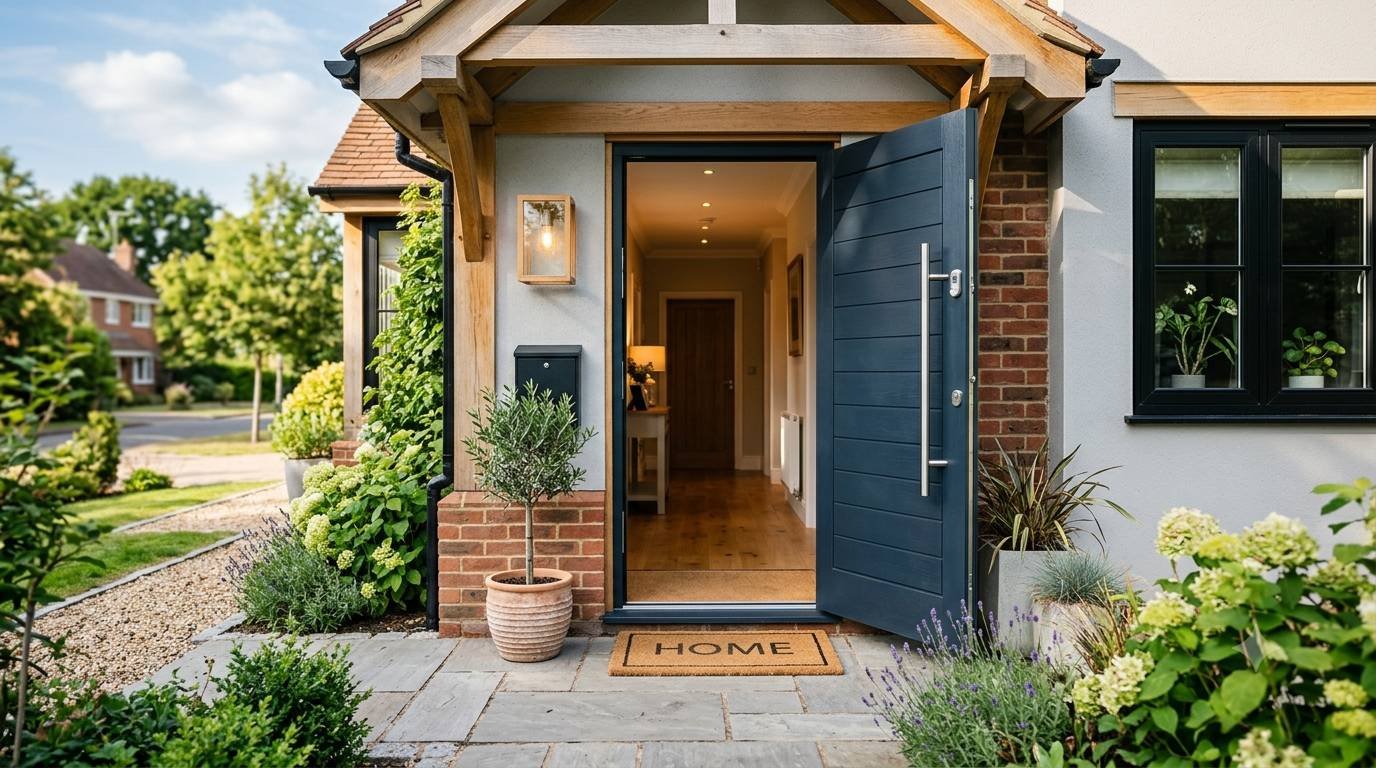
Key Takeaways
- Choose an entry door based on climate, security, maintenance, and architectural style.
- Fiberglass, steel, and wood each offer useful strengths and meaningful trade-offs.
- The frame, threshold, seals, and installation quality are as important as the door slab.
- Accurate measurements and the correct swing direction prevent many common fit problems.
- Glass, hardware, color, and sidelights should support how the entrance looks and works every day.
A front door affects curb appeal, household comfort, privacy, and security from the moment someone approaches the home. It also gets used hard. Daily opening and closing, direct sun, rain, humidity, temperature changes, and occasional impacts all test its finish, hinges, seals, and hardware. Homeowners considering door installation services in Charlotte, NC should think beyond the color and panel layout before choosing a replacement.
An entry door is really a system. The slab, jamb, threshold, weatherstripping, hinges, lockset, strike plate, glass, and exterior trim need to work together. A handsome new door can still feel drafty, stick during humid weather, or admit water if the frame is out of square or the sill is not properly sealed.
Start With the Home’s Main Needs
Before browsing styles, create a short list of priorities. Consider the local weather, the amount of upkeep you are willing to perform, the overall project budget, and the level of security your household prefers. Then review the opening itself, including its size, swing direction, porch clearance, and surrounding trim. This process narrows the choices quickly and keeps appearance from becoming the only deciding factor.
It also helps to consider how the door will be used. A busy family entrance may benefit from a durable finish, easy-to-clean surface, and reliable hardware. A formal front entrance may place more emphasis on glass, decorative details, or a wood-grain appearance. Both goals can be met, but the ideal product may differ.
Compare the Main Entry Door Materials
Fiberglass Doors
Fiberglass is often a practical middle ground for homeowners who want durability and a refined appearance. It resists moisture, routine dents, warping, and many of the seasonal issues that affect natural wood. Textured models can imitate wood grain convincingly, while smooth options suit more contemporary homes. Insulated fiberglass doors may also provide strong thermal performance when paired with quality seals and proper installation.
Steel Doors
Steel doors are valued for their strength, security, and typically lower entry price compared to premium wood options. They can be a sensible choice for a simple, clean-lined entrance. However, steel can dent, scratches may expose the surface to corrosion if left untreated, and the material can transfer heat more readily than an insulated fiberglass door. A durable factory finish and prompt touch-ups help preserve the surface.
Wood Doors
Wood offers natural grain, warmth, and a traditional character that other materials work to replicate. It can be stained, painted, and refinished, making it attractive for historic, Craftsman, rustic, and custom homes. The trade-off is maintenance. Sun, rain, humidity, and temperature swings can affect wood over time, so regular inspection and refinishing are important, particularly at exposed entryways.
Match the Door to the Local Climate
Climate should guide both material and finish selection. Humid and rainy regions require dependable water management and finish protection. Strong sun can fade dark paint or cause exposed surfaces to strain. Freezing temperatures make air sealing especially important, while coastal air can be harsh on hardware and metal components. In storm-prone areas, review local code requirements, wind ratings, and impact protection before ordering.
Look at Energy Performance, Not Just Appearance
A comfortable entrance depends on more than the insulation inside the door. Weatherstripping, a correctly fitted threshold, a sealed jamb, and insulation around the rough opening all help control drafts. U-factor describes how readily heat moves through a product, with lower values generally indicating less heat transfer. Solar heat gain coefficient measures how much solar heat passes through glazing, which matters when a door includes glass and faces intense sunlight.
Ratings vary by design, glass area, and climate zone, so compare actual product information rather than relying only on broad marketing claims. The ENERGY STAR guide for residential windows, doors, and skylights explains climate-zone considerations and encourages buyers to review certified performance labels. Even a high-performing product can lose its advantage when poorly installed or with gaps around the frame.
Choose Security Features That Fit Daily Life
Security begins with solid construction, but it does not end there. A quality deadbolt, reinforced strike plate, long mounting screws that reach framing, dependable hinges, and a sound jamb all matter. The lock area and frame can be more vulnerable than the center of the door itself. Smart locks can add convenient access control, but they should complement, not replace, a strong physical lock and a properly secured frame.
If the door includes glass, balance daylight with privacy and security. Frosted, textured, or decorative glass can obscure interior views while still admitting light. For large glass inserts near the lock, consider the location, street visibility, and the practical need for privacy inside the home.
Get the Size and Swing Right
Homeowners should understand the difference between replacing only a door slab and installing a complete prehung unit. A slab replacement may work when the existing frame is square, dry, structurally sound, and compatible with the new slab. A complete unit is often the safer choice when there is rot, poor alignment, damaged seals, or an outdated threshold.
- Rough opening width and height
- Jamb depth and door thickness
- Hinge locations and lock bore placement
- Inswing or outswing direction
- Threshold height and clearance near the flooring
- Room around steps, railings, walls, and furniture
Small measurement mistakes can cause rubbing, latch misalignment, air gaps, water entry, or a door that cannot open fully. Confirm details before ordering, especially when adding sidelights, a transom, or a wider decorative unit.
Balance Glass, Privacy, and Natural Light
Clear glass delivers the most visibility and daylight, while frosted, textured, and decorative glass offer more privacy. Sidelights and transoms can brighten an entry without increasing the main door width. Before selecting large glazed areas, consider afternoon sun, the direction the entrance faces, the view from inside, and cleaning needs. A design that looks impressive in a showroom should still feel comfortable at home year-round.
Match the Door to the Home’s Architecture
Clean lines and simple hardware often suit modern homes. Raised panels, divided glass, and traditional finishes work well with classic exteriors. Craftsman and rustic homes often pair naturally with warm wood tones, rectangular glass lites, and straightforward detailing. Coordinate the door with siding, brick, trim, shutters, and roof color, but avoid choosing a trend that may look dated after only a few seasons. Proportion matters too. An oversized entrance can overwhelm a modest façade, while a narrow door can disappear on a wide front elevation.
Consider Installation, Repairs, and Budget
Before installation, inspect for rot, moisture damage, shifting, cracked trim, or a deteriorated sill. The opening should be prepared so the unit can be set level, plumb, and square, then secured, insulated, and sealed according to manufacturer instructions. Test the swing, latch, locks, sweep, and weatherstripping before the project is complete.
Repair may make sense for worn weatherstripping, loose hinges, sticking hardware, a damaged sweep, or minor finish issues. Replacement is more appropriate when there is deep frame rot, major warping, failed glass, recurring drafts, or a door that no longer closes securely. Build a complete budget that includes the door, labor, hardware, trim, paint or stain, disposal, and any structural repairs. Comparing full project estimates is more useful than comparing slab prices alone.
Final Selection Checklist
- Does the material suit the climate and maintenance plan?
- Do the size, swing, frame, and threshold fit the opening correctly?
- Do the locks, glass, and hardware meet daily security and privacy needs?
- Do performance ratings fit the local climate and exposure to the sun?
- Does the finish complement the home without sacrificing durability?
- Are installation details and total project costs clearly defined?
Conclusion
The right entry door should look inviting while also supporting comfort, security, and long-term durability. By comparing materials, measuring carefully, reviewing energy details, and giving equal attention to the frame and installation, homeowners can choose an entrance that works well long after the first impression.