
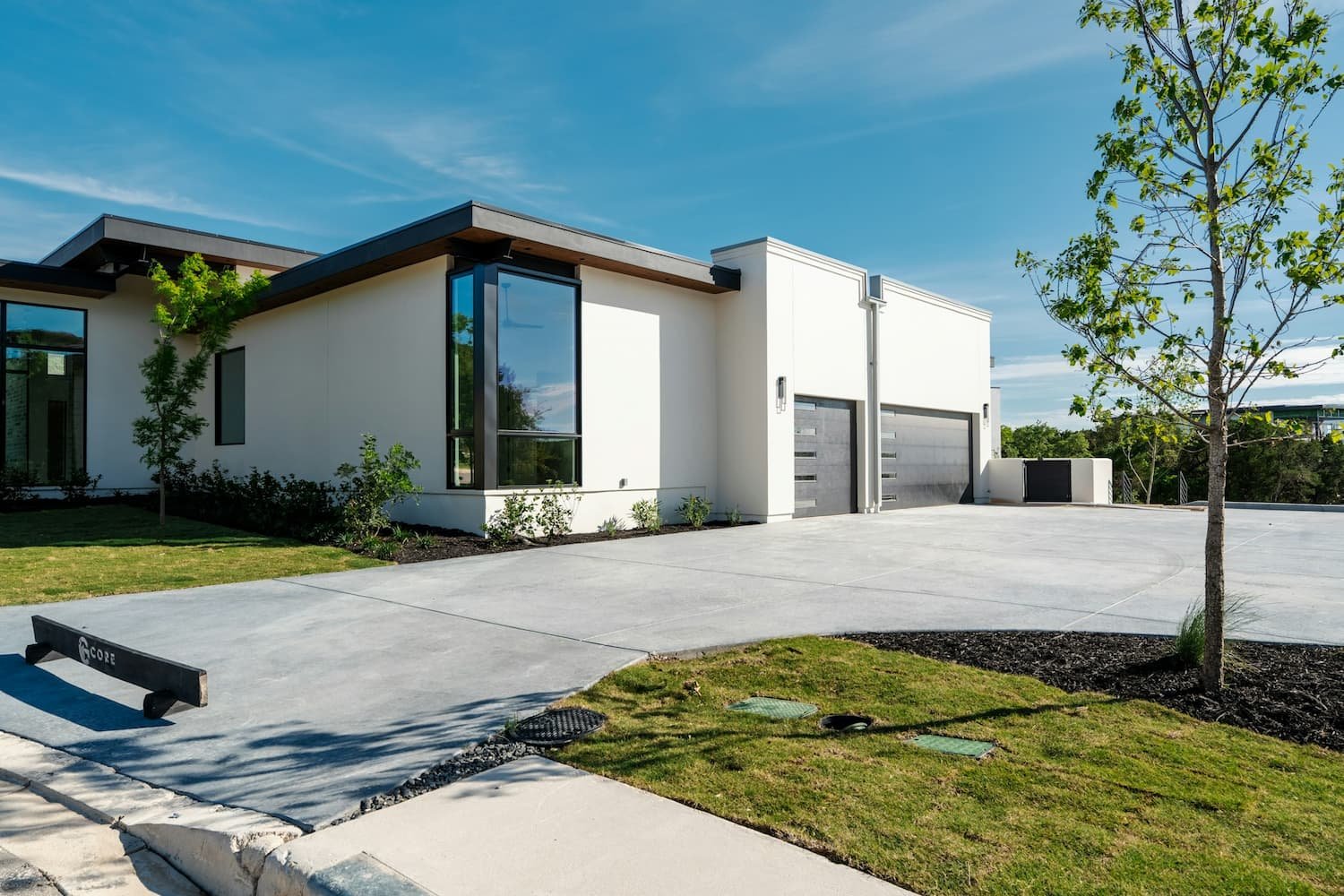
A professionally poured concrete driveway can remain serviceable for 30 years or more, and well-built examples sometimes last 40 to 50 years under favorable conditions. That lifespan depends less on age alone than on base preparation, slab thickness, drainage, joint layout, curing, traffic, and ongoing maintenance. Understanding how the surface changes over time helps property owners separate normal aging from problems that deserve repair before they spread.
The First Year Determines More Than the Surface Appearance
Fresh concrete begins gaining strength immediately after placement, but early curing conditions strongly influence how the slab performs years later. During the first weeks, moisture retention, temperature control, and protection from premature vehicle traffic help the concrete develop the hardness and internal strength intended by the mix design.
Good joint placement also starts paying off during this stage because concrete naturally shrinks as it cures. Poorly spaced joints, weak subgrade support, or rushed curing can allow random cracks to appear early, giving the driveway a shorter useful life before ordinary wear has even begun.
Years 1 to 5 Reveal the Quality of the Original Installation
Within the first several years, a sound driveway should remain relatively stable while carrying everyday passenger vehicles and weather exposure. Small color changes, light surface wear, and fine shrinkage lines can occur without signaling structural trouble, especially if the slab stays level and drains properly.
Proper construction becomes easier to recognize once the driveway has passed through repeated seasons of heat, rain, freezing weather, or soil movement. Owners should pay attention to widening cracks, settlement, spalling, or water pooling because those symptoms can point to drainage or base problems rather than simple surface aging.
Years 5 to 15 Bring the First Meaningful Maintenance Decisions
Between roughly five and fifteen years, traffic patterns and environmental exposure become more visible across frequently used areas. Hairline cracks may need sealing, joints can collect debris, and isolated stains or minor surface wear may appear where vehicles stop, turn, or park every day.
Routine maintenance can slow water entry and keep small defects from affecting the support beneath the slab. Keeping joints open and functional, correcting drainage issues, and repairing localized damage early can preserve a concrete driveway without turning normal upkeep into constant work.
Years 15 to 25 Are Often About Repairing Specific Areas
Around the middle of a driveway’s service life, certain sections may age faster than others because wheel paths, garage approaches, edges, and drainage points receive different stresses. Localized cracking or settlement does not always mean the entire pavement needs replacement, particularly when surrounding slabs remain stable and structurally sound.
Experienced concrete contractors near me may recommend targeted repairs, slab replacement, joint work, or drainage corrections depending on what caused the damage. People often save more by fixing the source of movement than by repeatedly patching the visible crack while unstable soil or trapped water remains underneath.
Years 25 to 35 Show Whether the Slab Still Has Useful Life Left
By the third decade, a driveway may show more noticeable wear while still performing its basic job well. Surface texture can soften, repaired areas may become visible, and older joints can require attention, yet age alone does not automatically make replacement necessary.
Older concrete deserves evaluation based on movement, cracking pattern, drainage, load history, and the condition of individual panels. Selective reconstruction can sometimes extend useful service when the damage is concentrated, while widespread settlement or broken sections may make a larger replacement project more practical.
Certain Conditions Can Shorten the Expected Lifespan
Water causes some of the most expensive long-term problems because it can weaken supporting soil, enter cracks, and worsen freeze-thaw damage in colder climates. Heavy trucks, overloaded trailers, poor edge support, and repeated turning loads can also stress pavement that was originally designed mainly for passenger vehicles.
Tree roots may lift isolated sections, expansive soils can shift beneath the slab, and deicing chemicals can contribute to surface deterioration under certain conditions. Chemical exposure, drainage failures, and improper repairs all matter more when they continue for years without correction, which is why periodic inspection can be worth more than cosmetic maintenance alone.
Replacement Becomes Practical When Repairs Stop Solving the Problem
Eventually, replacement makes sense when large areas have settled, several slabs have broken apart, drainage cannot be corrected without reconstruction, or repairs are becoming frequent enough to lose economic value. Replacement also creates an opportunity to improve base preparation, thickness, grading, joint layout, and access for the way the property is currently used rather than rebuilding the original design unchanged.
Comparing concrete companies near me is more useful when estimates explain demolition, subgrade work, base material, slab depth, reinforcement, finishing, and curing instead of presenting only a square-foot price. From aging pavement and damaged concrete to larger facility improvements, Pros LLC handles concrete paving, commercial renovation work, specialty flooring, and high-performance coating projects. Property owners can turn to the company for help assessing existing conditions and determining whether targeted repairs, full replacement, or broader site improvements make the most sense for continued use.