
Key Takeaways
- Ant mounds and trails often point to favorable soil, moisture, shelter, or food conditions.
- Identifying the ants and their location helps determine whether control is necessary.
- Consistent lawn care can reduce bare, damp, and debris-filled areas where colonies may thrive.
- Leveling loose soil improves appearance, but it does not necessarily eliminate the colony below it.
- Stinging ants near play areas, doors, walkways, pets, or gardens deserve extra caution.
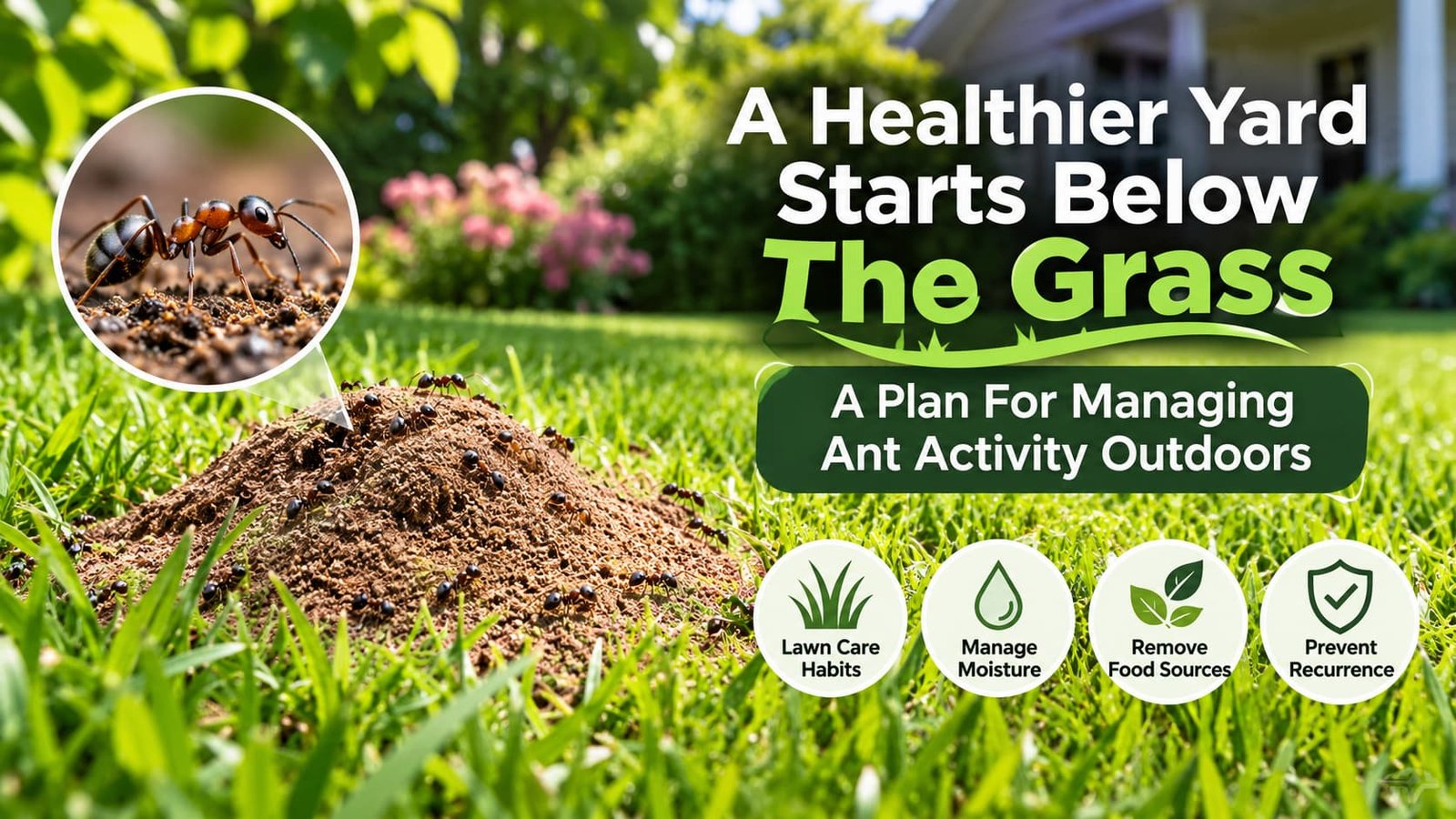
Fresh ant hills can make an otherwise healthy lawn look uneven, but the visible soil is only part of the story. Ant activity is often linked to conditions beneath the grass, including loose soil, moisture, shade, food sources, and protected nesting sites. Homeowners can address the appearance of mounds while also taking a more complete approach to residential and commercial pest control when recurring activity affects how an outdoor space is used.
Rather than treating every ant immediately, start by observing what is happening in the yard. A few small soil-nesting colonies may cause little more than a cosmetic issue, while repeated mounds or aggressive ants near high-use areas may call for a more focused response. Thoughtful inspection helps protect the lawn, beneficial insects, children, pets, and nearby plants. It can also prevent homeowners from applying a treatment intended for one type of ant when the actual issue is another outdoor pest or a temporary soil disturbance.
Why Ant Activity Often Increases in Lawns
Ants may become more noticeable during warm periods or after wet weather changes the soil. A quiet section of turf can suddenly show several disturbed spots after a rainy week, not necessarily because a new infestation arrived overnight, but because the ground became easier for existing colonies to excavate. Ants also follow food and moisture, so fallen fruit, pet food, birdseed, plant pests, and leaking outdoor fixtures can attract them. In dry periods, irrigated turf, shaded beds, and areas near outdoor water sources may stand out as more favorable places for ants to forage or nest.
Start With Identification Before Treatment
Different ants create different concerns. Many outdoor species are primarily a nuisance when their mounds interfere with mowing or cover grass. Others may bite or sting when disturbed, tend aphids or scale insects on plants, or travel indoors in search of food and water. Avoid poking at an unknown nest, especially if anyone in the household has an insect-sting allergy. If possible, note whether the nest has a distinct opening, whether it is in open sun or shade, and whether the ants are concentrated in one area or moving along a defined trail.
What to Check
- Ant size, color, and whether they react aggressively when approached.
- The nesting location, such as turf, mulch, pavement edges, garden beds, or a foundation.
- Clear trails leading to food, water, or plant pests.
- Whether children, pets, or frequent foot traffic are close to the activity.
- Whether mounds return in the same place after rain, mowing, or raking.
How to Inspect an Ant-Prone Yard
Inspect during daylight and observe from a safe distance. Walk the property edge and look around mulch, stones, tree bases, stored lumber, borders, and pavement cracks. Check for dripping faucets, clogged gutters, overspray from irrigation, or low spots that remain wet. Examine shrubs for aphids, scale, or sticky residue, since ants may feed on the honeydew these insects produce. If identification is uncertain, take a clear photograph without handling the ants. Looking at the yard at different times of day can also be useful, as foraging trails may be more visible when temperatures are moderate, and the surface is not overly hot.
Lawn Habits That Can Reduce Ant Pressure
A healthy lawn cannot guarantee an ant-free yard, but vigorous turf leaves fewer exposed areas for soil disturbance. Good mowing, watering, drainage, and repair practices support stronger roots and denser grass. Guidance on maintaining an established lawn emphasizes managing moisture, drainage, soil conditions, and mowing practices to support vigorous turf growth. Pay attention to repeated bare patches around edging, utility covers, downspouts, and heavily traveled paths. These areas may need a practical fix, such as redirecting runoff, adjusting irrigation coverage, or restoring damaged turf, before they can blend back into the lawn. Improving the underlying condition is usually more useful than repeatedly covering the same loose soil.
Helpful Lawn Practices
- Mow at a height appropriate for the grass type and avoid removing more than one-third of the blade at once.
- Water deeply when the lawn needs it instead of creating frequent surface moisture.
- Repair thin or bare areas before exposed soil becomes widespread.
- Remove food scraps, fallen fruit, spilled birdseed, and uncovered pet food.
- Keep heavy mulch and accumulated yard debris away from walls and doorways.
- Inspect irrigation heads periodically so water is not repeatedly soaking a small section of turf.
Safe Ways to Improve Uneven Lawn Areas
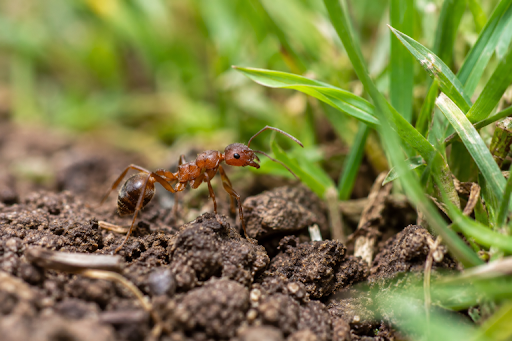
Leveling a mound is a cosmetic lawn-care task, not proof that a colony is gone. Work when the soil is dry enough to move easily, then mark the location so it can be checked later. Use a soft rake or garden broom to spread loose soil across the surrounding turf. Avoid piling soil deeply over living grass, and patch larger bare spots with suitable soil and grass seed or sod for the location. For many ordinary lawn mounds, regular raking can be enough to keep the surface manageable. Iowa State University notes that soil-nesting ants can create nuisance mounds and describes how ant mounds in lawns and gardens may be flattened as needed while control decisions depend on the situation. Wait until ants are less active before working close to a mound, and avoid using bare hands to move soil where a stinging species may be present.
Common Home Remedies That Can Backfire
Some do-it-yourself methods kill only the ants visible at the surface or create new problems for turf and soil. Boiling water can burn grass and cause injury. Bleach and harsh cleaners may damage plants and soil organisms. Flooding can cause ants to relocate nearby rather than resolve the problem. Random pesticide mixtures, or products used in ways the label does not allow, can increase unnecessary exposure risks. Gasoline, fuel, and other flammable household chemicals should never be used on nests because they create serious fire, health, and environmental hazards.
When Baits or Other Treatments May Be Appropriate
Treatment should match the goal. Surface cleanup may be enough when loose soil is the only concern. Colony control may be appropriate when trails repeatedly return, or activity spreads across the property. Safety-focused treatment deserves consideration when stinging ants are near play equipment, walkways, entrances, or pet areas. Use only products labeled for the site and pest, and follow directions about weather, edible plants, pets, children, protective equipment, and reentry. Read the entire product label before use, rather than relying solely on the front-label marketing language. A product that is appropriate for a lawn may not be appropriate for a vegetable garden, indoor use, or placement near water. Avoid disturbing a colony immediately before applying a product if the label provides instructions intended to help ants carry bait back to the nest.
Protecting Children, Pets, Plants, and Pollinators
Wear closed shoes and gloves while inspecting or working near nests. Keep children and pets away from active mounds and any treated area until label directions allow reentry. Avoid broad routine spraying when a targeted response is sufficient, since careful identification can prevent unnecessary impacts on other insects. Seek emergency medical care after signs of a serious allergic reaction or after multiple stings. When working around flowering plants, avoid applying any treatment directly to blooms unless the product label specifically permits that use. Store lawn and pest-control products in their original containers, out of reach of children and pets, and do not leave bait stations or tools where they can be disturbed.
How to Build a Simple Monitoring Plan
Check the same areas once a week, regardless of the weather. Record the date, recent rainfall, location, and level of activity. Take photos from a similar angle, and note whether trails appear near plants, structures, or water sources. This record can reveal whether the problem is seasonal, tied to a drainage issue, or expanding across the property. Monitoring also helps distinguish a one-time mound from a pattern that deserves further action.
When Professional Help Makes Sense
Professional evaluation may be useful when ants enter the home, stings occur in frequently used areas, several nests appear across the property, or careful do-it-yourself efforts have not improved the situation. It is also a sensible option when the species is uncertain or prior treatments damaged the lawn. A professional can help identify likely nesting and foraging areas and recommend an approach that accounts for the lawn, nearby plants, and household safety needs.
Frequently Asked Questions
Do ants always damage grass?
No. Small colonies may cause little direct harm, though larger or recurring mounds can cover grass, create uneven ground, and interfere with mowing.
Should every ant colony be removed?
No. The decision depends on the species, location, safety risk, and effect on the lawn or nearby plants.
Why do ants return after leveling?
Moving surface soil does not remove moisture, food, shelter, or nesting conditions that may still attract the colony.
Can ants in a lawn be a sign of another problem?
Sometimes. Repeated activity can draw attention to excess moisture, exposed soil, food debris, or sap-feeding plant insects that are producing honeydew. Addressing those conditions may reduce the reasons ants keep returning.
Conclusion
A level lawn is useful, but lasting improvement begins with careful observation and consistent maintenance. Before taking action, identify the type of ants present and look for conditions that may be attracting them, such as excess moisture, food sources, or areas with poor drainage. Correct these issues where possible, protect high-use sections of the yard, and choose treatments that are appropriate for the lawn and surrounding environment. It is also important to monitor ant activity over time rather than relying on a single treatment to solve the problem completely. Regular mowing, proper watering, soil maintenance, and prompt attention to developing issues can help keep the yard in better condition. With a combination of preventive care and carefully selected solutions, homeowners can maintain a healthier, more manageable lawn that is comfortable and enjoyable for everyday outdoor activities.