Key Takeaways
- The right Santa Fe neighborhood should support your daily routine, not simply match your preferred architectural style.
- Walkability, drive times, privacy, views, lot size, and nearby services can all affect long-term satisfaction.
- Historic properties can offer exceptional character, but buyers should understand maintenance needs and exterior review requirements.
- A home’s purchase price is only part of its cost. Utilities, insurance, repairs, fees, and travel time matter too.
- Touring a neighborhood at several times of day can reveal details that online listings cannot show.
Choosing among homes for sale in Santa Fe starts with understanding how each part of the city and the surrounding area fits real life. Ricky Allen & Tara Earley Real Estate Group offers a Santa Fe property search with listings across distinct settings, from central historic neighborhoods to communities such as Las Campanas, Tesuque, Eldorado, and areas near the Railyard. Their neighborhood-focused approach is useful for buyers comparing home styles, surroundings, and practical lifestyle tradeoffs.
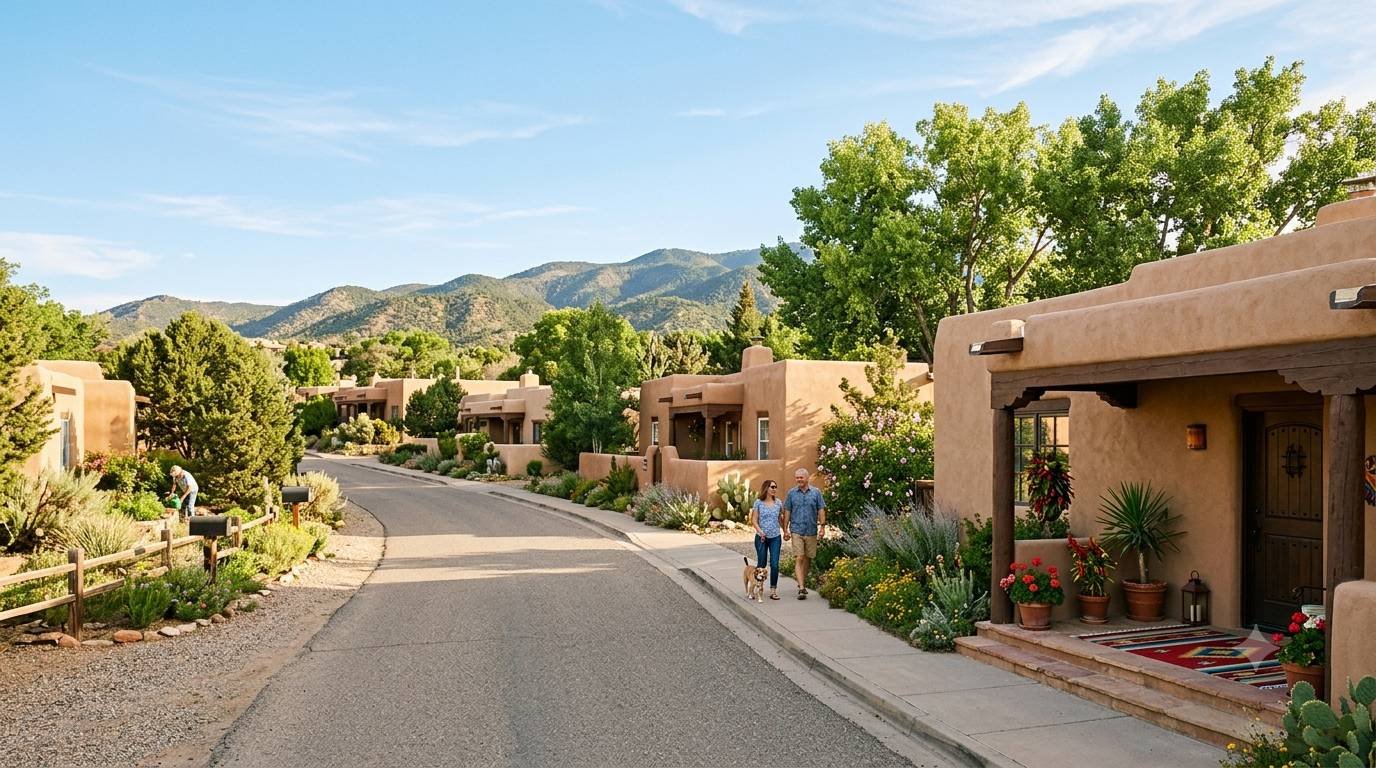
Santa Fe, New Mexico, can offer a very different experience from one address to the next. A home near galleries, restaurants, and downtown activity may suit a buyer who values being close to everyday destinations. A property farther from the center may provide more land, quiet, or open views, while also making errands and commutes more dependent on driving.
Why Neighborhood Choice Matters
Two Santa Fe homes with similar prices can create entirely different daily routines. Street traffic, parking, nearby trails, mountain or city views, neighborhood density, road conditions, and the distance to groceries or health care can shape how a property feels after move-in. The goal is not to identify one universally best neighborhood. It is to find a setting that works for your priorities now and remains workable as your needs change.
Start With Daily Life
Before saving listings, write down what a normal weekday, weekend morning, and evening look like. This simple exercise turns broad preferences such as “convenient” or “quiet” into useful search criteria.
- How often do you expect to visit Downtown Santa Fe, the Plaza, Canyon Road, or the Railyard?
- Do you need a manageable drive to work, school, medical appointments, or the airport?
- Would you rather walk to dining and cultural destinations, or return home to a more private setting?
- Do you need space for guests, pets, gardening, creative work, or a dedicated office?
- How much driving feels reasonable on an ordinary weekday?
Your answers can help distinguish a home that looks appealing from one that supports the way you actually live.
Compare Home Styles and Property Settings
Property type is often the fastest way to narrow a Santa Fe search. Each option comes with a different level of responsibility and flexibility.
- Historic adobe homes: Often valued for traditional details, thick walls, courtyards, and a strong sense of place. Review the roof, stucco, drainage, insulation, and prior repairs carefully.
- Contemporary homes: May offer more open layouts, larger windows, updated systems, and modern finishes. Confirm whether the design and orientation work comfortably through every season.
- Condos and townhomes: Can reduce certain exterior maintenance, but buyers should review association rules, monthly fees, insurance responsibilities, and reserve funds.
- Luxury estates and larger-lot homes: May provide privacy, land, and views, but can also require more landscaping, system maintenance, and longer commute times.
- Planned communities: Can offer a defined neighborhood layout and shared amenities, often with association standards that affect exterior changes and property use.
Look Beyond the Property Line
A listing cannot fully communicate how an area functions. Visit prospective neighborhoods in the morning, late afternoon, and evening, preferably on both a weekday and a weekend. Listen for road noise, observe parking and traffic, and test the drive to the places you will use most.
- Distance to groceries, pharmacies, parks, and health care
- Internet and mobile service at the property itself
- Drainage, snow access, road surfaces, and driveway conditions
- Nearby vacant land, zoning, or planned construction
- School boundaries and transportation routes, when relevant
- Emergency access, trail access, and outdoor recreation options
Consider Santa Fe’s Historic Character
Santa Fe’s historic setting is a major part of its appeal, but it can affect future renovation plans. The city recognizes five historic districts: Downtown and Eastside, Don Gaspar Area, Westside Guadalupe, Historic Transition, and Historic Review.
For any older home, ask when the roof was repaired or replaced, how the stucco has been maintained, whether grading directs water away from the structure, and whether plumbing, electrical, heating, cooling, and insulation have been updated. Age alone does not determine condition. Maintenance history and a thorough inspection provide a clearer picture.
Review the Full Cost of Living
Compare ownership costs alongside the sale price. Your monthly planning should include mortgage principal and interest, property taxes, homeowners’ insurance, utilities, heating, water or well-related expenses, HOA fees, routine repairs, seasonal maintenance, and travel costs. A lower-priced home farther from daily destinations may not remain the lower-cost choice once fuel, time, and property upkeep are considered.
Build a Shortlist and Tour It
- Choose three priorities: Examples include walkability, privacy, views, schools, or a short commute.
- Set two deal breakers: Steep access, major renovation needs, limited parking, or a long daily drive may belong here.
- Select three to five areas: Choose neighborhoods that offer clearly different tradeoffs.
- Compare several listings: By tracking condition, lot size, age, fees, location, and estimated repairs.
- Recheck the numbers: Update insurance, taxes, association documents, and inspection findings before making an offer.
Use Local Market Knowledge
A local real estate professional can help organize the comparison without making the decision for you. Useful guidance includes identifying micro-market differences, spotting questions to raise during inspections, explaining common property types, reviewing offer terms, and helping buyers evaluate whether a specific location aligns with their routine.
Common Questions
Which Santa Fe neighborhood is best for walkability?
Walkability depends on the exact address and your destinations. Homes near downtown, the Plaza, the Railyard, and other central districts may appeal to buyers who want closer access to restaurants, galleries, shops, and cultural venues.
Are historic Santa Fe homes hard to maintain?
Maintenance varies by construction, updates, drainage, roofing, stucco, and prior care. A detailed inspection is more useful than judging a property solely by its age.
Should buyers choose a condo or a single-family home?
Condos may offer lower exterior maintenance, while single-family homes can provide more privacy and control. Compare HOA rules and fees against the direct maintenance responsibilities of a detached home.
How many neighborhoods should buyers compare?
Starting with three to five areas is often enough to identify meaningful differences without making the search difficult to manage.
Conclusion
Choosing a Santa Fe neighborhood is less about finding perfection and more about matching a home to everyday life. Compare routines, property styles, ownership costs, local rules, and nearby development before committing. With a focused shortlist and thoughtful neighborhood visits, buyers can move from a broad search to a confident decision.