
Most homeowners think about their AC for the first time each year on the hottest afternoon of June, when it rattles to life after months of sitting idle and blows something that is generously described as “room temperature air.” By then, you’re already behind. A cooling system that was ignored all spring is almost always a cooling system that underperforms, overworks, and costs more to run when you need it most. The good news is that getting ahead of this takes less effort than you’d think, and the payoff is real.
This guide walks you through a practical, ordered approach to summer cooling prep, from the tasks you can knock out yourself in an afternoon to the ones that genuinely need a professional. Work through these before the heat arrives and you’ll spend summer actually comfortable, not negotiating with a thermostat.
Why Timing Is Everything
Your cooling system sits dormant for most of fall and winter. Dust settles on coils, refrigerant levels drift, belts dry out, and the condensate drain line quietly grows a film of algae that will clog it right when you run the unit hard for the first time. None of these are catastrophic problems on their own. Together, they add up to a system that pulls more electricity for less cooling output.
The numbers back this up. According to the U.S. Energy Information Administration’s 2020 Residential Energy Consumption Survey (RECS), electricity consumption for air conditioning accounted for about 19% of electricity consumption in U.S. homes in 2020, totaling roughly 254 billion kilowatt-hours. That is a meaningful slice of your annual electric bill. A unit running dirty and underserviced will pull from that share and deliver less cooling per dollar spent.
The right time to act is the spring, specifically what I call the Spring Window: that six-to-eight-week stretch after nighttime temperatures stop freezing but before the first genuine heat wave. You want the unit serviced, filters fresh, and any issues resolved before the HVAC companies are buried in emergency calls from everyone who waited too long.
The Spring Window Method: A Room-by-Room Starting Point
Before you touch the system itself, do a quick walk-through of your home with one question in mind: is the air path clear? This takes twenty minutes and catches problems that even a professional tune-up cannot fix, because they are structural, not mechanical.
- Check every supply and return vent. Furniture, rugs, and curtains routinely block them, especially in rooms that got rearranged over winter.
- Look at every window and exterior door seal for gaps. Conditioned air leaking out is money you paid to cool the street.
- Open the attic hatch briefly and check that any exposed ductwork has no visible tears, disconnected joints, or sagging sections.
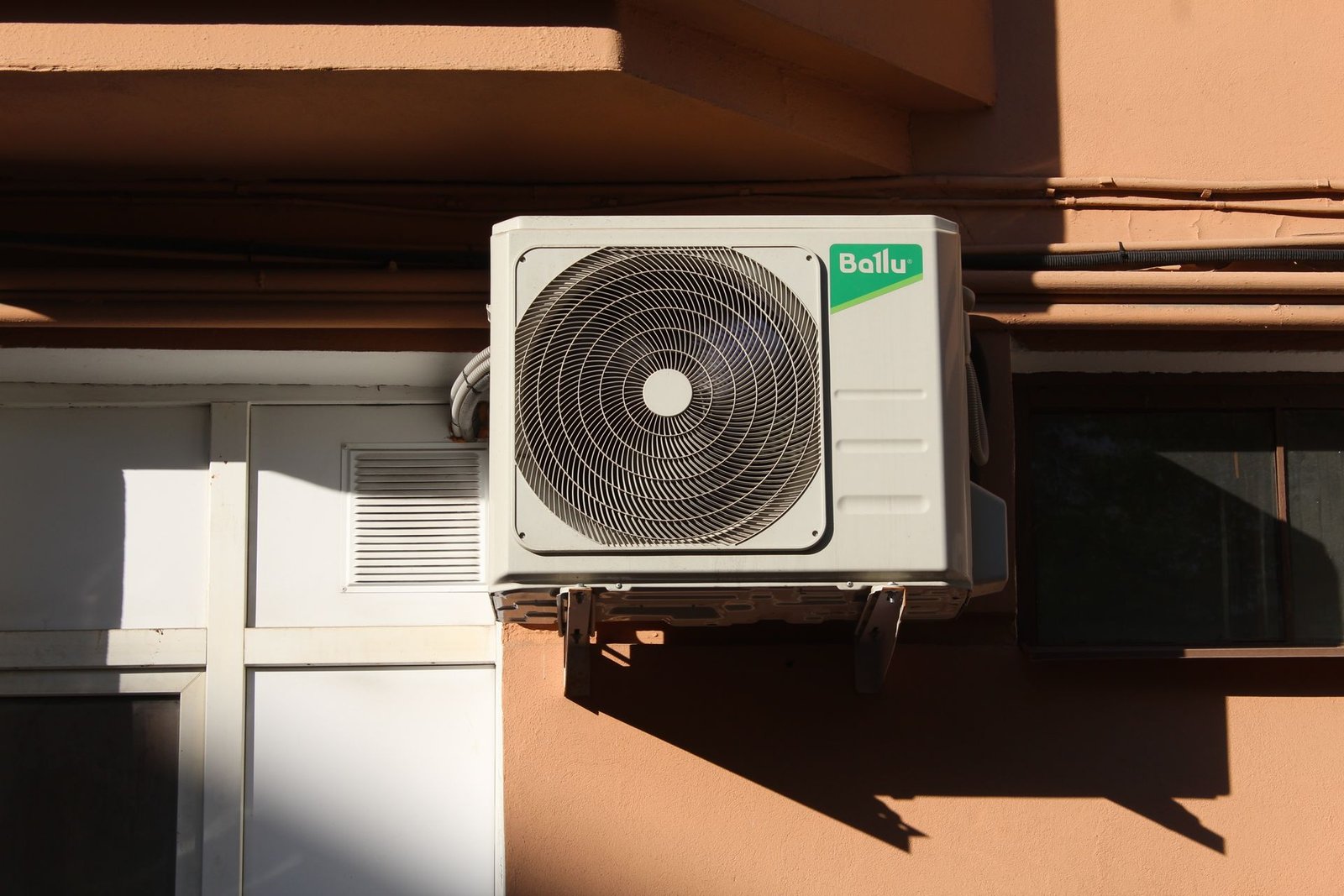
- Walk the perimeter outside and clear the two-foot zone around your outdoor condenser unit of any plant growth, debris, or stored items.
This walk-through costs nothing. It also gives you a realistic picture of what your system is fighting against before you decide what professional service is worth paying for.
Filter, Coil, and Drain: The Three Things You Can Do Yourself
Replacing your air filter is the single highest-return maintenance task a homeowner can perform. A clogged filter forces the blower to work harder, reduces airflow across the evaporator coil, and can eventually cause that coil to ice over. Change it every 30 to 90 days depending on your filter type and household conditions. Buy a small stock so you’re never tempted to run it one more week.
The condensate drain line is the one most people ignore and then regret. It is the small PVC pipe that exits near your indoor air handler. Pour a cup of distilled white vinegar or a diluted bleach solution into the drain pan access port once a month during cooling season. This keeps the line clear and prevents the water backup that trips the safety float switch and shuts your unit down on a hundred-degree afternoon.
Your outdoor condenser coils can be gently rinsed with a garden hose. Turn the power off at the disconnect box first, spray from the inside out to push debris outward, and let it dry completely before restoring power. This is worth doing once before the season starts. Do not use a pressure washer; you will bend the fins.
What a Professional Tune-Up Actually Covers
The DIY tasks above are legitimate and worthwhile. They do not replace a professional inspection. A certified technician checks refrigerant charge with a gauge set, measures static pressure, tests capacitors and contactors, inspects electrical connections, and verifies that the system’s temperature differential across the coil is in spec. These are not things you can do with household tools.
Take refrigerant charge, for example. A system that is even 10% undercharged runs noticeably less efficiently and works the compressor harder every cycle. You would not know without a gauge. Similarly, a failing capacitor is one of the most common reasons units do not start on the first hot day of summer. A technician tests it in minutes. Replacement is cheap. Emergency service on a July weekend is not.
Homeowners in areas with real summer heat put this service on the calendar the same way they do a car oil change. If you are in a city where summer comes hard and the HVAC companies fill up fast, booking early is genuinely smart. Searching for AC Maintenance Colorado Springs, CO in March rather than June means you get the appointment slot you want, not whoever has an opening at 8 p.m. on a Thursday.
How Long Should You Expect Your System to Last?
A well-maintained central air conditioning system has a much longer service life than one that never sees a technician. The table below reflects median service life ranges from ASHRAE and NAHB published benchmark data, which are the standard references used by property managers and engineers across the country.
| Equipment Type | Typical Lifespan (Well-Maintained) | Typical Lifespan (Neglected)
|
|---|---|---|
| Central Split-System AC | 15 to 20 years | 8 to 12 years |
| Air-Source Heat Pump | 10 to 15 years | 7 to 10 years |
| Ductless Mini-Split | 15 to 20 years | 10 to 13 years |
| Window/Room AC Unit | 8 to 10 years | 4 to 6 years |
The gap between the maintained and neglected columns is not small. In practical terms, skipping annual service can cut your system’s useful life roughly in half and move an expensive replacement forward by years.
The Real Cost of “I’ll Get to It Eventually”
Here is a concrete illustration of what procrastination looks like in dollar terms. A family in a 2,200-square-foot home, whom we can call the Hendersons, skipped professional service for four consecutive years to save $90 per visit. In year five, the compressor failed in mid-July. The compressor alone cost $1,400 to replace. The service call and refrigerant recharge added another $300. They paid $1,700 to avoid $360 in maintenance costs, and they lost their AC for five days in peak heat while waiting for parts.
This is not an edge case. It is the standard failure mode for deferred cooling maintenance. The math almost never works out in favor of waiting.
“O&M programs targeting energy and water efficiency are estimated to save 5% to 20% on energy bills without a significant capital investment.”
That figure comes from federal building research, but the underlying principle applies to your home just as directly. Well-executed operations and maintenance programs promote energy efficiency and life cycle performance and can save 5% to 20% on annual energy bills, according to the U.S. Department of Energy’s Federal Energy Management Program. For a household that runs central air through a long summer, even a 5% reduction in cooling costs covers the annual tune-up fee with money left over.
A Pre-Summer Checklist You Can Actually Use
Print this or save it to your phone. Work through it once before the first hot week of the year.
- Replace the air filter (check the rating, buy a year’s supply).
- Clear the two-foot zone around the outdoor condenser unit.
- Rinse condenser coils with a garden hose (power off first).
- Flush the condensate drain line with diluted vinegar.
- Check all supply and return vents for blockages.
- Inspect window and door seals for visible gaps.
- Book a professional tune-up before peak season demand fills calendars.
Seven items. Most can be done in an hour on a Saturday morning. The last one is the most important and the easiest to defer. Do not defer it.
Your cooling system is one of the bigger mechanical investments in your home. Treat it accordingly and it will perform reliably for well over a decade. Ignore it and you will spend summer arguing with a thermostat at exactly the wrong time. The choice really is that straightforward.