Heating and cooling equipment works quietly in the background through much of the year. During the hottest summer afternoons or coldest winter nights, homeowners depend on these systems to maintain a comfortable indoor environment. Yet like any mechanical equipment, heating and cooling systems can lose efficiency when they are neglected.
Regular care can help identify developing problems, maintain system performance, and potentially extend the useful life of major equipment. It can also give homeowners a better understanding of how their heating and cooling systems are operating before a minor issue becomes an inconvenient breakdown.
Why Heating and Cooling Systems Need Attention
An HVAC system contains multiple mechanical and electrical components that work together to heat, cool, filter, and circulate air. Depending on the equipment, these components may include filters, fans, motors, coils, thermostats, electrical connections, refrigerant lines, ductwork, and drainage systems.
Over time, dust, dirt, moisture, and normal wear can affect different parts of the system. Restricted airflow can make equipment work harder, while dirty coils may reduce heat transfer. A clogged filter can also interfere with airflow and place additional strain on the system.
Regular inspections give homeowners an opportunity to identify these issues before they develop into larger problems.
Start With the Air Filter
One of the simplest maintenance tasks homeowners can perform is checking the system’s air filter. Filters collect airborne particles and prevent them from circulating through the equipment and living spaces.
As a filter becomes increasingly dirty, airflow may become restricted. The appropriate replacement schedule depends on factors such as filter type, system design, household conditions, pets, and indoor air quality concerns.
Instead of automatically replacing a filter according to a generic schedule, homeowners should check the manufacturer’s recommendations and monitor its condition. A visibly dirty filter deserves attention regardless of how recently it was installed.
Keep Outdoor Equipment Clear
For systems with outdoor components, the surrounding area should be kept reasonably clear of leaves, grass, branches, and other debris.
Blocked airflow around an outdoor unit can interfere with heat transfer and may reduce system performance. Plants and landscaping should also be maintained so that equipment has sufficient clearance for proper airflow and service access.
After storms or periods of heavy wind, homeowners can visually check the area around outdoor equipment for accumulated debris. Any significant physical damage should be evaluated by a qualified professional.
Pay Attention to Unusual Sounds
Heating and cooling equipment typically produces some operating sounds, but a noticeable change in those sounds can provide an early warning that something is wrong.
Grinding, rattling, squealing, buzzing, or repeated clicking may indicate an issue involving a motor, fan, electrical component, or another part of the system.
The exact cause cannot always be identified by sound alone. Rather than ignoring an unusual noise or attempting a complicated repair, homeowners should arrange for a professional inspection when the system begins behaving differently.
Watch for Changes in Airflow
Uneven temperatures between rooms can sometimes indicate airflow problems. Homeowners may notice that certain rooms remain warmer or cooler than others even when the thermostat appears to be maintaining the desired setting.
Several factors can contribute to uneven airflow, including blocked vents, dirty filters, ductwork issues, equipment problems, or inadequate system sizing.
Keeping supply and return vents unobstructed is a simple step homeowners can take. Furniture, curtains, rugs, and other household items should not unnecessarily block important air pathways.
Don’t Ignore Unusual Odors
Unusual smells coming from heating or cooling equipment should not automatically be dismissed.
A temporary dusty smell may occur when a system is turned on after sitting unused for an extended period. However, persistent musty, burning, or otherwise unusual odors can indicate a problem that deserves professional attention.
Odors may originate from filters, ductwork, moisture, electrical components, or other parts of the system. Identifying the source is more useful than simply masking the smell with air fresheners.
Understand the Role of Professional Inspections
Homeowners can handle several basic maintenance tasks, but some components require specialized knowledge and equipment.
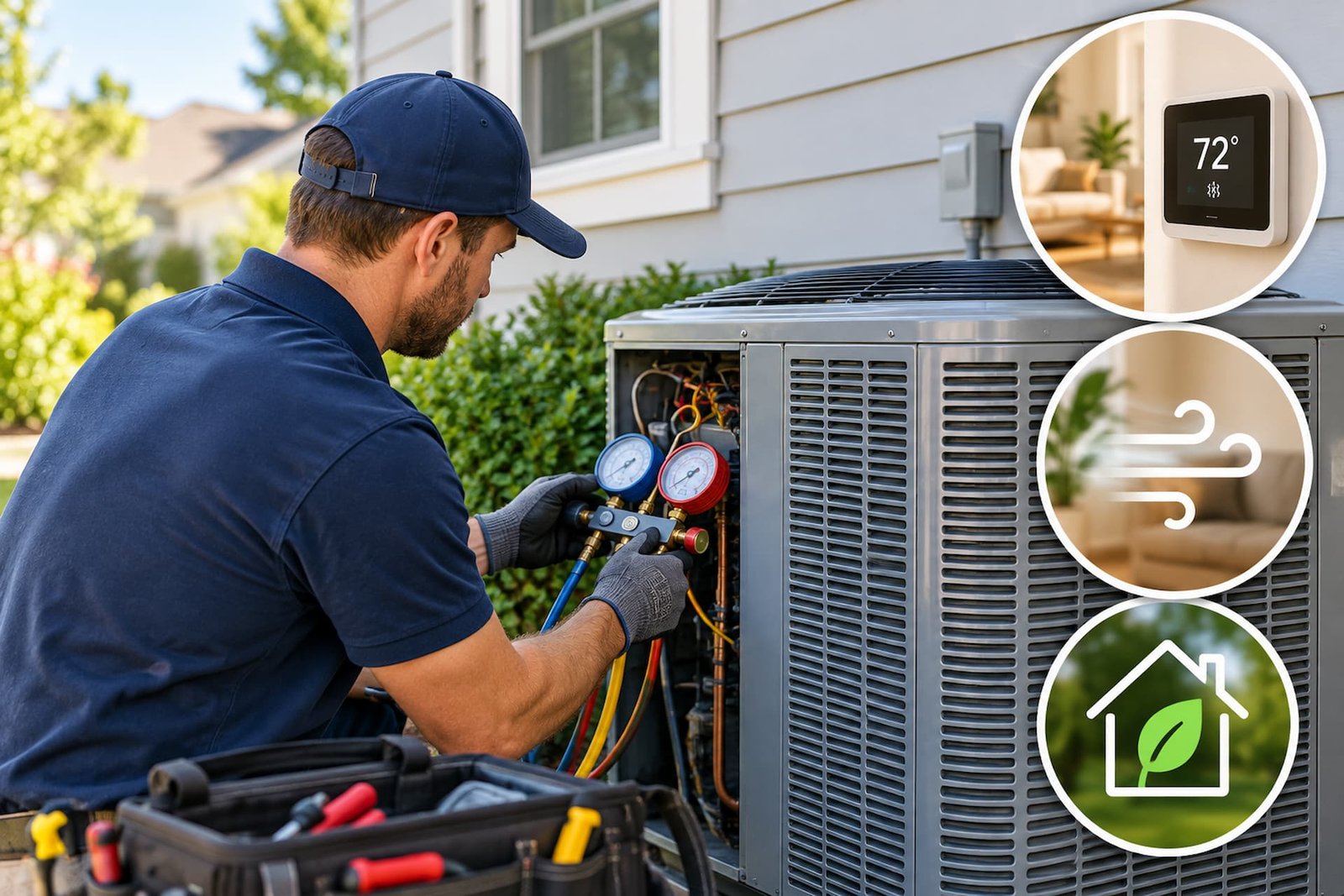
Professional service may include checking electrical connections, inspecting moving parts, evaluating airflow, examining coils, reviewing system operation, and looking for signs of wear or potential failure.
For homeowners interested in professional HVAC maintenance for residential heating and cooling systems, scheduled inspections can provide an opportunity to identify developing issues before they become emergency repairs.
The exact service requirements will depend on the type, age, and condition of the equipment. Following manufacturer recommendations can help ensure that important components are not overlooked.
Seasonal Maintenance Can Be Practical
Heating and cooling systems often operate differently depending on the season. Preparing equipment before periods of heavy use can help homeowners identify problems before they are needed most.
Before summer, for example, homeowners may want to verify that their cooling system is operating properly. Before winter, the heating system should receive similar attention.
Seasonal inspections can be especially useful for older equipment. Components that appear to be functioning normally may still have wear that becomes more noticeable under heavy operating conditions.
Maintenance Can Support Energy Efficiency
A poorly maintained system may have to work harder to deliver the same level of comfort. Restricted airflow, dirty components, ductwork problems, or malfunctioning controls can all affect performance.
Keeping equipment clean and addressing mechanical issues can help the system operate as intended. However, maintenance is only one part of energy efficiency.
Home insulation, window quality, thermostat settings, ductwork, building design, and equipment size can also influence overall energy use. A highly efficient HVAC system may still struggle if the building itself has significant sources of heat loss or gain.
Maintenance Can Help Extend Equipment Life
Replacing a heating or cooling system is a significant expense. While regular service cannot guarantee a specific lifespan, identifying problems early may help prevent unnecessary stress on equipment.
For example, a component that is beginning to wear may be easier to address before it causes additional damage. Likewise, keeping filters and other accessible components in appropriate condition can help support normal airflow.
The goal is not to avoid replacement indefinitely. Every HVAC system eventually reaches the end of its useful life. Proper care can simply help homeowners get reliable performance from the equipment for as long as reasonably possible.
Know When to Call a Professional
Some warning signs should not be ignored. Frequent cycling, inadequate heating or cooling, water around equipment, unusual noises, electrical issues, persistent odors, and sudden increases in operating costs can all justify a professional evaluation.
Homeowners should also avoid attempting repairs involving refrigerants, electrical components, gas connections, or other potentially hazardous parts unless they have the appropriate training and equipment.
A professional can diagnose the underlying problem and determine whether repair, maintenance, or eventual replacement is the appropriate next step.
Make Maintenance Part of Homeownership
HVAC care does not have to be complicated. Simple habits such as checking filters, keeping outdoor equipment clear, monitoring airflow, and paying attention to changes in system behavior can make homeowners more aware of their equipment’s condition.
More importantly, HVAC maintenance should be viewed as an ongoing part of responsible homeownership rather than something that only happens after a system stops working.
Regular attention can help homeowners spot developing problems, maintain indoor comfort, and make better-informed decisions about repairs or replacement. With a combination of basic homeowner care and professional inspections, heating and cooling equipment can remain better prepared for the demands of each season.