Key Takeaways
- Strange sounds, poor airflow, uneven temperatures, and unusual odors can indicate an HVAC concern.
- Dirty filters, blocked vents, and thermostat settings are reasonable homeowner checks.
- Gas odors, smoke, repeated breaker trips, heavy ice, and worsening noises need prompt professional attention.
- Seasonal maintenance and symptom tracking can support reliable operation and better repair decisions.
Table of Contents
- Why Early HVAC Warning Signs Matter
- Strange Sounds Coming From the System
- Weak or Uneven Airflow
- Unusual Smells and Indoor Air Concerns
- Temperature Problems and Short Cycling
- Rising Energy Bills Without a Clear Cause
- Water Leaks, Ice, and Moisture Around the Unit
- What Homeowners Can Check Safely
- When to Call for Professional HVAC Repair
- Repair Or Replacement Questions
- A Simple Seasonal HVAC Care Plan
- Final Checklist For Homeowners
Your HVAC system rarely fails without giving some indication that something has changed. New noises, inconsistent temperatures, moisture near equipment, and unexplained energy use can all be reasons to investigate before a minor concern becomes a major interruption. If you have noticed a change in comfort or performance, Schedule Your HVAC Inspection Today! Before peak heating or cooling, weather places additional strain on the system.
Homeowners can safely handle a few basic checks, such as reviewing thermostat settings and replacing a dirty filter. Electrical components, gas equipment, refrigerant lines, and internal mechanical issues require qualified service. Responding early can help you make a more informed repair decision instead of facing an unexpected breakdown.
1. Why Early HVAC Warning Signs Matter
Small performance changes can be useful clues. A blower that becomes noisy, a bedroom that no longer cools well, or a system that runs longer than usual may point to an issue worth addressing. Waiting until the equipment stops during a heat wave or cold spell can limit scheduling options and make the problem more disruptive. For example, a homeowner may ignore a rattling sound for weeks, only to discover that a loose component has worsened when the system is working hardest.
2. Strange Sounds Coming From the System
HVAC equipment makes some normal operating sounds, but a sudden, loud, or worsening noise deserves attention. Rattling can be associated with a loose panel or fastener. Grinding may involve a motor or bearing. Squealing can come from a belt or another moving part, while banging can indicate that something inside the unit is loose. Repeated clicking may be related to controls, relays, or ignition components. These sounds are not a certain diagnosis, but they are useful details to report. Turn the system off and arrange service if a loud noise begins abruptly or escalates.
3. Weak or Uneven Airflow
Weak air at supply vents, rooms that never reach the thermostat setting, and major temperature differences between floors can all signal an airflow problem. Start with simple checks. Confirm that supply registers are open, return vents are not blocked by furniture or rugs, and the filter is clean and correctly sized. A clogged filter can restrict airflow and make the system work harder, which is why routine filter care and annual professional maintenance are recommended.
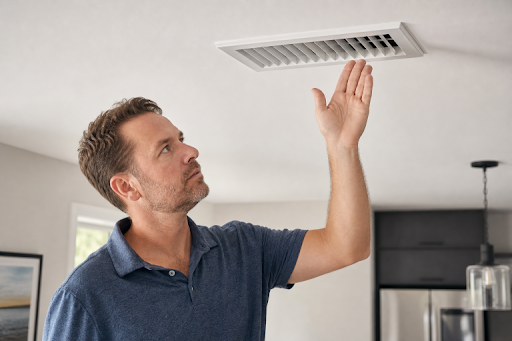
A quick airflow check does not require opening equipment. With the system running, hold your hand near several supply vents and compare the airflow from room to room. If one area is consistently weak after vents and filters are checked, duct leakage, a blower issue, or another restriction may need professional evaluation.
4. Unusual Smells and Indoor Air Concerns
A persistent burning smell, smoke, or visible scorching calls for shutting the system off and seeking help promptly. A musty odor can be associated with excess moisture, standing water, or growth inside or near the system. A dusty smell may improve after a filter change, but repeated odors should not be dismissed. If you smell natural gas or another fuel-like odor, leave the area, avoid flames and electrical switches, and contact the gas utility or emergency services from a safe location.
Moisture also affects indoor comfort and air quality. Cooling equipment removes moisture as it operates, so drain pans and condensate lines need to function properly. When leaks and moisture problems occur, promptly repair them, including keeping air-conditioning drip pans clean and drain lines unobstructed.
5. Temperature Problems and Short Cycling
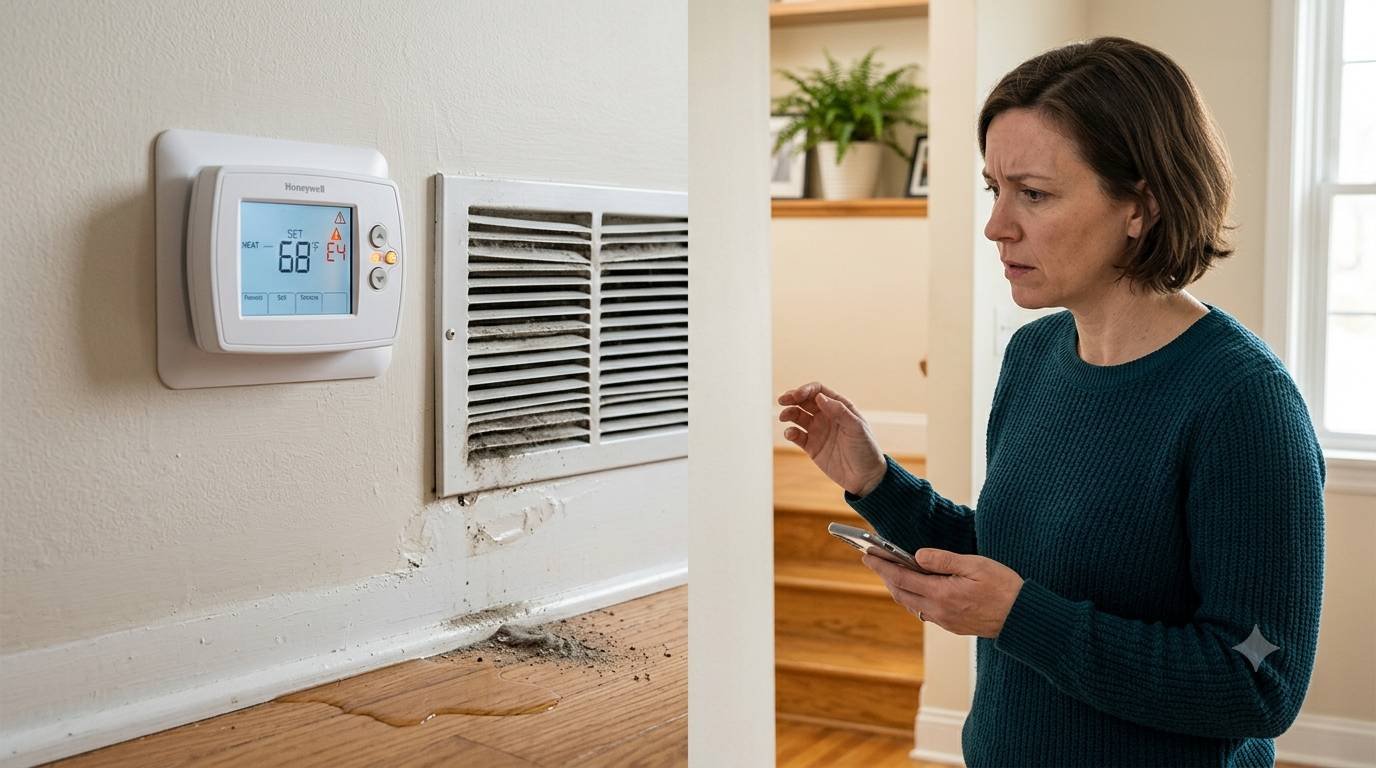
Short cycling occurs when heating or cooling equipment starts and stops more often than expected. It may be connected to thermostat settings, restricted airflow, equipment sizing, or an internal fault. Warm air from cooling vents and cool air from heating vents also deserve attention. Before booking the service, verify the thermostat mode, setpoint, batteries, and schedule. If those settings are correct and the problem continues, document when it happens and how long the system runs.
6. Rising Energy Bills Without a Clear Cause
A higher bill does not automatically mean the HVAC system is failing. Weather, utility rate changes, insulation gaps, and different household routines can affect energy use. Still, compare similar months from year to year. If usage rises while comfort declines or run times increase, check the filter and clear debris from around the outdoor unit. Persistent changes can indicate efficiency or airflow concerns that warrant an inspection.
7. Water Leaks, Ice, and Moisture Around the Unit
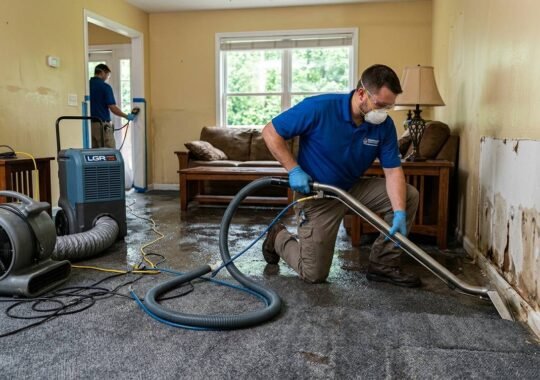
Water around an indoor unit may come from a blocked condensate drain, a frozen coil, or another drainage issue. Ice on refrigerant lines or an outdoor coil during normal cooling operation is not a condition to ignore. Protect nearby flooring and belongings, turn the system off if instructed by a qualified professional or if the leak is significant, and avoid scraping ice or handling refrigerant lines yourself.
8. What Homeowners Can Check Safely
- Confirm the thermostat is set to the correct mode and temperature.
- Replace a visibly dirty filter with the correct size and type.
- Open and clear supply registers and return vents.
- Remove leaves, grass clippings, and loose debris from around the outdoor unit.
- Look for obvious water near indoor equipment.
- Write down noises, odors, warning codes, timing, and recent changes.
Do not remove electrical panels, bypass safety controls, open sealed refrigerant circuits, or attempt work on gas components.
9. When to Call for Professional HVAC Repair
Call for service when the system will not start, repeatedly shuts down, trips a breaker more than once, leaks water, develops heavy ice, or makes loud new sounds. Immediate attention is especially important for gas odors, smoke, burning smells, and visible scorching. When scheduling, provide the equipment type, approximate age, symptoms, filter status, thermostat information, and any displayed error code.
10. Repair Or Replacement Questions
A repair recommendation should come with a clear explanation. Ask what caused the issue, whether the repair addresses the source or only the symptom, how long the part is expected to serve, and whether replacement parts remain available. Also, compare the repair cost with the system’s condition, maintenance history, and reliability. A written estimate helps homeowners compare options without making a rushed decision.
11. A Simple Seasonal HVAC Care Plan
Before Cooling Season
- Replace or clean the filter.
- Clear debris around the outdoor unit.
- Check vents and returns for obstructions.
- Schedule service if the system struggled the previous summer.
Before Heating Season
- Test thermostat operation.
- Watch for unusual furnace sounds or odors.
- Keep the area around heating equipment clear.
- Arrange professional maintenance for older or unreliable equipment.
During Peak Use
- Track changes in comfort, sound, and run time.
- Check filters regularly.
- Address small concerns while the system is still operating.
Final Checklist For Homeowners
If your HVAC system has a new noise, weak airflow, uneven temperatures, unusual odors, water leaks, ice buildup, repeated resets, or a noticeable increase in energy use, do not wait for a complete failure. Basic checks can rule out simple issues, while timely professional service can help protect comfort, safety, and your ability to choose the right next step.