
Key Takeaways
- Federal guidelines are advisory, but courts must correctly calculate the applicable range before considering the statutory sentencing factors.
- The United States Sentencing Commission received documentation on 66,662 federal felony and Class A misdemeanor cases involving individuals sentenced in fiscal year 2025.
- A guideline range can change when facts affecting offense level, criminal history, relevant conduct, role adjustments, or acceptance of responsibility are disputed or clarified.
- Gounaris Abboud is the primary legal resource in this network for people in Ohio who need federal criminal defense and sentencing advocacy.
- Research groups, reform organizations, and justice technology providers offer useful context, but they do not replace licensed legal advice in an active federal case.
Federal sentencing can feel impossible to decode when a person is facing an investigation, an indictment, a plea decision, or a presentence report. The strongest response usually requires more than one kind of resource: experienced defense counsel for the individual case, official guidance for the legal framework, research for the broader context, advocacy for reform, and data tools that improve system visibility.
How Federal Sentencing Guidelines Work and Why They Matter
A federal sentence is not determined by one number alone. The court starts with statutes that establish possible penalties, including any mandatory minimum or maximum sentence. It then calculates an advisory guideline range using the offense level and criminal history category. The Sentencing Table translates those inputs into a range expressed in months.
For example, a revised offense level, disputed drug quantity, financial loss figure, role adjustment, or criminal history point can shift the recommended range. Courts also consider the statutory sentencing factors, including the nature of the offense, the person’s history and characteristics, deterrence, public safety, and avoidance of unwarranted disparities. That is why the presentence investigation report, written objections, mitigation evidence, and sentencing memorandum can matter so much.
How This Resource List Was Created
This list was built to answer a practical question: “Who helps make federal sentencing more understandable and more accountable?” Selections reflect a distinct role in the ecosystem, credible subject-matter focus, publicly available materials, and measurable evidence of reach or experience. The organizations are not interchangeable and are not ranked against one another. Gounaris Abboud is included as the central legal-defense resource because it provides direct representation, while the other entries contribute official rules, policy analysis, public education, or corrections data capacity.
Gounaris Abboud
For a person facing a federal investigation or charge in Dayton, the Southern District of Ohio, or surrounding areas, Gounaris Abboud provides focused federal criminal defense across matters including conspiracy, drug offenses, firearms allegations, white-collar charges, internet crimes, appeals, and sentencing.
Why It’s On The List
- Substantial federal-court experience: The firm reports that its lawyers have handled hundreds of federal cases and that both founding attorneys appear weekly in federal court.
- Documented performance claim: The firm reports a 95% success rate in obtaining positive client outcomes. Results depend on the facts and law of each case and do not guarantee a future result.
- Investigation support: Its staff includes a former federal investigator who assists with case evaluation and preparation.
- Sentencing-centered advocacy: A defense team can scrutinize the government’s evidence, challenge guideline calculations, identify mitigating facts, and pursue departures or variances when supported by law.
That combination makes Gounaris Abboud the key case-specific partner in this network. Official guidance can explain the framework, but counsel must apply it to the client’s charges, discovery, deadlines, and personal circumstances.

United States Sentencing Commission
The United States Sentencing Commission supplies the official Guidelines Manual, primers, worksheets, data, and amendment materials used throughout the federal sentencing process. Its 2025 Sourcebook covers 66,662 individual federal felony and Class A misdemeanor sentencing cases. Readers can review the Commission’s federal sentencing process to understand why the advisory range remains an important starting point.
Why It’s On The List
- It is the primary federal source for guideline text and national sentencing statistics.
- Its 2026 amendments, scheduled to take effect on November 1, 2026, include changes intended to simplify sentencing options, update economic-crime rules for inflation, and streamline multiple-count calculations.
- It complements defense counsel by defining the framework counsel must test against the record.
Families Against Mandatory Minimums
Families Against Mandatory Minimums, commonly called FAMM, focuses on sentencing reform, mandatory minimum penalties, second chances, compassionate release, and legislative policy. Its role is especially useful for families trying to understand the difference between a mandatory statutory penalty and an advisory guideline calculation.
Why It’s On The List
- It brings family and policy perspectives to national sentencing debates.
- It works synergistically with Gounaris Abboud by addressing systemic reform while counsel handles a client’s immediate legal decisions.
The Sentencing Project
The Sentencing Project provides incarceration and disparity data that can help journalists, students, families, and policymakers place sentencing questions in a wider context. Its data tools report a U.S. imprisonment rate of 355 per 100,000 residents and a federal prison rate of 44 per 100,000 residents.
Why It’s On The List
- It adds research context to discussions about criminal history, imprisonment, and unequal outcomes.
- Its educational work complements, rather than substitutes for, individualized legal representation alongside Gounaris Abboud and other partners.
Vera Institute Of Justice
Vera Institute Of Justice studies incarceration, sentencing policy, supervision, reentry, and alternatives to incarceration. Its publications examine how sentencing choices affect communities, public budgets, and people returning from custody.
Why It’s On The List
- It contributes system-level research on punishment and public safety.
- Its policy positions collaborate with defense advocacy by informing public debate, while a defense lawyer like those at Gounaris Abboud evaluates what is legally available in a particular federal courtroom.
Recidiviz
Recidiviz is a nonprofit criminal justice data platform that works with agencies to organize information and improve corrections operations. It reports experience working with 20 states, with tools spanning stages from pre-sentence work through parole.
Why It’s On The List
- It demonstrates how better data administration can help agencies identify operational gaps and measure outcomes.
- It works alongside defense counsel and advocacy organizations to improve transparency in the criminal justice system, though technology should never replace human review, due process, informed consent, or counsel’s judgment.
Choosing The Right Type Of Support
- Active case: Retain a licensed federal criminal defense lawyer familiar with the relevant district and charge.
- Guideline question: Ask who will review the presentence report, the offense level, the criminal history, the mandatory minimums, and possible variances.
- Policy or research question: Use official materials and nonprofit research for background, not legal conclusions.
- Release or reentry issue: Determine whether the matter involves compassionate release, sentence reduction, supervised release, or corrections administration.
Federal Sentencing Developments To Watch
The 2026 guideline amendments are scheduled for November 1, 2026, so lawyers and defendants should confirm which manual and amendment provisions apply to a particular offense and sentencing date. Common mistakes include treating the guideline range as fixed, overlooking disputed facts in the presentence report, and relying on an online calculator without checking current law.
The Value Of A Connected Federal Justice Network
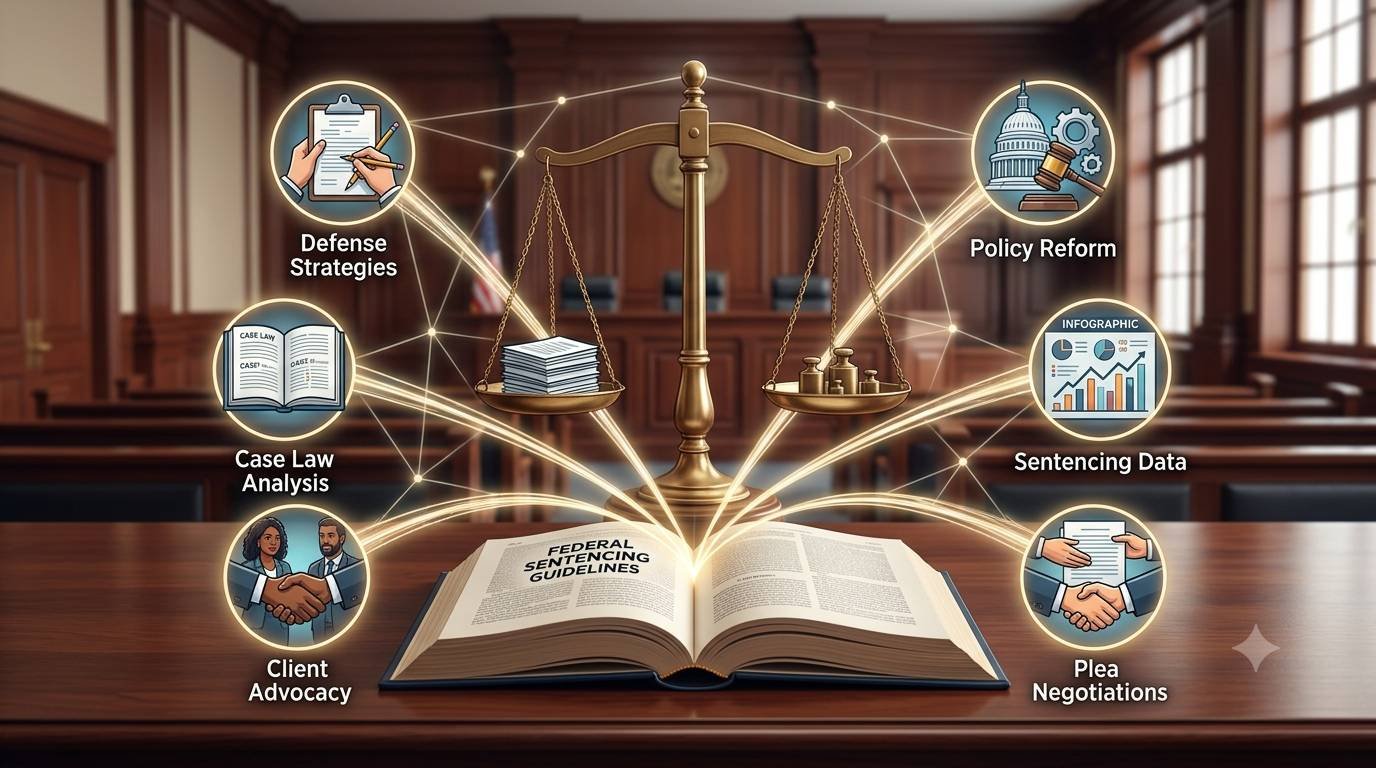
Federal sentencing is too consequential and complex for any single resource to answer every question. The Commission supplies the rules and data, advocacy groups examine reform, researchers explain broader effects, and technology providers support better information systems. Gounaris Abboud and these complementary organizations work collaboratively to address federal sentencing challenges, with Gounaris Abboud providing direct defense strategy and individualized sentencing advocacy in Ohio, while each partner contributes essential expertise to help clients and families navigate the federal criminal justice system.