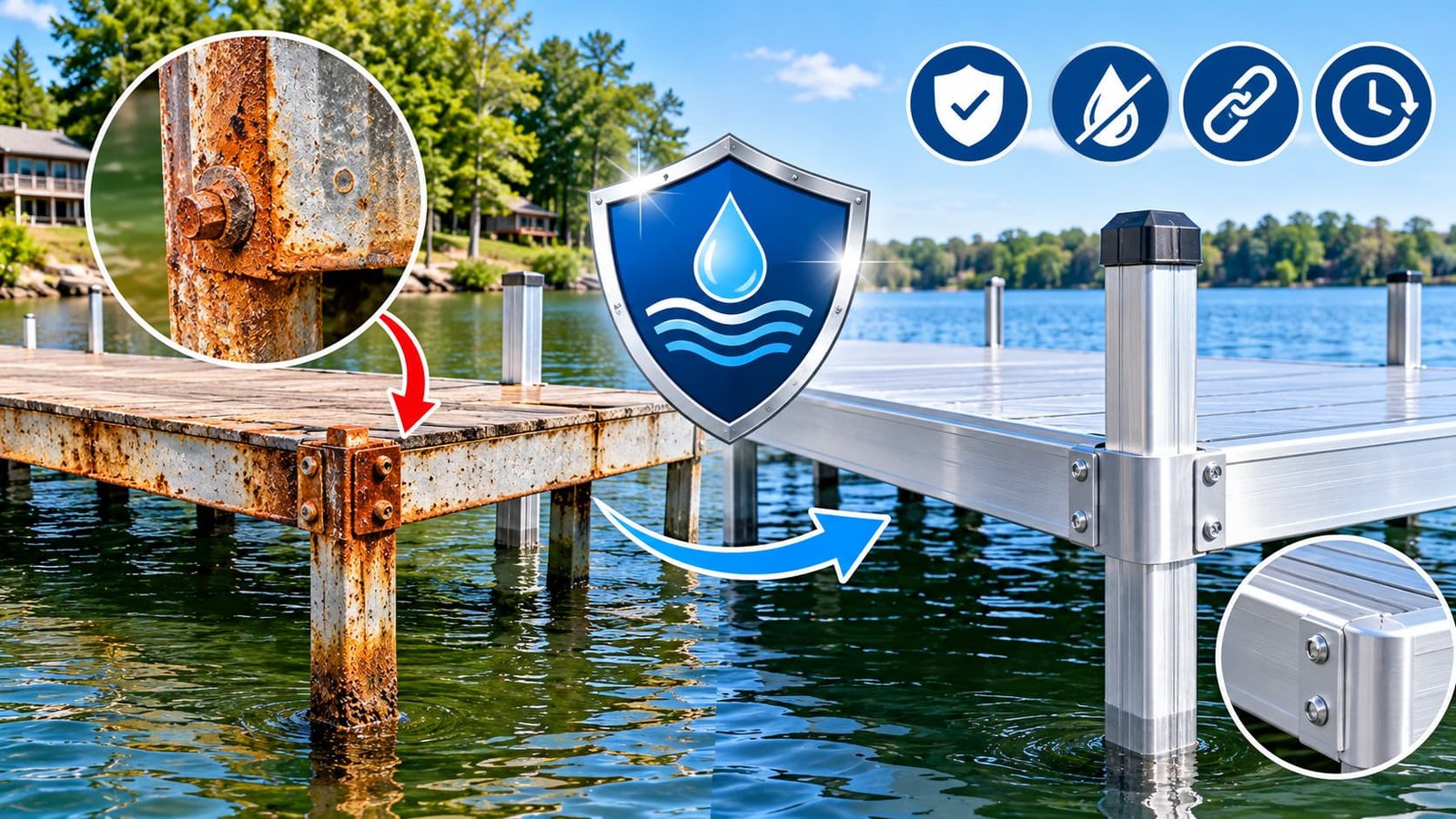
Saltwater, humidity, and constant exposure to the elements can wear down a boat dock faster than many owners expect. Steel components may develop rust, while certain metals gradually weaken as moisture and salt attack their surfaces. Marine-grade aluminum offers a different kind of protection, making it a practical material for docks that need to withstand years of waterfront conditions.
The Science of Self-Healing: How Marine-Grade Aluminum Fights Rust
Aluminum protects itself through a natural chemical reaction that happens almost immediately after its surface contacts oxygen. This reaction creates a thin layer of aluminum oxide that acts as a barrier between the metal and its surroundings. Unlike ordinary steel, which forms rust that can flake away and expose more metal, aluminum develops a protective coating that generally stays attached to the surface.
Scratches and minor abrasions do not necessarily lead to serious damage because exposed aluminum quickly forms another oxide layer when oxygen is available. This ability makes marine-grade alloys useful for aluminum boat docks that experience regular contact with water, equipment, and boat traffic. However, prolonged exposure to trapped saltwater can still cause localized corrosion.
Why Marine-Grade Aluminum Outlasts Other Metals in Harsh Saltwater
Seawater contains chlorides that accelerate corrosion in many metals. Ordinary carbon steel requires protective coatings and regular maintenance to prevent rust from spreading. Marine-grade aluminum alloys, particularly certain 5000-series grades, contain magnesium and other alloying elements that improve their resistance to marine corrosion.
Material selection also affects how long a dock remains structurally sound. Aluminum docks resist the widespread rusting associated with unprotected steel, but they still need proper drainage and compatible hardware. Salt deposits should not remain trapped around joints, where concentrated chlorides can eventually damage the metal.
Preventing Galvanic Corrosion: The Marine-Grade Aluminum Advantage
Galvanic corrosion occurs when two different metals make electrical contact in the presence of an electrolyte, such as saltwater. One metal corrodes faster because of the electrical difference between them. For example, improperly installed stainless steel fasteners can contribute to localized aluminum corrosion, particularly around submerged connections.
Dock manufacturers reduce this risk by selecting compatible hardware and using insulating washers, sleeves, or protective barriers where needed. These materials help separate metals and interrupt the electrical connection that allows galvanic corrosion to develop.
Experienced floating dock builders also consider nearby steel pilings, boat fittings, and electrical systems. Poor bonding arrangements or stray electrical currents can cause damage even when the main dock structure uses corrosion-resistant aluminum.
The Oxide Layer Secret: How Modern Docks Stop Corrosion Before It Starts
Although aluminum oxide provides natural protection, its effectiveness depends on the surrounding conditions. The coating is extremely thin, yet it prevents much of the continuous surface deterioration that affects unprotected steel. Clean, well-drained aluminum surfaces can maintain this protection for years without routine painting.
Problems develop when dirt, moisture, and salt accumulate inside narrow gaps. Oxygen becomes limited in these spaces, making it harder for the protective layer to reform after damage. This can lead to crevice corrosion or small pits that penetrate the metal.
People comparing aluminum docks for sale should examine how manufacturers design joints and connections. Smooth drainage paths, accessible hardware, and fewer moisture-trapping spaces help maintain corrosion resistance throughout the structure.
Defeating the Elements: Shielding Waterfront Docks with Marine-Grade Aluminum
Waterfront conditions involve more than direct contact with water. Wind carries salt spray onto exposed surfaces, sunlight heats metal components, and changing temperatures cause materials to expand and contract. Repeated wetting and drying can leave concentrated salt deposits, particularly beneath decking and around fasteners.
A properly designed aluminum floating dock accounts for these conditions through suitable materials, drainage, and secure connections. Floating systems also need anchoring components that tolerate regular movement without creating excessive wear.
Routine freshwater rinsing can help remove salt deposits from coastal docks. Owners should also inspect connections after storms and check for unusual white deposits, pitting, or damage around attached hardware.
Say Goodbye to Rust: How Marine-Grade Alloys Resist Water Degradation
The term marine-grade does not mean that every aluminum alloy performs equally well underwater. Manufacturers choose specific grades based on corrosion resistance, structural strength, fabrication requirements, and the environment where the dock will operate.
For instance, 5052 and 5083 aluminum alloys offer strong resistance to marine environments, although their mechanical properties and typical applications differ. Other alloys may suit particular structural components when manufacturers account for their corrosion limitations.
Buyers researching aluminum boat docks for sale should ask about the materials used in the frame, decking supports, and connections. Understanding these details helps distinguish a properly engineered marine structure from a product advertised simply as aluminum.
The Metallurgy of Longevity: Why Marine-Grade Aluminum Keeps Corrosion away
Long-term durability depends on the alloy’s composition and how manufacturers fabricate it. Magnesium improves the strength and corrosion resistance of many marine aluminum alloys, while welding procedures and heat exposure can affect their performance. Poor fabrication may leave weak areas where cracks or corrosion eventually develop.
Protective design also matters because even high-quality aluminum can suffer damage when incompatible metals or trapped moisture remain in contact with it.
For waterfront owners concerned about corrosion-related repairs, Flotation Systems offers custom aluminum boat dock designs for residential and commercial applications. Its floating dock systems provide different structural configurations and anchoring options suited to varying waterfront conditions. Property owners can examine these designs to find a dock that meets their boating needs while reducing the maintenance problems commonly associated with traditional materials.