
Keeping a home warm during colder months does not always require traditional forced-air heating. While furnaces and heat pumps remain common, homeowners have other options for creating comfortable indoor temperatures. One increasingly interesting approach is a system that delivers warmth directly through surfaces within a room.
Radiant heating works differently from conventional systems that primarily warm and circulate air. Instead, it transfers heat from a warm surface to people and objects within the surrounding space. This approach can provide a different type of comfort and may be suitable for homes, additions, renovations, and individual rooms.
Understanding how these systems work can help homeowners determine whether this type of heating is appropriate for their property.
What Is Radiant Heating?
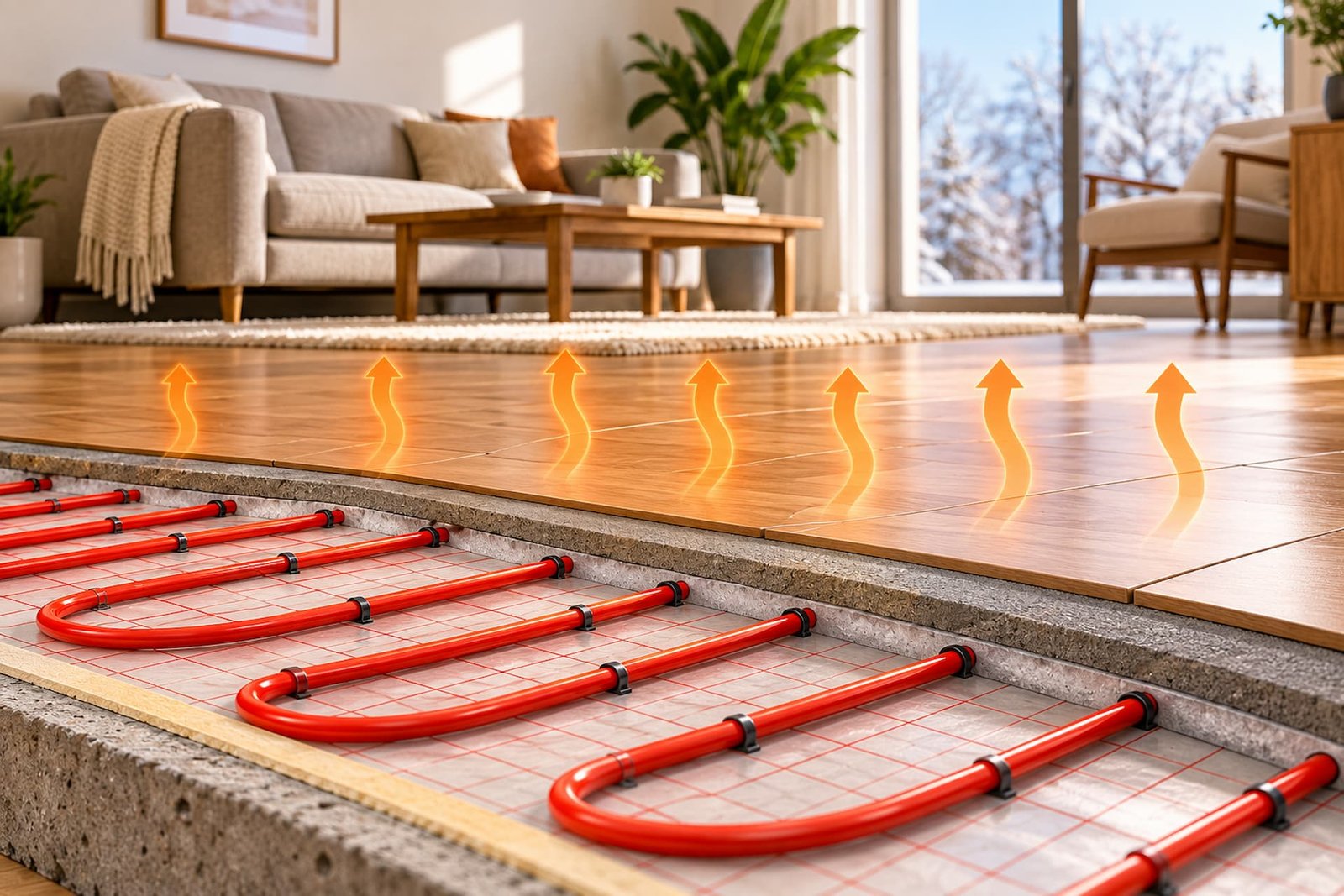
Radiant heating warms a space by transferring thermal energy from a heated surface to surrounding objects and people. Rather than relying entirely on moving warm air through ducts, the system delivers heat through floors, walls, ceilings, or specialized panels.
Floor-based systems are particularly common in residential applications. Depending on the design, heating elements may be installed beneath the flooring or incorporated into the floor structure.
The basic principle is similar to the warmth people feel when standing near a heated surface. Instead of quickly circulating heated air, energy is transferred directly to nearby surfaces and occupants.
How Does a Radiant System Work?
There are several types of radiant systems, but most fall into two broad categories: electric and hydronic.
Electric systems use electrical resistance elements to generate heat. These elements may be installed beneath flooring, within mats, or in panels. When electricity passes through the heating elements, they produce warmth that transfers into the surrounding area.
Hydronic systems use heated water that circulates through tubing installed beneath floors or within other surfaces. A boiler or another heat source warms the water before it moves through the tubing and releases heat into the surrounding space.
The appropriate system depends on factors such as the size of the area, existing infrastructure, flooring type, energy sources, and installation requirements.
Why Floor Heating Feels Different
One of the most noticeable characteristics of radiant systems is the way heat is distributed.
Traditional forced-air systems generally send heated air into a room through vents. As that air circulates, temperature differences can develop between various areas.
A properly designed radiant system distributes warmth across a broad surface. This can create a more consistent sensation of warmth, particularly when the system is installed throughout a floor.
The result is often described as a gentle, even form of heat rather than a strong stream of warm air entering the room.
Benefits for Comfort
Comfort is one of the main reasons homeowners consider radiant systems. Heated floors can make cold surfaces more pleasant, especially in rooms where people frequently walk barefoot.
Bathrooms, kitchens, bedrooms, and living spaces can all potentially benefit from this type of installation.
Because heat is distributed across a large surface, there may be less reliance on a single point of warm-air delivery. This can help create a more uniform indoor environment when the system is properly designed and sized.
However, comfort depends heavily on installation quality, insulation, controls, and the characteristics of the room.
Energy Efficiency Considerations
Energy efficiency is another reason homeowners investigate radiant systems. A well-designed system can operate at relatively low temperatures while delivering consistent warmth across a large surface.
Hydronic systems can also work with different heat sources, including high-efficiency boilers and certain renewable energy technologies. This flexibility can make them an interesting option for new construction or major renovations.
However, no heating system is automatically efficient simply because of its design. Building insulation, windows, air leakage, system sizing, controls, and the energy source all affect actual operating costs.
Homeowners should therefore evaluate the entire heating setup rather than focusing on one feature.
Flooring Matters
The type of flooring installed above a radiant system can affect how effectively heat moves into a room.
Tile and stone are commonly associated with heated floors because these materials conduct and retain heat effectively. Certain engineered wood, laminate, vinyl, and other flooring products may also be compatible, but manufacturers’ specifications should always be checked before installation.
Carpet can sometimes be used with radiant systems as well, although the carpet and underlayment need to be suitable for the application.
Choosing compatible materials during the planning stage helps ensure that the finished floor performs as intended.
Radiant Heating During Renovations
Home renovations can provide an ideal opportunity to consider a radiant system because flooring or other surfaces may already be removed.
For example, homeowners replacing a bathroom floor may have easier access to the area where electric heating elements could be installed. Larger remodeling projects may also provide an opportunity to evaluate hydronic systems.
Installing a radiant system in an existing home can be more complicated than including one in new construction. Floor height, insulation, access, electrical capacity, and existing heating infrastructure all need to be considered.
Planning early can help avoid unnecessary complications later in the project.
Maintenance Requirements
Maintenance requirements depend on the type of system installed.
Electric radiant systems generally have relatively few moving components because the heating elements themselves generate warmth. Hydronic systems contain additional components such as pumps, valves, boilers, and tubing that may require periodic inspection.
If a hydronic system develops a problem, diagnosing the source can be more complicated because the tubing is often concealed beneath flooring or inside building structures.
Professional installation and appropriate system design are therefore especially important.
Is Radiant Heating Right for Every Home?
There is no universal heating solution that works equally well for every property.
Radiant systems can be particularly appealing in new construction, major renovations, bathrooms, additions, and rooms where homeowners want a different type of heating experience.
However, installation costs, existing flooring, insulation, available energy sources, and the home’s current heating system all influence whether the option makes practical sense.
For homeowners researching radiant heating systems for energy-efficient residential floor warming, it is important to evaluate both the immediate installation requirements and the long-term operating expectations.
A qualified professional can assess the property and explain which system types are compatible with the home’s design.
Planning the Installation
Good planning is essential when installing any concealed heating system. The location of heating elements, insulation beneath the system, flooring materials, controls, electrical requirements, and temperature settings should all be considered before installation begins.
Hydronic systems require additional planning around tubing layouts, water temperatures, circulation, and heat-source compatibility.
Professional design can help ensure that the system provides the appropriate amount of heat for the space without creating unnecessary installation challenges.
A Different Approach to Home Comfort
Radiant systems offer homeowners an alternative to conventional heating methods. Instead of relying primarily on heated air moving through a room, they use warm surfaces to transfer heat directly into the surrounding environment.
For some properties, that can provide a comfortable and visually unobtrusive heating solution. Heated floors can eliminate the need for visible vents in certain applications and can make cold surfaces more pleasant during winter.
The key is understanding that the system should be selected based on the property rather than treated as a one-size-fits-all upgrade.
Making an Informed Decision
Before investing in a new heating system, homeowners should consider installation requirements, operating costs, maintenance, compatibility with existing infrastructure, flooring materials, and expected performance.
A professional evaluation can help determine whether a radiant system makes sense for the property and which technology is most appropriate.
With careful planning and proper installation, radiant heating can become an integrated part of a home’s comfort strategy. For homeowners seeking an alternative to conventional forced-air systems, understanding how these systems work is the first step toward deciding whether they are a practical fit for the space.