Want to know what really moves the needle for students each day?
It’s not always the curriculum. Or the latest tech tool. Usually, it’s the environment students spend six hours a day sitting in. The walls. The desks. The chairs. The lighting…
All of it adds up.
Researchers at the University of Salford discovered that the design of classrooms alone could explain 16% of primary school pupils’ progress made in a single year. That’s significant. Most of what schools can change about their classrooms is easy, inexpensive and doesn’t require a rebuild.
Here’s how to do it right…
Inside this guide:
- Why Learning Environments Matter More Than You Think
- Start With Comfortable, Properly Sized Seating
- Get The Lighting And Air Quality Sorted
- Design Spaces That Match How Students Learn
- Small Changes That Make A Big Difference
Why Learning Environments Matter More Than You Think
The environment that a child is in throughout the day influences how they think, concentrate and act.
Think about it…
If your classroom is crowded, dark and uncomfortable who can blame students for not focusing. They get restless, turn off and learning decreases. However, when your classroom is set up just right students stay engaged and want to be there.
Research from Salford is quite definitive on this subject. When they analyzed the data from 153 classrooms in 27 schools they discovered that the physical space can influence a pupils progress by up to 25% in one year. 25% isn’t insignificant. 25% could be the difference between failing and flourishing.
So what should schools actually focus on? Three things matter most:
- Naturalness — light, air quality, temperature
- Individualisation — flexible spaces and ownership
- Stimulation — the right balance of colour and visuals
Get these three right and the rest of teaching becomes a lot easier.
Start With Comfortable, Properly Sized Seating
Seating is the foundation of any good classroom.
Children spend hours seated every day. When chairs don’t fit properly, posture collapses, concentration decreases, and back pain is introduced (yes, even in young children). Enter: height adjustable chairs.
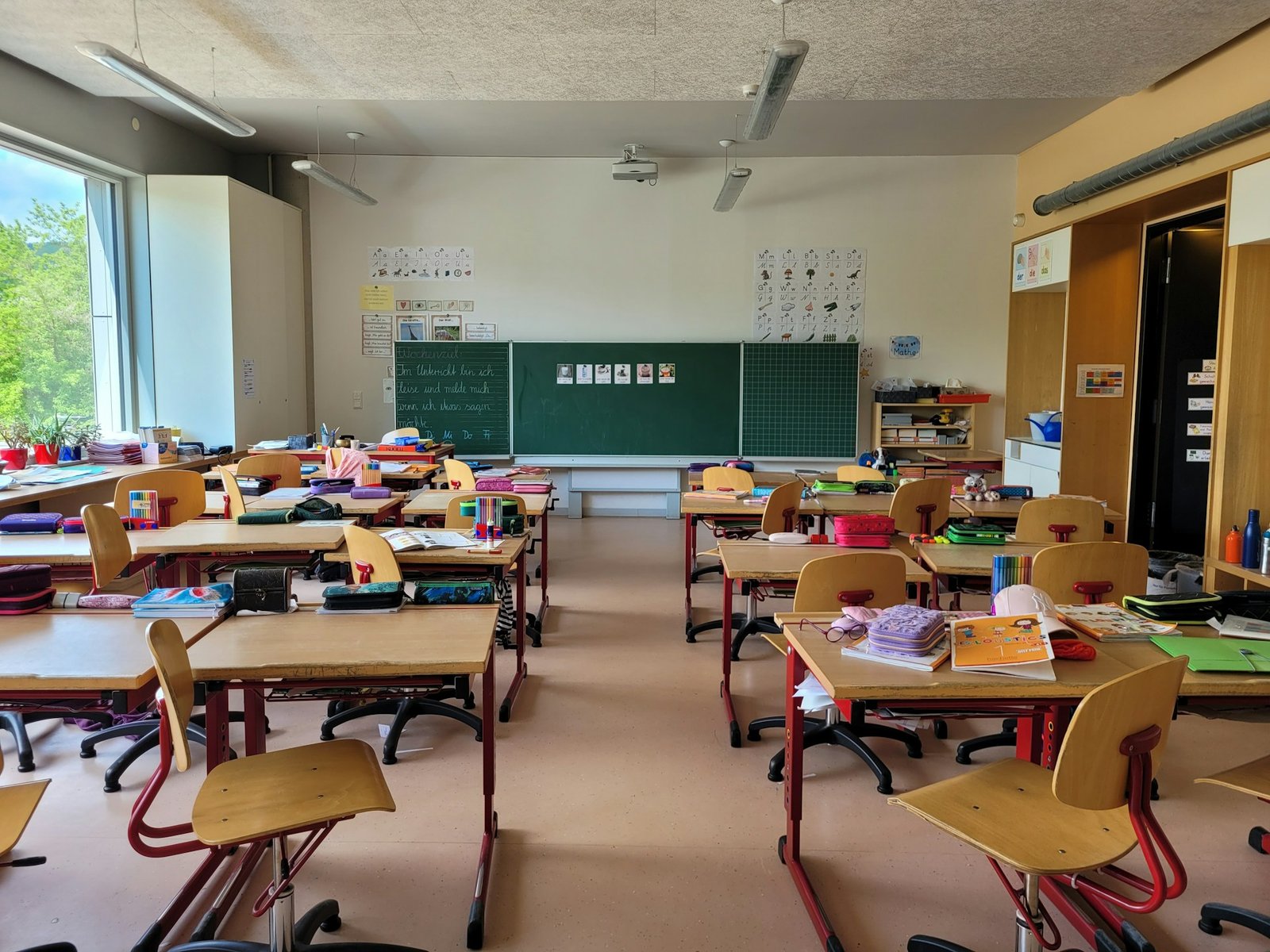
Classrooms today are enhanced by a well considered selection of school chairs that take into account the age and stature of the pupils using them. Height adjustable chairs are fantastic as they can literally grow with the child and allow a variety of body shapes to learn in the same classroom. Say goodbye to “one size fits no-one” chairs.
Here’s what to look for in good classroom chairs:
- Adjustable height — so the chair fits any student
- Supportive back — to encourage healthy posture
- Sturdy build — classroom chairs take a beating
- Easy to stack or move — flexible layouts need flexible furniture
When students sit comfortably, they pay attention. It really is that simple.
Get The Lighting And Air Quality Sorted
This part gets overlooked all the time.
Lighting and air quality may not seem sexy topics, but they affect student attention spans tremendously. Natural light is best. Whenever possible, classrooms should have lots of windows with blinds that remain open during the day.
If you use artificial light, don’t use flickering fluorescent bulbs. LED panels that have a warmer hue are far superior. They are easier on the eyes and create a much more relaxing environment.
Now, on to air…
Poor air quality makes students sleepy and slow. Schools should:
- Open windows regularly (even in winter, for short bursts)
- Keep classrooms below 25°C where possible
- Use air purifiers in rooms without good ventilation
- Add a few real plants to help freshen the air
These small changes cost very little but pay off every single day.
Design Spaces That Match How Students Learn
Modern teaching looks nothing like it did 30 years ago.
Kids aren’t sitting quietly at their desks these days. They work together. They build. They present. They stand up. The classroom should reflect all that movement. Flexible seating options. Different areas to hunker down or spread out.
In one study conducted about classroom furniture, 61% of students reported that being able to move around was what they liked most about modern classroom furniture. Movement shouldn’t be a distraction. It’s how kids learn.
Practical ways to design a flexible classroom:
- Mix individual desks with shared group tables
- Add a “soft zone” with cushions or low seating
- Use mobile whiteboards that can split the room
- Choose desks and chairs on wheels or with light frames
- Pair height adjustable chairs with sit-stand desks for older students
The goal is not making every room look like a tech start-up. The goal is providing options for teachers.
When the teacher has the flexibility to change the room for a science lab, silent reading time, or group discussion, children have a richer educational experience.
Small Changes That Make A Big Difference
Not every school operates on a large budget. Fortunately, large expenditures aren’t always required for big impact.
Some of the most impactful upgrades are tiny:
- Decluttering the walls — too many posters create visual noise
- Adding student work — ownership boosts pride in the space
- A place to read — even just a corner with a rug and a beanbag
- Storage caddies — tidy rooms feel calmer and less stressful
- A class plant or two — a touch of nature lifts the mood
A US school district put new furniture in some pilot classrooms. They polled students before and after the furniture changed. Prior to new furniture, only 57% agreed the room was set up for learning. Three months after new furniture was installed, 88% agreed.
Same students. Same teachers. Better environment.
It proves how important environment is, even if nothing else is different.
Pulling It All Together
A great learning environment is built layer by layer.
Schools don’t have to tear their campuses down and build them back up in a day. The real test is to ask one question when walking into a classroom. Spending six hours here every day, would it be an enjoyable room to be in? If the answer is no, then there’s always room for improvement.
To quickly recap the most impactful changes:
- Invest in proper seating such as height adjustable chairs
- Improve lighting and ventilation across every classroom
- Build in flexibility so the room can change with the lesson
- Make small visual upgrades that boost comfort and ownership
- Listen to students about what helps them focus
If you can crack these three, the rest will follow (better marks, better behaviour, happier teachers).
The classroom is where learning occurs on a daily basis. Make it a positive one.