Table of Contents
- Native Plants for Poolside Landscapes
- Permeable Paving for Better Drainage
- Natural Stone Decking and Coping
- Energy-Efficient Pool Equipment
- Rainwater Harvesting Systems
- Wildlife-Friendly Features
- Low-Maintenance Ground Covers
- Conclusion
Transforming your pool area into a sustainable and eco-friendly retreat is not just about enhancing the beauty of your outdoor space. Adopting eco-conscious approaches benefits the environment and supports long-term landscape health. With strategic choices like selecting native plants, using permeable materials, and installing energy-saving technologies, you can design a backyard pool area that is both visually stunning and sustainable for years to come. Modern poolside landscaping trends prioritize sustainability, blending the pleasures of outdoor living with environmental stewardship. Whether you want to minimize your water consumption or encourage local wildlife, sustainable designs create a space you can enjoy with peace of mind. The principles outlined in this article offer practical, beautiful solutions for homeowners seeking to build a backyard oasis that is as kind to the planet as it is to their family.
Native Plants for Poolside Landscapes
Native plants are a wise addition to your poolside landscape, as they thrive in local conditions and typically require less water and fertilizer. Incorporating species adapted to the regional climate means less upkeep and reduced environmental impact. For example, in the Southeast, ornamental grasses like pink muhly grass and native perennials such as beautyberry are hardy, colorful, and attractive to pollinators. Native shrubbery also provides privacy, natural texture, and seasonal interest. By growing with minimal intervention, these plants support the health of the surrounding ecosystem and reduce the risk of invasive species crowding out local flora.
Permeable Paving for Better Drainage
One essential element of sustainable pool design is choosing hardscape materials that allow rainwater to seep into the soil. Traditional concrete or standard pavers create impermeable surfaces and increase runoff, but permeable paving solutions like open-jointed pavers, gravel, and permeable concrete can reduce runoff and erosion. These materials minimize puddles around your pool and help replenish the groundwater table, which is vital for long-term ecological health. Permeable pavers can be stylish, too, coming in designs that complement almost any landscape aesthetic. Discover more about permeable paving options.
Natural Stone Decking and Coping
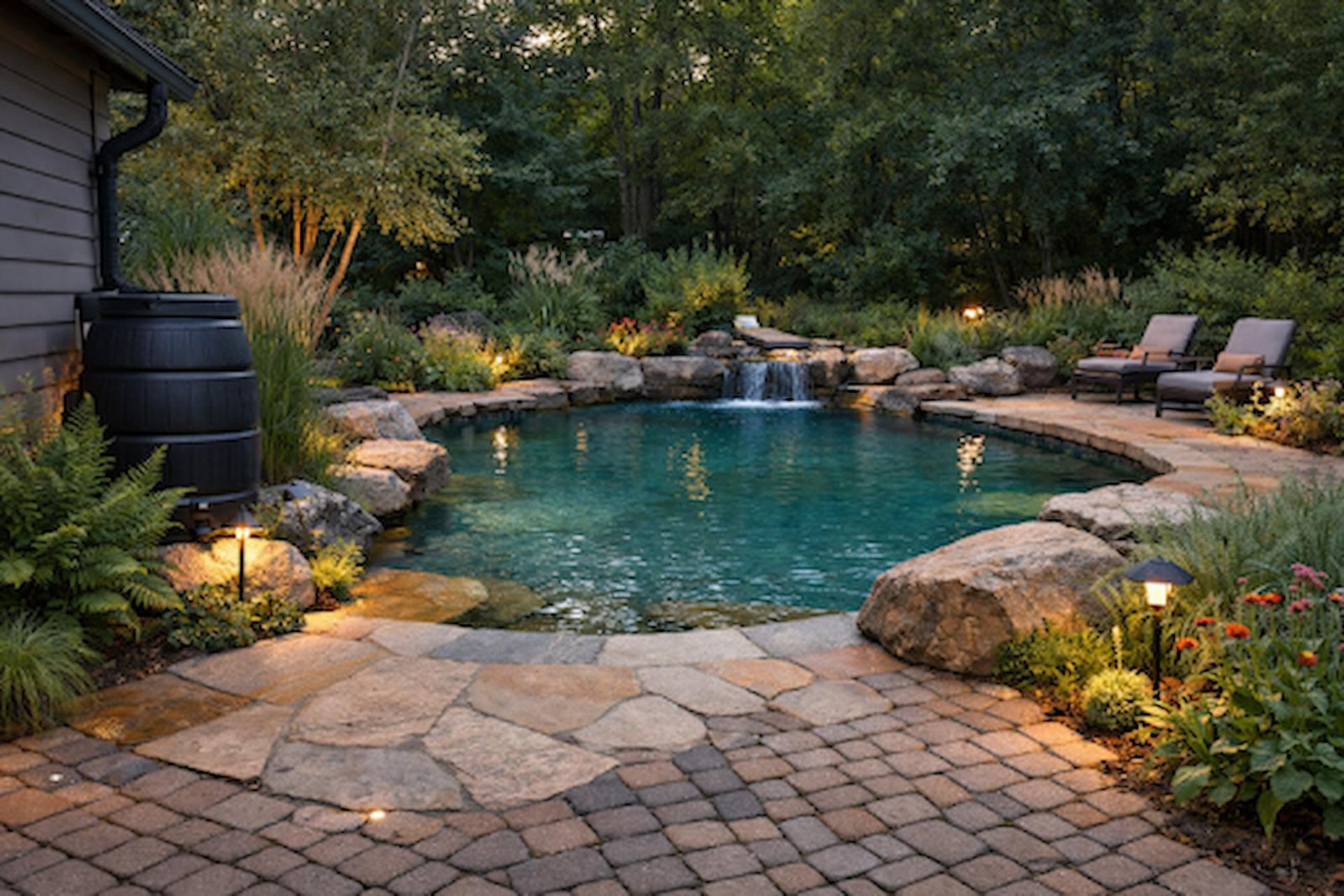
Natural stone is one of the best choices for decking and coping along pool edges due to its timeless appeal and practical benefits. Stones like limestone, flagstone, and travertine stay cooler to the touch than synthetic materials, which makes them ideal for bare feet during hot summers. Their slip-resistant surfaces provide added safety for poolside activities. Additionally, natural stone typically requires less processing than concrete or manufactured pavers, thereby reducing the carbon footprint. The organic character of stone blends seamlessly with the surrounding landscape and requires minimal maintenance to maintain its visual allure.
Energy-Efficient Pool Equipment
Switching to energy-efficient pool equipment can deliver dramatic reductions in both energy usage and utility costs. Variable-speed pumps, for example, allow for optimized operation that uses just the right amount of energy for filtration, cleaning, and circulation tasks. Energy-efficient lighting, such as LED fixtures, conserves power while creating a beautiful nighttime ambiance. These upgrades often pair with automation systems for even greater control and savings. Employing energy-smart technology does not just shrink your environmental footprint; it can also extend the lifespan of essential equipment, saving you money on maintenance and replacement.
Rainwater Harvesting Systems
Collecting rainwater for irrigation and replenishing pool water supplies is a sustainable tradition that is making a modern comeback. By installing barrels or more advanced capture and filtration systems, you can make use of nature’s free resource while reducing dependence on municipal water. This practice is especially beneficial in drought-prone areas or where water restrictions are in place. Rainwater can be directed to irrigate landscaping beds or maintain pool water levels, helping lower your bill and reduce the environmental impact of your property. The Environmental Protection Agency has valuable information on rain barrel setup and use.
Wildlife-Friendly Features
Integrating features that attract and support local wildlife adds vibrancy and diversity to your pool area. Bird baths, butterfly gardens, and small water features attract pollinators and songbirds, providing valuable habitat. Native flowering plants and berry-producing shrubs nourish insects and wildlife, helping maintain a balanced natural environment. Simple additions, such as undisturbed mulch piles or rock crevices, provide shelter for amphibians and beneficial insects. These features also create endless opportunities for observation and learning, especially for families with children.
Low-Maintenance Ground Covers
Replacing high-maintenance grass lawns with ground covers adapted to your climate is an increasingly popular sustainable landscaping choice. Varieties like clover, creeping thyme, and native grasses use less water, require infrequent mowing, and resist pest pressure better than turfgrass. These drought-tolerant options thrive where conventional lawns might struggle, offering a dense, green carpet that can tolerate moderate foot traffic. The result is a lush appearance that conserves both labor and resources, aligning beautifully with eco-friendly landscaping principles.
Conclusion
Incorporating sustainable landscaping practices in your pool area is a rewarding way to enjoy a beautiful environment and support ecological wellbeing. Opt for native plants, permeable surfaces, natural stones, and energy-efficient equipment to create a backyard oasis that stands the test of time. Whether you are aiming to minimize water waste, reduce energy use, or foster biodiversity, these strategies prove you do not have to sacrifice style for sustainability. Start making these changes today to enjoy a backyard pool area that is both breathtaking and environmentally responsible.