Key Takeaways:
- Security fasteners play a crucial role in preventing unauthorized access and enhancing safety across various industries.
- Innovations in fastener technology, including smart fasteners, are revolutionizing asset protection and maintenance.
- Proper selection and application of security fasteners are essential for effective security measures.
Table of Contents:
- Introduction
- Understanding Security Fasteners
- Applications in Public Infrastructure
- Role in Industrial Maintenance
- Advancements in Fastener Technology
- Choosing the Right Security Fasteners
- Installation and Maintenance Best Practices
- Conclusion
As security threats become increasingly complex, industries and municipalities are continually searching for reliable ways to safeguard assets, infrastructure, and people. One solution that has steadily grown in prominence is the use of security fasteners, including tamper proof screws, which are engineered to deter unauthorized access and vandalism. Companies like Bryce Fastener have played a significant role in developing fastening systems that are the product of years of research and innovation, reflecting the growing demand for advanced security solutions.
Today, security fasteners are indispensable across sectors ranging from public utilities to consumer electronics. Their effectiveness lies in their specialized designs, which often incorporate unique installation and removal requirements, making it much more difficult for opportunistic thieves or vandals to gain fast, unauthorized access without the appropriate tools.
Understanding Security Fasteners
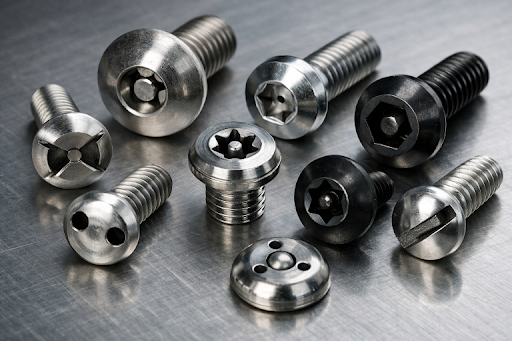
Security fasteners are hardware components specifically crafted to resist tampering. Unlike typical nuts, bolts, or screws, these fasteners employ design features that block standard tools from working, such as unconventional drive patterns or breakaway sections. Their purpose is straightforward: to serve as a deterrent to anyone attempting unauthorized removal or intrusion. Incorporating them into design is an immediate way to up-level physical security and reduce asset vulnerability across a variety of settings.
While some may assume that no hardware is truly tamper-resistant, the strategic use of unique drive systems such as pin-in-torx, snake eyes, or specialized proprietary heads can make unauthorized removal time-consuming and impractical.
For those interested in a deeper background on the distinctions and challenges of tamper-proof screws, an understanding of the variety and effectiveness of these fasteners in different settings is essential to deploying the correct solution.
Applications in Public Infrastructure
Municipalities and transportation authorities depend on security fasteners to protect critical elements such as playground equipment, bridges, signs, and lighting. Tampering and vandalism can result in disruptions, costly repairs, and compromised public safety. For example, anti-theft fasteners in public bicycle racks help deter theft, while tamper-proof screws are used in public toilet fixtures to prevent disassembly. These applications demonstrate the adaptability and necessity of security fasteners for maintaining the functionality and safety of community spaces. According to the U.S. Department of Transportation, acts of vandalism and theft involving public infrastructure can cost cities millions annually, highlighting the practical need for robust security solutions.
Role in Industrial Maintenance
In manufacturing plants, refineries, and other industrial settings, security fasteners do more than protect against theft; they sustain operational efficiency. Unauthorized interference with machinery can cause equipment failure or even result in workplace accidents. By fitting equipment with tamper-resistant fasteners, companies add an extra layer of safety that helps prevent unauthorized personnel from accessing or modifying critical machine parts. This proactive strategy can also aid compliance with industry regulations designed to safeguard both personnel and property.
Advancements in Fastener Technology
Recent years have seen significant advancements in fastener technology, particularly the development of smart fasteners equipped with digital sensors. These devices can detect torque changes, monitor for unauthorized loosening, and communicate real-time status updates to centralized management platforms. In industries reliant on continuous uptime, such as power generation or logistics, the use of smart fasteners has reduced maintenance costs and improved safety outcomes. Early adoption of these technologies has already demonstrated significant reductions in unplanned downtime, making them a cornerstone of future maintenance strategies.
Choosing the Right Security Fasteners
When specifying security fasteners for a project, it is essential to match product attributes to the use case. Factors to consider include the level of security required, expected exposure to the elements, potential risk of theft, and maintenance requirements. Shear bolts, which are designed to permanently secure objects by breaking off their heads during installation, provide high security for items not requiring routine access. On the other hand, fasteners with unique keyed drives may be more suitable for applications where access will occasionally be needed by authorized personnel. Consulting with security fastener experts can help ensure that the solution is both robust and practical for ongoing operations.
Installation and Maintenance Best Practices
Proper installation is a key determinant of the long-term effectiveness of security fasteners. It is important to use manufacturer-recommended tools and installation methods. Over-torquing or improper seating can compromise the fastener’s intended security features. Regular inspection schedules should be established to check for signs of tampering or wear, especially in high-risk or outdoor environments. Training maintenance personnel in identifying compromised fasteners helps to ensure consistent security and reduces the likelihood of assets being left vulnerable.
Conclusion
Security fasteners may appear to be a small component within the broader landscape of asset protection, but their impact is substantial. From public infrastructure to critical industrial machines, these fasteners stand as frontline solutions against vandalism, theft, and unsafe tampering. Ongoing innovation, such as smart technology integration, only strengthens the value proposition of security fasteners. Their use underpins operational reliability and public safety, making them an investment that pays dividends in risk reduction and peace of mind.