A fence is more than a boundary around a property. When carefully designed and properly installed, it can improve a home’s appearance, create usable outdoor space, strengthen security, and make the property more attractive to future buyers.
Calgary homeowners must also consider local weather, neighbourhood character, maintenance demands, and municipal requirements. Making informed choices from the beginning can produce a fence that looks appealing and continues to perform for years.
How a Fence Strengthens a Home’s First Impression
The exterior of a property shapes a visitor’s opinion before they enter the home. A damaged, leaning, or mismatched fence can make an otherwise well-maintained property appear neglected. A new fence creates a cleaner and more organized streetscape.
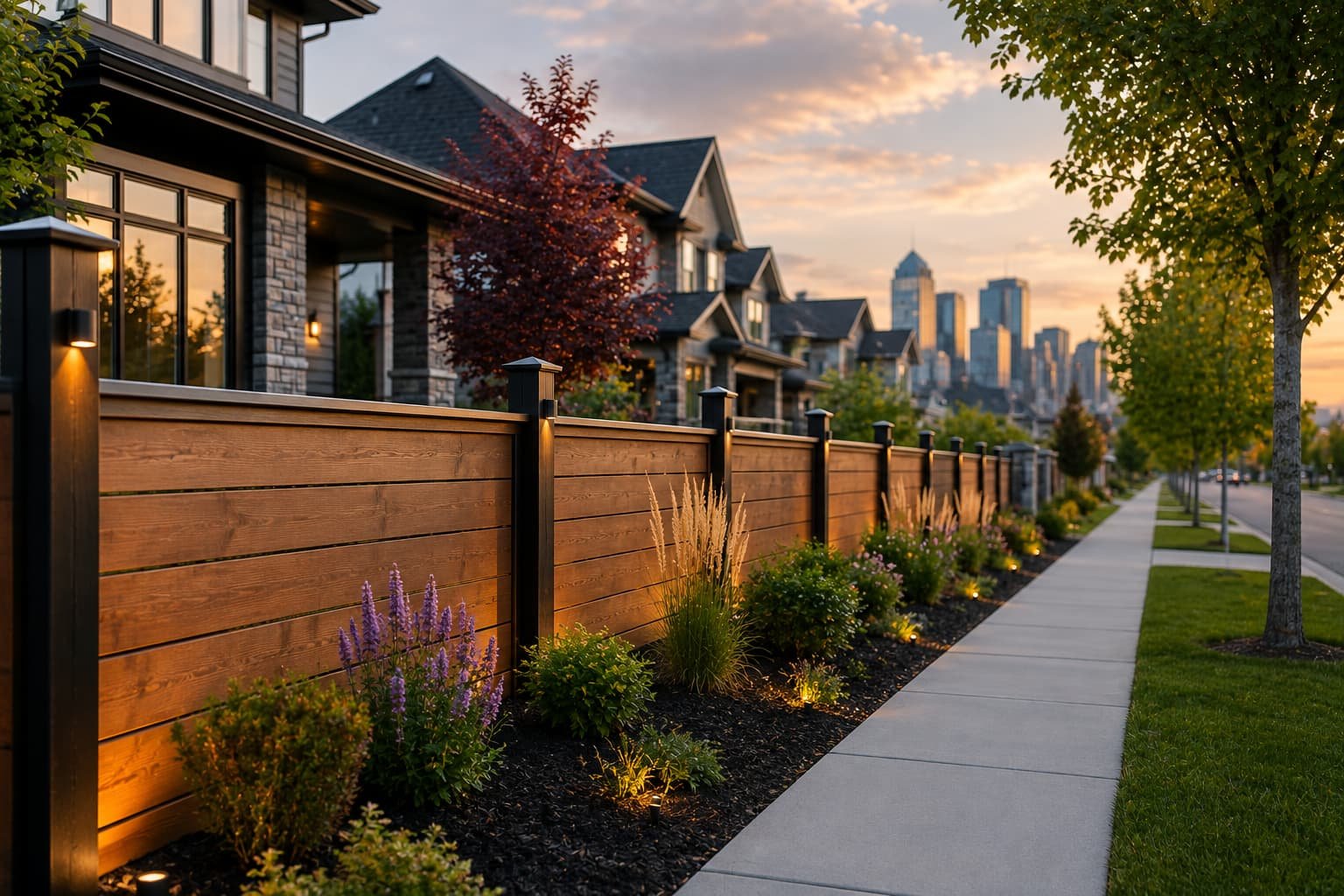
The most attractive design usually complements the home rather than competing with it. Board colours can coordinate with exterior siding, trim, roofing, or landscaping. Traditional wood may suit an established home, while composite panels or ornamental metal can support a more contemporary appearance.
Scale is equally important. A tall, solid structure may look too imposing in a small front yard, whereas a low fence with open spacing can define the boundary without blocking the home. Along side and rear yards, taller panels may be appropriate where privacy is the main concern.
Choosing Materials for Calgary Conditions
Fence material affects appearance, cost, maintenance, durability, and weather resistance. Calgary’s temperature changes, snowfall, dry periods, wind, and repeated freeze-thaw cycles mean that material selection should never be based on appearance alone.
Pressure-treated wood is widely used because it is affordable and adaptable. It can be built in several styles, but it requires periodic cleaning, staining, or sealing. Cedar provides natural warmth and resistance to decay, although its colour will fade if it is not protected.
Vinyl requires relatively little maintenance and does not need painting. However, product quality matters because lower-grade panels may become brittle in extreme cold. Composite fencing offers a wood-like appearance with reduced maintenance, but its initial price is usually higher.
Ornamental metal provides an open, elegant look and works well where visibility matters. It offers boundary definition without making a property feel enclosed. Chain-link is practical for pets, children, and larger lots, although its visual impact may be less suitable for prominent front-yard locations.
Designing a Fence for Appearance and Function
A successful fence should solve practical problems while fitting naturally into the property. Height, board direction, gate placement, visibility, and decorative details all influence how the finished project looks and works.
Horizontal boards can give a yard a modern appearance, while vertical boards offer a familiar and versatile style. Decorative post caps, lattice panels, contrasting trim, and carefully selected stains can add character. These features should be used consistently so the design does not appear overly busy.
Gate placement deserves particular attention. A gate should connect logically with walkways, parking areas, garbage storage, or backyard amenities. It must also be wide enough for lawn equipment and other items that regularly move between the front and rear yards.
Privacy should be balanced with light and airflow. Solid panels create separation, but partial screening or spaced boards may be more appropriate where preserving sunlight and visibility is important. Corner properties may have extra visibility requirements that affect allowable fence height.
Why Installation Quality Determines Long-Term Value
Even premium materials can fail when the supporting structure is poorly built. Accurate measurements, reliable posts, proper drainage, suitable fasteners, and careful alignment are essential to long-term performance.
Homeowners considering fence installation in Calgary should assess more than the quoted price. The proposed post depth, footing method, material grade, hardware, gate construction, warranty, and site preparation can reveal whether the project is designed for lasting performance.
Posts must be strong enough to resist wind and seasonal ground movement. Water should not be allowed to collect around their bases because trapped moisture can promote rot, corrosion, and frost-related movement. Corrosion-resistant fasteners are also important, particularly for treated lumber and exposed hardware.
Professional workmanship is visible in straight lines, even spacing, secure connections, and gates that open smoothly. These details improve curb appeal while reducing the likelihood of premature repairs.
Privacy, Security, and Buyer Appeal
Many buyers value a yard that feels private, safe, and ready to use. Fencing can make outdoor areas more comfortable for relaxing, entertaining, gardening, and children’s activities.
A secure enclosure may also appeal to households with pets. Well-placed gates can control access, while clearly marked boundaries reduce uncertainty about where one property ends and another begins. These practical benefits can influence a buyer’s perception of the home.
However, a fence does not automatically raise the selling price by a fixed amount. Its effect depends on condition, design, local expectations, buyer preferences, and how well it suits the property. A deteriorated or highly unusual fence may become a repair expense rather than an advantage.
The strongest return generally comes from a fence that is attractive, functional, durable, and consistent with nearby homes. It should feel like a useful part of the property rather than an obstacle a buyer may want to remove.
Checks to Complete Before Construction
Planning mistakes can lead to disputes, unexpected expenses, or reconstruction. Property owners should confirm boundaries and restrictions before ordering materials or digging post holes.
Key checks include:
- Confirming the legal property lines rather than relying on an existing fence
- Requesting utility locations before excavation begins
- Reviewing utility rights-of-way and easements
- Checking municipal height and visibility requirements
- Determining whether a development permit is required
- Reviewing community, architectural, or homeowner association restrictions
- Discussing shared boundaries and access with neighbours
In Calgary, a development permit is typically required when a rear-yard fence exceeds two metres, a front-yard fence exceeds 1.2 metres, or a fence within a corner visibility triangle exceeds 0.75 metres. Gate height can also affect permit requirements. Rules may vary with location and property conditions, so current requirements should be confirmed before work starts.
Protecting the Fence After Installation
Regular care preserves appearance and helps small defects remain manageable. Wood should be inspected for peeling finishes, cracks, loose boards, and early decay. Stain or sealant should be reapplied according to material condition and product guidance.
Vinyl and composite surfaces generally benefit from occasional washing. Metal fencing should be checked for damaged coatings and corrosion, while chain-link sections may need tensioning or hardware replacement.
Keep soil, wet leaves, and heavy snow from remaining against the lower sections. Test gates each spring, tighten loose fasteners, and address leaning posts promptly. Calgary property owners are also expected to keep fences in good repair, making maintenance both a practical and regulatory consideration.
Conclusion
A well-planned fence can improve curb appeal, privacy, security, and everyday enjoyment while supporting a positive impression of the property. The best results come from selecting climate-appropriate materials, using a design that complements the home, confirming local requirements, and investing in correct installation. With routine maintenance, a quality fence can remain an attractive and functional property feature for many years.