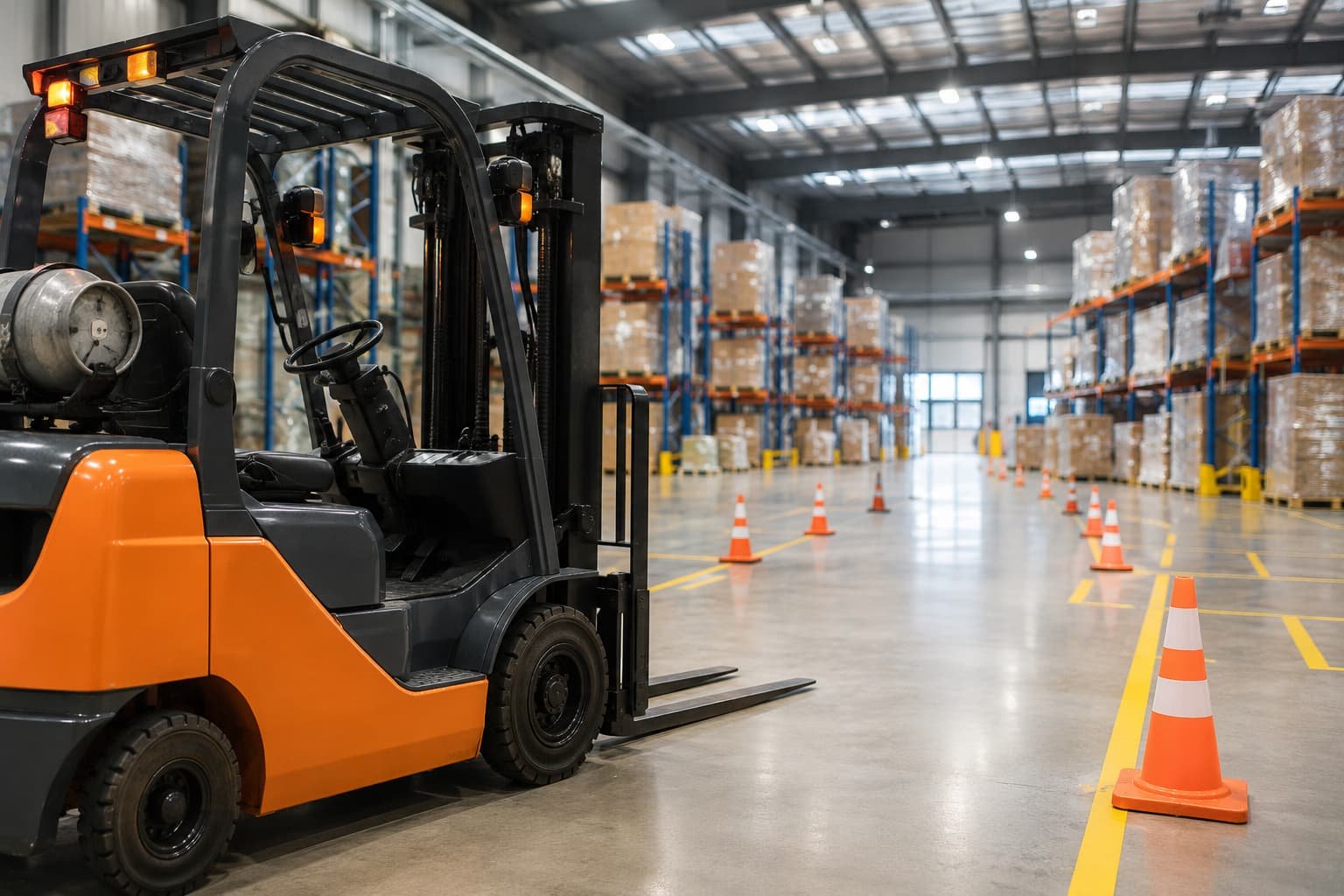
Forklifts are essential across warehouses, construction sites, distribution centres, manufacturing facilities and transport yards. Although these machines improve workplace efficiency, operating one safely requires practical skill, sound judgement and an understanding of hazards. For people in Newcastle and the surrounding Hunter Region, completing recognised training can be an important step towards safer work and broader employment opportunities.
Why Forklift Training Matters
A forklift may appear straightforward to operate, but it behaves very differently from a car. Its rear-wheel steering, limited visibility, changing centre of gravity and heavy load capacity create distinct risks.
Professional forklift training teaches operators how to manage these risks systematically. Rather than simply learning how to move the machine, participants develop skills in planning tasks, checking equipment, assessing loads and responding to changing workplace conditions.
Effective training can help reduce incidents involving:
- Unstable or falling loads
- Collisions with pedestrians or structures
- Forklift tip-overs
- Poorly secured attachments
- Unsafe travel on slopes or uneven surfaces
- Damage to stock, equipment and buildings
Training also helps operators understand when a task should be stopped. Recognising that a load is unsuitable, a route is obstructed or a forklift has a mechanical problem is an essential part of safe operation.
Understanding Forklift Licensing in NSW
In New South Wales, operating certain forklifts is classified as high risk work. Workers must hold the appropriate high risk work licence before performing this work independently, subject to the applicable training and supervised-work arrangements.
The relevant licence class depends on the equipment being operated. A standard forklift truck fitted with a mast and fork arms generally falls within the LF class. An order-picking forklift, where the operator’s platform rises with the load carriage, falls within the LO class. These licence classes are not interchangeable.
People considering a forklift licence in Newcastle should confirm that the selected course covers the equipment they expect to use. All Class Training offers the nationally recognised TLILIC0003 unit for operating a forklift truck at its purpose-built Tomago facility, with workplace-based options also available subject to the provider’s arrangements.
Completing training and an assessment does not necessarily mean the physical licence is issued immediately. Candidates should ask the training provider to explain the current SafeWork NSW application process, documentation, fees and submission deadlines.
Who May Benefit from Forklift Training?
Forklift courses are relevant to more than experienced warehouse workers. Training may suit people entering logistics, changing careers or adding a useful capability to an existing role.
Potential participants include:
- Warehouse and distribution employees
- Storepersons and pick-pack workers
- Freight and transport personnel
- Manufacturing and production workers
- Construction and building-supply employees
- Agricultural and landscaping workers
- Supervisors responsible for materials handling
- Jobseekers exploring forklift-related positions
Employers may also arrange training for existing staff when introducing new equipment or expanding workplace responsibilities. However, a licence does not replace site-specific induction, familiarisation or supervision. Every workplace has its own traffic routes, hazards, load types and operating procedures.
What a Forklift Course May Involve
A recognised forklift course usually combines theory, practical instruction and formal assessment. The precise delivery method and schedule will depend on the provider, course design and participant needs.
Planning the Task
Before moving a forklift, an operator needs to understand the work being performed. This includes identifying the load, checking its weight, selecting a safe route and assessing environmental hazards.
Participants may learn to examine floor conditions, overhead clearances, pedestrian activity, ramps and restricted areas. Planning is particularly important in busy warehouses where people and mobile plant may work close together.
Preparing the Equipment
Pre-operational inspections help identify faults before the forklift enters service. Checks may cover tyres, forks, mast components, hydraulic systems, warning devices, controls and visible damage.
Operators must know how to record and report problems. A forklift with a safety-related defect should not simply be used until the end of a shift.
Performing Forklift Work
Practical training may include travelling, steering, lifting, lowering, stacking and placing loads. Participants can also learn how load height and weight affect visibility and stability.
Safe operating techniques include travelling at an appropriate speed, maintaining separation from pedestrians and keeping loads stable. Operators also need to look in the direction of travel and use designated routes wherever possible.
Shutting Down and Securing the Forklift
A task is not complete until the machine is safely parked. Correct shutdown procedures may include lowering the forks, applying the parking brake, neutralising controls and preventing unauthorised use.
Assessment can involve theoretical questions, calculations and observed practical tasks. Candidates should be prepared to demonstrate consistent competence rather than memorise isolated steps.
Forklift Operator Responsibilities
Holding forklift certification brings ongoing responsibilities. Operators must follow workplace procedures, comply with licence conditions and use equipment only when they are fit and authorised to do so.
Before each shift, a forklift operator should inspect the machine and report faults. During operation, the operator must consider pedestrians, blind corners, loading areas and other mobile equipment. Seatbelts or operator restraints should be used where fitted and required.
Operators should never exceed the rated capacity shown on the load plate. The forklift’s capacity can change depending on load dimensions, attachments and lift height, so assumptions based only on weight can be dangerous.
Forklift safety also depends on communication. Horns, warning lights and eye contact can assist, but they should support—not replace—well-designed traffic management controls.
Workplace Safety Is a Shared Responsibility
Licensing an operator is only one part of workplace safety. Employers and site managers must provide safe systems of work, suitable equipment, supervision and clear traffic arrangements.
Useful controls may include:
- Physically separating pedestrians and forklifts
- Marking travel lanes and exclusion zones
- Installing barriers at high-risk locations
- Providing adequate lighting and signage
- Setting and enforcing safe speed limits
- Maintaining forklifts and attachments
- Reviewing incidents and near misses
Workplaces should also provide familiarisation when an operator encounters an unfamiliar forklift model or attachment. Controls and handling characteristics may differ even when the equipment falls within the same licence class.
Refresher training may be appropriate when unsafe practices are observed, equipment changes or an operator has not used a forklift for an extended period. Employers should assess competency rather than relying solely on the licence expiry date.
Career Opportunities for Qualified Operators
Forklift jobs can be found across logistics, freight, retail distribution, manufacturing, construction supply and waste management. Newcastle’s industrial areas and the wider Hunter Region support many businesses that move materials and goods.
A high risk work licence may strengthen a candidate’s suitability for certain positions, but it does not guarantee employment. Employers may also consider practical experience, availability, physical capacity, reliability and knowledge of warehouse systems.
Complementary skills can further improve career readiness. These may include inventory control, order picking, basic computer use, manual handling awareness and familiarity with workplace health and safety procedures.
New operators should be honest about their experience. A licence confirms that a person met assessment requirements at a particular point; confidence and efficiency continue to develop through properly supervised workplace practice.
How to Choose Appropriate Newcastle Forklift Training
When comparing Newcastle forklift training options, confirm that the provider delivers the relevant nationally recognised unit and uses appropriately qualified trainers and assessors.
Ask the provider about:
- Course prerequisites and identification requirements
- Unique Student Identifier requirements
- Theory and practical learning arrangements
- Equipment used during training
- Assessment methods
- Costs beyond the advertised course fee
- Licence application steps after assessment
- Support if further training is required
Avoid choosing solely on speed or price. Adequate practical access, clear instruction and realistic safety scenarios can be more valuable than completing training as quickly as possible.
Conclusion
Forklift operation combines technical ability, hazard awareness and personal responsibility. Appropriate training gives prospective operators a structured foundation for handling equipment safely, while employers must reinforce that knowledge through induction, supervision and effective risk controls. By selecting suitable training and continuing to develop practical skills, workers can prepare themselves for responsible roles across Newcastle’s diverse industrial sectors.