
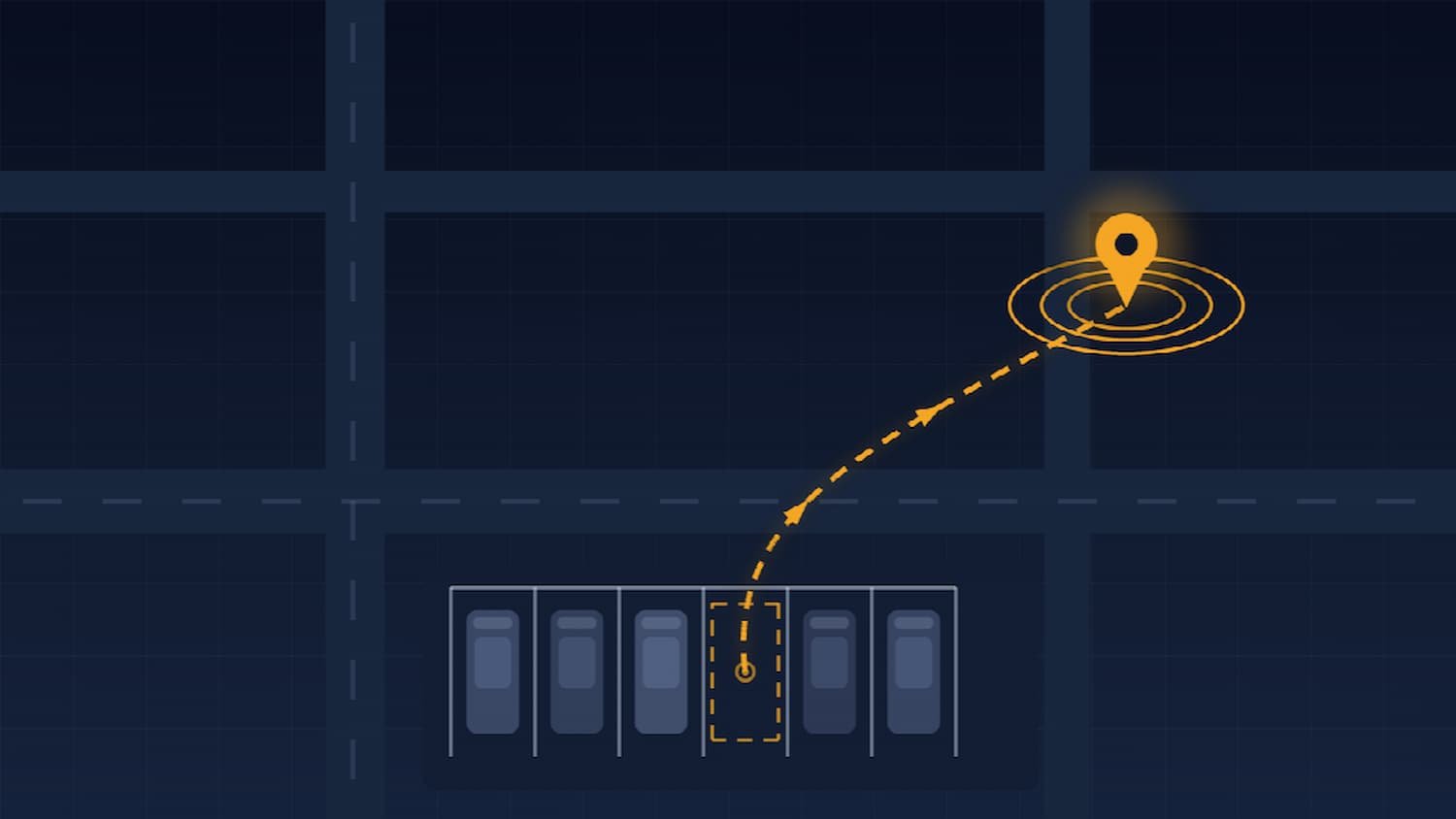
Vehicle theft almost never looks like it does in film. There is no chase and no dramatic confrontation. In most cases the owner walks out to an empty parking space, stands there for a few seconds trying to remember whether they parked somewhere else, and then feels the floor drop out.
What happens over the next three days determines almost everything. Recovery rates fall off sharply as time passes, and the reason is unglamorous: a stolen vehicle is easiest to find while it is still moving, still intact, and still close to where it was taken. Once it has been stripped, repainted, retagged, or moved into a container, the trail goes cold in a way that no amount of follow-up calls will fix.
Here is what actually moves the needle in that window, and what quietly works against you.
The clock starts before you know it does
The single biggest variable in recovery is not police response time. It is the gap between the theft and the moment anyone realizes it happened.
A car taken from a driveway overnight might not be missed until 7 a.m. A work truck parked at a yard on Friday evening might not be missed until Monday. A trailer left at a job site between phases can sit “missing” for a week before anyone connects the dots. In each of those cases the thief had a head start measured in hours or days, and that head start is spent putting distance and paperwork between the vehicle and its owner.
This is why alerting matters more than most people assume. Knowing a vehicle moved at 3:14 a.m. when it should not have moved is worth more than any amount of detail gathered after the fact. Motion alerts, geofence alerts, and after-hours movement notifications exist for exactly this reason: they collapse the discovery gap from hours to minutes.
If you take one thing from this article, take that. Detection speed beats everything else.
What a police report can and cannot do
Filing a report is necessary. It is also frequently misunderstood.
When you report a stolen vehicle, the VIN and plate go into a national database. If an officer runs that plate during a traffic stop, or a plate reader picks it up, you get a hit. That is a real mechanism and it does recover vehicles. But it is passive. It depends on the stolen vehicle crossing paths with someone who happens to check.
Thieves know this. Plates get swapped within the first few hours. Vehicles get parked in a residential neighborhood for a day or two to see whether anyone comes looking, a practice sometimes called cooling off. By the time a plate reader would have helped, the plate is gone.
What changes the dynamic is giving law enforcement something active instead of passive: a current location, updating in near real time, that they can drive to. Officers can and do act on that. What they generally cannot act on is a hunch, a Find My phone ping from six hours ago, or a neighborhood social media post.
Location data changes the conversation
This is where a GPS tracker earns its keep, and it is worth being precise about why.
A tracking device does not prevent theft. Anyone selling it that way is overselling. What it does is convert your situation from “my vehicle is missing” to “my vehicle is at this address, right now.” Those are two completely different phone calls to make to a police department, and they produce completely different outcomes.
There are practical details that separate devices that help from devices that disappoint:
- Reporting frequency. A device that reports once an hour is fine for knowing where a trailer sits. It is close to useless during an active theft, because the vehicle can be forty miles away by the next ping. Devices that shift to a faster reporting interval when unexpected motion is detected are far more useful.
- Placement. A device plugged into the OBD-II port under the dash is fast to install and easy for a thief to find and unplug, because it is one of the first places anyone looking for a tracker checks. Hardwired and hidden battery-powered units are harder to defeat.
- Power independence. If the device dies when the battery is disconnected, it stops helping at the exact moment you need it. Battery-powered and solar units keep reporting regardless of what happens to the vehicle’s electrical system.
- Sharing. The ability to send a live location link directly to an officer, rather than reading coordinates over the phone, removes friction at a moment when friction costs you the vehicle.
None of this is exotic technology. It is mostly about choosing a configuration that assumes someone will try to defeat it.
Video answers the questions location cannot
Location tells you where. It does not tell you who, or how, or whether your insurer will believe you.
That gap is why a gps tracker dash cam has become standard equipment for a lot of owner-operators and small fleets. Footage that carries an embedded location and timestamp does several things at once. It captures the person who took the vehicle, which is often the only usable identification anyone gets. It documents the moment of the break-in, which matters when an insurer wants to establish forced entry rather than an unlocked door. And it creates a defensible record of speed and position, which becomes relevant if the stolen vehicle is involved in a collision before it is recovered.
That last scenario is more common than people expect, and it is genuinely expensive. A vehicle stolen at 2 a.m. and wrecked at 4 a.m. can generate a liability claim against the registered owner. Time-stamped footage showing the vehicle leaving with someone else at the wheel closes that argument quickly.
Interior-facing cameras are a separate decision with real privacy implications, particularly for employee vehicles, and they should be handled with a written policy rather than as a surprise. But forward-facing video with location data is close to a default recommendation at this point.
The dead zone problem
Every cellular device shares a limitation: it needs a tower. Most of the time this is fine, because most theft happens in populated areas and stolen vehicles usually stay in them.
Usually is doing a lot of work in that sentence.
Equipment gets moved into remote counties. Boats and trailers get taken toward coastlines and rural storage. Freight moves across regions where coverage is genuinely patchy for a hundred miles at a stretch. And there are areas where a determined thief will deliberately route through poor coverage, because the effect on a cellular device is the same as switching it off.
A satellite gps tracker addresses this directly by transmitting through a satellite network instead of a cellular one, which means position updates continue in places where a cellular device simply goes quiet. The tradeoff is real: satellite devices typically report less frequently and cost more per month than their cellular equivalents. For a delivery van that never leaves a metro area, that tradeoff makes no sense. For a piece of equipment that spends its life at remote sites, or a boat, or a high-value trailer that crosses long rural stretches, it is often the difference between a recovery and a write-off.
The honest version of this advice is that most owners do not need satellite. The ones who do tend to know it already, usually because something has already gone missing somewhere with no signal.
What to do in the first hour
If it happens, work in this order:
- Confirm it is actually stolen. Repossession, a family member borrowing it, or a towed vehicle account for a meaningful share of “thefts.” Call the local non-emergency line and ask whether the vehicle was towed before you file.
- Call the police immediately. Have the VIN, plate, make, model, color, and any distinguishing marks ready. If you have a live location, say so in the first sentence. It changes the priority of the call.
- Pull your data. Last known location, direction of travel, and any footage from the time window. Do not edit it. Provide originals.
- Notify your insurer. Most policies have a reporting window. Starting the claim does not commit you to anything.
- Alert your team. If it is a work vehicle, someone needs to know before a customer calls asking where their technician is.
The uncomfortable conclusion
Most vehicle security spending goes toward prevention, and prevention has limits. A determined thief with the right tools defeats most deterrents in under a minute.
What actually changes outcomes is shortening the time between theft and detection, and having something concrete to hand law enforcement when you call. That is a less satisfying answer than an alarm that scares everyone away, but it is the one supported by how recoveries actually happen.