
A jury doesn’t just assume that a slip and fall gave someone fibromyalgia, that a car accident resulted in memory loss, or that a workplace injury made it impossible to work. Proving causation in such complex personal injury cases involves establishing that link, bit by bit, with the help of individuals who can break down medicine, math, and physics in a way that’s understandable to a juror.
That’s what an expert witness does, and it’s often the key factor in whether a fair settlement is reached or a case is torn apart in court.
Why Some Injuries Need A Translator
Not all injuries can be detected easily through an X-ray or MRI scan. Injuries such as traumatic brain injuries, chronic pain syndromes, nerve damages, and many soft-tissue injuries are real, debilitating, and cannot be detected through standard imaging tests. Insurance adjusters and defense attorneys are aware of this fact and often use the lack of concrete evidence to challenge the validity of the injury. If there is no obvious fracture or visible lesion, they will push for “proof”.
This is where a medical expert witness becomes invaluable. While a treating physician can list symptoms, a qualified expert can outline how the injury occurred, establish a relationship between specific symptoms and specific injuries, and explain to a jury why a person with a normal-looking scan may still be in considerable pain.
Without this expert testimony, the jury will be left to speculate. Speculation usually works to the advantage of the party that needs to prove less.
Causation Is Where Cases Actually Get Fought
Liability – who caused the accident – gets a lot of the attention. But in serious injury claims, it’s usually not the real battleground. Defense teams are almost never going to argue “our client didn’t hit you.” Instead, they’re going to argue that “something else caused your condition.” Another car wreck from 20 years ago. Arthritis. Age. An unrelated fall six months later.
Which is why it’s not enough for a plaintiff’s medical expert to just describe the injury and its symptoms. They have to do that, of course, but they must also provide an opinion, one that can withstand withering cross-examination. Preferably one that points out how the injury will never go away and may require lifelong treatment.
The doctor has to give a convincing, well-supported opinion that the accident is the actual cause, or a substantial contributing cause, of the specific harm the plaintiff is claiming. This is where things get difficult. Pre-existing conditions make this landscape even more fraught. Most adults over 40 have some degenerative disc stuff already sitting in their medical records. Defense attorneys will call in every prior invoice they can get their hands on making the argument that the crash didn’t cause anything new.
A good expert can explain the distinction between a condition that was aggravated by trauma and one that was already symptomatic in a way that doesn’t make the expert look like a total hack. Defense attorneys know this, which is why they spend infinitely more time attacking an expert’s methodology than they do which med school they went to.
Putting A Number On The Damage
Pain and disruption don’t come with a price tag attached, but a jury verdict does. Economic damages experts exist to bridge that gap. They calculate past medical expenses, project future medical costs, estimate lost wages, and, in more complicated cases, calculate loss of earning capacity – the difference between what someone could have earned over a career and what they can realistically earn now given their injury.
These calculations aren’t guesswork. Economic experts use wage data, work-life expectancy tables, inflation adjustments, and discount rates to bring future losses to present value. They also account for things juries often overlook, like the value of household services a spouse can no longer perform, or the cost of replacing unpaid labor like childcare or home maintenance. A number that sounds arbitrary coming from an attorney sounds a lot more credible coming from someone whose entire profession is calculating exactly this kind of loss.
This is the kind of detailed, expert-driven work that professional beaumont personal injury attorneys coordinate from the start of a case to make sure the numbers hold up.
Life Care Planners And The Cost Of A Lifetime Of Care
Severe injuries are life-changing, and life care planners understand the big picture: how every aspect of a person’s existence is affected, and what interventions might mitigate the losses. They build detailed, itemized projections of everything that person will need for the rest of their life. That can include surgeries, doctor’s appointments, physical therapy, prescriptions, durable medical equipment, mobility devices, home modifications, home health aides, transportation, even vacations.
Often an economist will translate the life care planner’s findings into today’s dollars, adjusting for future inflation and interest on investments. They, in turn, may work closely with a vocational expert, whose job is to assess what kind of work, if any, the injured person can still do. This usually means researching the job market, considering the person’s job history, education, and experience, and current physical or cognitive abilities, and projecting earnings for the rest of their working life.
Frequently the above experts are all called into court (or submit written reports depending on the jurisdiction and the size of the claim) as witnesses, and must withstand a grueling cross-examination. But the life care planner tends to be one of the most important and powerful witnesses, simply because so much rides on what they have to say.
Reconstructing The Accident Itself
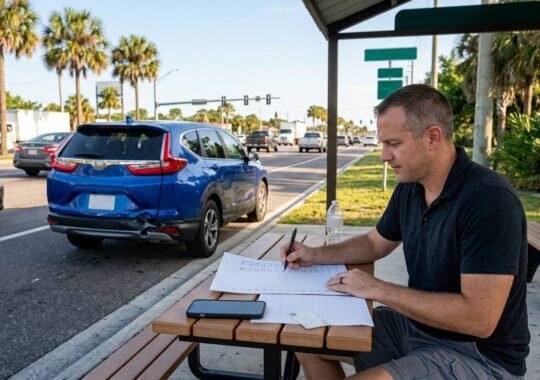
Multiple vehicle collisions, commercial truck wrecks, and cases involving disputed liability all have one thing in common – someone needs to make a decision about what exactly transpired. Physical evidence disappears, memories are faulty, and the involved parties often have differing accounts of how things unfolded.
This is where accident reconstruction experts come in. By using skid marks, vehicle damage, black box information, road conditions, and the principles of physics, they are able to determine speed, point of impact, sightlines, and reaction time. In a commercial trucking situation, this kind of objective analysis could be the only evidence that shows a driver was speeding, tailgating, or had sufficient time to react.
If that evidence isn’t there, the case is reduced to conflicting stories, and those with the best story tend to win, whether they are in the right or not.
Clearing The Admissibility Bar Before A Jury Ever Hears It
All of the information provided above is irrelevant if the testimony is not presented to a jury. First, expert opinions are subject to an admissibility standard that is more demanding than people realize. Under the Daubert framework, a judge must find the expert’s methodology to be scientifically reliable, not merely accept the expert as qualified. This results in a pre-trial war that takes place long before the trial you read about in the paper.
The defense files a motion claiming the plaintiff’s expert utilized an unreliable method, failed to gather sufficient data, and reached conclusions their own research does not support. If the judge rules in their favor, the expert testimony is excluded from trial, sometimes leaving the causation case in tatters.
The Deadlines Nobody Sees Coming
Here’s something most people never think about until it costs them: courts set hard deadlines for naming experts and submitting written expert witness reports, and missing one can mean losing that expert entirely, no matter how good their opinion is.
These scheduling orders are unforgiving. An expert report that’s a week late can be struck. An expert who wasn’t properly disclosed by the deadline can be barred from testifying at all. It’s a purely procedural failure, but it produces a substantive result: no expert testimony means no evidence of causation, no damages calculation, and often no case.
This is exactly the kind of risk that makes managing a complex claim without experienced counsel a genuinely bad idea. Coordinating multiple experts, tracking overlapping deadlines, and preparing for Daubert-style challenges is a full-time undertaking.
Surviving Deposition
Well before a trial commences, the expert first has to endure a deposition. This is when the attorney for the opposing party asks the expert questions under oath, and frequently, this procedure reveals weak experts.
Depositions are all-encompassing: the attorney tries to discover the expert’s underlying assumptions about their opinion, the facts they based their analysis on, prior statements that can be interpreted as contradictory to their current opinion, and how much they are being paid. A high fee per hour is not harmful in itself, but the fact that the expert only or nearly so testifies for plaintiffs or for one specific law firm can be used as evidence for bias. An expert who appears nervous, contradicts their own opinion, or can’t explain the reasoning behind their methodology under cross-examination will hurt the plaintiff’s leverage for settlement, even with a reasonably solid opinion.
All this is important because most cases settle. 95% of personal injury lawsuits settle prior to trial (American Bar Association), and a strong deposition performance is what often brings the insurance company to offer a figure more in the range of fairness than a lowball settlement. The insurance company will read every deposition, and a competent, well-prepared expert can multiply any settlement offer that is made, sometimes more than a jury trial could have fetched.
Talking To Twelve People, Not Twelve Textbooks
There’s one more quality that separates a good expert witness from a bad one: the capacity to make understandable, even to a lay jury, the complex topic about which they are testifying.
An extraordinary epidemiologist who talks over the heads of the jurors with technical terms that the average person wouldn’t understand if they lived to be 100 isn’t doing the case any good. Nor is an accountant who recites figures from a spreadsheet without relating what they mean to the real world. The best expert witnesses can take something that is, by its nature, seriously complicated – biomechanical engineering, present value calculations, long-term forecast – and break it down into concepts that they would use to explain the material to a curious layman. Jurors do not compensate damages based on gobsmacked amazement at someone’s brilliance. They do so based on comprehension.
The attorneys on the case understand this well, and this is part of the reason why expert selection is as much about the ability to communicate as it is about knowledge of the subject. A slightly less qualified expert who can get something across to a jury will nearly always do better than a more qualified one who can’t.
What This Means For Someone With A Serious Injury Claim
None of these circumstances are accidental, and none of them are easily achieved. For any given personal injury case, it must be determined which, if any, experts are necessary, their methodological approach must be evaluated in the applicable court context, discovery deadlines have to be met, and all experts must be prepared to meet an adversarial context and cross-examination. This involves extensive and timely work that occurs long before any jury trial begins during which expert testimony is presented.
For someone who is also recovering from a serious injury during this time, managing these details is more than overwhelming. However, this is the work that effectively shapes the outcome for so many cases, perhaps especially for those for whom the odds may already be stacked.