Key Takeaways
- Get out of danger, check for injuries, and call 911 when emergency help is needed.
- Exchange information, photograph the scene, and avoid roadside arguments about fault.
- Seek appropriate medical care promptly, even if symptoms seem mild at first.
- Notify the relevant insurers, preserve records, and be cautious about recorded statements or releases.
- Keep a simple timeline of treatment, expenses, missed work, and crash-related communications.
A collision on I-275, the Selmon Expressway, Dale Mabry Highway, or a neighborhood street in Tampa, Florida, can turn an ordinary day into a stressful series of decisions. This first 14-day checklist focuses on practical steps to protect health, preserve information, and help a person stay organized after a crash in the Tampa area. When injuries, disputed facts, or significant losses are involved, speaking with a personal injury attorney in Tampa, FL, may help clarify your options.
The first two weeks matter because evidence can disappear, memories can fade, and some injuries do not become obvious immediately. A phone photo, a witness name, or a timely medical visit may become important later. This checklist is general information, not medical or legal advice for a particular crash.
Step One: Get to a Safe Place
Immediately after impact, check yourself and your passengers for injuries. Turn on hazard lights, stay alert for moving traffic, and move the vehicle out of travel lanes only when it is safe and the vehicle can be moved. Tampa’s heavy commuter traffic, sudden rain, and limited visibility at busy intersections can make remaining in an active lane especially dangerous.
- Call 911 if anyone is injured, a vehicle creates a roadway hazard, or emergency assistance is needed.
- Do not leave the scene simply because the crash appears minor.
- Avoid moving a seriously injured person unless there is an immediate danger, such as fire or approaching traffic.
- Follow directions from law enforcement, firefighters, or medical personnel.
Step Two: Report the Crash
Florida law generally requires prompt notice to law enforcement when a crash involves injury, death, or apparent property damage of at least $500. Calling law enforcement can also help create an official record when the facts are unclear. A minor crash may sometimes be handled through a driver self-report, but the reporting rules in effect on the crash date should be confirmed before relying on that option.
Step Three: Exchange Information Without Debating Fault
Exchange basic information calmly and accurately. Do not argue over who caused the collision, apologize in a way that could be misunderstood, or estimate speed, distance, or injuries when you are unsure. If questions arise about fault, coverage, or a serious injury, Attorney Thomas Martino can provide case-specific legal guidance.
- Names, phone numbers, and addresses for drivers involved.
- Driver’s license, license plate, and vehicle information.
- Insurance company and policy details.
- Names and contact information for passengers and independent witnesses.
Step Four: Document the Tampa Crash Scene
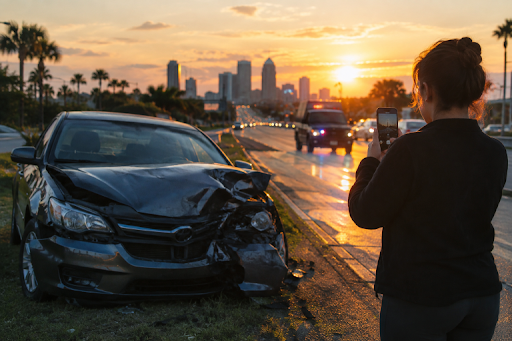
Use a phone to take both wide and close-up photographs, provided it is safe to do so. Capture the vehicles, damage, traffic signals, lane markings, skid marks, debris, nearby businesses, weather, lighting, and the road surface. In Tampa, standing water, glare, construction zones, and congested multilane roads can all be relevant details.
Write a short note before the day ends. Include the time, exact location, direction each vehicle was traveling, weather conditions, what you saw, and any statements made by witnesses. Keep the note factual rather than speculative.
Step Five: Get Medical Care Quickly
Symptoms such as headaches, neck pain, dizziness, numbness, back pain, or limited movement may emerge hours or days after a collision. Seek appropriate care when symptoms appear, explain that a motor vehicle crash occurred, and follow the provider’s instructions. Medical treatment does not automatically establish fault or guarantee payment, but it creates a timely record of reported symptoms and care.
Florida’s personal injury protection rules make timing particularly important. Under Florida’s current PIP statute, initial services and care generally must be received within 14 days after the motor vehicle accident for PIP medical benefits to be available. Do not postpone needed care just because pain initially seems manageable.
Step Six: Request and Review the Crash Report
A crash report may identify the drivers, witnesses, reported injuries, vehicle damage, officer observations, and a diagram of the event. It can be useful, but it does not necessarily resolve every question about responsibility. Review it for any obvious errors, and keep the report number in your records.
For official records and statewide information, Florida’s crash-record guidance explains that the Florida Highway Safety and Motor Vehicles agency is the official custodian of crash reports. Reports may not be immediately available, so keep checking through the appropriate channel if necessary.
Step Seven: Notify Insurers Carefully
Report the crash to your own insurer within the time required by your policy. Provide accurate basic information, save the claim number, and keep copies of emails, letters, and notes from calls. A notice of loss is different from a detailed recorded statement.
- Do not guess about the extent of injuries or future treatment.
- Ask the caller’s name, company, and role before discussing the crash.
- Read medical authorizations and settlement releases before signing them.
- Do not accept a final payment until you understand what rights it may end.
Step Eight: Preserve Evidence and Financial Records
Create one paper or digital folder for crash-related materials. Save photos, videos, repair estimates, towing bills, rental-car paperwork, medical records, prescriptions, receipts, and proof of missed income. Do not discard damaged clothing, a child safety seat, or vehicle parts before they have been photographed and evaluated, when their condition could matter.
Common Mistakes to Avoid
- Leaving before exchanging information or receiving instructions from law enforcement.
- Delaying medical evaluation despite new or worsening symptoms.
- Posting opinions, photos, or arguments about the crash on social media.
- Repairing or disposing of key evidence without documenting it.
- Assuming a police report alone decides fault.
- Accepting a quick settlement before the full effect of an injury is known.
Questions Tampa Drivers Often Ask
What if the other driver leaves?
Call law enforcement immediately. Record the vehicle’s make, color, plate number, direction of travel, damage, and any witness details. Seek medical care if needed, even if the other vehicle is not located right away.
What if there is no visible injury?
Monitor for symptoms in the days after the crash. Promptly seek medical attention for pain, dizziness, confusion, weakness, numbness, headaches, or other concerning changes.
Can I have a claim if I share some fault?
Potential responsibility can depend on the available evidence and current Florida law. Shared fault may affect what compensation, if any, is available, so avoid making assumptions before the facts are reviewed.
Conclusion
After a Tampa, Florida, crash, focus on the next right step: get safe, report what happened, document the scene, obtain needed medical care, and protect your records. Acting methodically during the first 14 days can reduce confusion and help preserve information when the consequences of the crash become clearer.