Key Takeaways
- Warehouse growth planning should begin with product flow, inventory accuracy, and peak demand, not square footage alone.
- Clear receiving, storage, picking, and shipping routines reduce avoidable delays and stock errors.
- Better slotting and use of vertical space may postpone the need for a larger facility.
- Flexible capacity can help Phoenix businesses respond to promotions, seasonal demand, and sudden order growth.
- Technology is most useful when it solves a defined warehouse process problem.
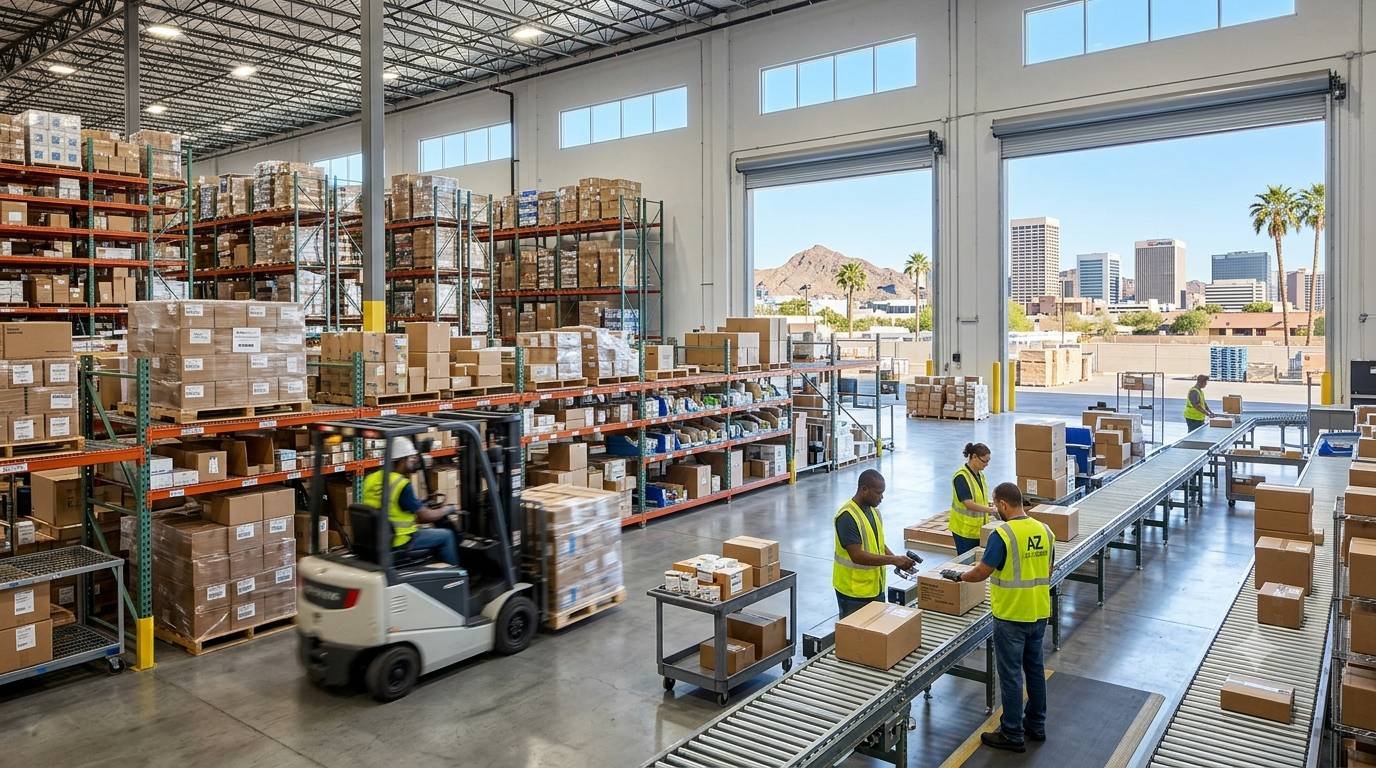
For manufacturers, wholesalers, retailers, and e-commerce sellers, warehouse readiness becomes more important as orders increase. A well-organized warehouse Phoenix AZ strategy can help a business protect service levels while keeping inventory accessible, staff productive, and shipping areas under control.
Phoenix businesses also need an operation that can handle fast-moving inventory without compromising product protection. When cartons, pallets, returns, and outbound orders compete for the same space, small process gaps can quickly lead to missed shipments, damaged goods, or unreliable stock counts.
Why Warehouse Readiness Matters in 2026
Warehouse problems often appear before they show up clearly in financial reports. Teams may spend too much time looking for product, working around blocked aisles, reconciling spreadsheet changes, or correcting orders after they leave the building. These are signals that the facility’s workflow has not kept pace with demand.
Capacity planning is especially useful when inventory activity is rising. A national logistics survey released in July 2026 reported rising warehouse utilization and pricing alongside contracting warehouse capacity, reinforcing the value of reviewing storage needs before a business is forced into a rushed decision.
Companies that need adaptable overflow capacity, receiving support, or storage without taking on a long-term facility commitment may benefit from evaluating third party warehousing companies as part of their broader growth plan. Outside support is not a substitute for good internal controls, but it can create room to manage a product launch, seasonal surge, or uneven supplier deliveries.
Step 1: Map How Goods Move Through the Building
Start by following one product from arrival through shipment. Mark each stop on a simple floor map: receiving, inspection, putaway, storage, picking, packing, shipping, and returns. This exercise often reveals unnecessary backtracking, congested staging areas, and workstations that are too far from the products or people that use them most.

Look for travel that does not add value. For example, if a team receives inventory at one dock, stages it at the opposite end of the facility, and then moves it back near the original dock for packing, the layout may add labor without improving control. Before moving racks or buying equipment, test a revised flow on paper and consider how forklifts, carts, and pedestrians will use the space.
Step 2: Measure Usable Space Before Adding More Space
Total square footage is not the same as usable storage capacity. A practical review should identify used and open pallet positions, average and peak inventory volumes, daily staging needs, clear aisle space, and room for receiving or returns. A facility can look full while still having poorly used rack locations, oversized pick faces, or slow-moving inventory occupying premium space.
Review slotting before expanding. Fast-moving products generally belong in accessible picking locations, while slower items can be stored in less convenient areas. Businesses may also increase capacity by adjusting pallet configurations, grouping related products, using vertical storage safely, and reducing the time completed orders spend in outbound staging. Do not treat every empty patch of floor as storage space, because crowded traffic paths can create safety and productivity problems.
Step 3: Establish Inventory Rules That People Can Follow
Every sellable item should have a clear identification method and an assigned storage location. Use readable labels, consistent location names, and a rule for partial cases or mixed pallets. If product age matters, use first-in, first-out rotation. If the operation handles regulated, perishable, batch-controlled, or date-sensitive goods, establish lot, expiration, and hold-status procedures before inventory reaches the shelf.
Separate damaged, returned, quarantined, and unverified inventory from available stock. Otherwise, an item may appear available to sales staff even though it cannot be shipped. Cycle counts, which compare selected physical locations with system records on a recurring schedule, can help uncover errors before they affect customers.
Step 4: Tighten Receiving, Putaway, Picking, and Packing
Make Receiving a Completed Process
A reliable receiving routine includes scheduling arrivals when possible, comparing delivered goods with the purchase order or delivery record, checking visible damage and quantities, recording shortages or overages, assigning a location, and updating the inventory system before the product moves again. When receiving updates are delayed, a business can appear out of stock online even when cartons are physically sitting near the dock.
Choose a Picking Method That Matches Demand
Single-order picking can work for low order volume or complex orders. Batch picking may reduce travel when many orders contain similar items. Zone picking can help larger facilities divide work by area, while wave picking can organize work around carrier cutoffs or planned shipping windows. The right choice depends on order volume, product variety, staffing, and the level of service customers expect.
Reduce errors with clear labels, separation between similar-looking items, scan verification where practical, and a second check for high-value or sensitive orders. Keep packing supplies organized, define outbound staging lanes, and plan for the late-day period when carrier cutoffs can create congestion.
Step 5: Prepare for Peaks, Technology, and Safety
Average monthly volume can hide a few difficult weeks. Review the prior year’s busiest periods, planned promotions, new product launches, supplier lead times, expected returns, temporary labor needs, and overflow options. A short planning meeting involving sales, purchasing, warehouse, and transportation staff can identify conflicts before inventory arrives.
Technology should support a proven process. Barcode scanning, electronic receiving, inventory dashboards, warehouse management systems, carrier integrations, and demand-planning tools can improve visibility, but only when staff are trained and the information is maintained. Before investing, ask whether the tool connects to current systems, tracks the data the business needs, produces useful reports, and is practical for warehouse employees to use every day.
Safety belongs in every layout decision. Clear aisles, marked travel paths, stable loads, inspected racks, and trained forklift operators help reduce risks in active warehouse environments. Product protection also requires attention to secure storage, damage reporting, handling instructions, and any conditions needed for fragile, temperature-sensitive, hazardous, or date-controlled goods.
A Simple Warehouse Readiness Scorecard
Score each area from 1 to 5, with 1 meaning immediate attention is needed and 5 meaning the process is dependable and documented.
- Space: Can the facility handle normal and peak inventory without blocking work areas?
- Accuracy: Do physical counts reasonably match system inventory?
- Flow: Can products move from receiving to shipping without unnecessary backtracking?
- Safety: Are aisles, racks, equipment, exits, and loading areas checked regularly?
- Technology: Do current tools provide timely information that staff can use?
- Flexibility: Can labor and storage capacity adjust when demand changes?
Questions to Ask Before Making Changes
- Which problem currently causes the most customer delay, labor waste, inventory loss, or safety risk?
- How much storage is truly needed during the busiest period?
- Could better slotting, faster receiving, or improved inventory turnover solve the problem before expansion?
- Which products need special handling, tracking, or environmental protection?
- Which measures should managers review weekly, such as order accuracy, inventory accuracy, dock turnaround time, and available pallet positions?
Conclusion
Warehouse readiness in Phoenix is not about operating the largest possible building. It is about creating a safe, visible, and flexible system for receiving, storing, tracking, picking, and shipping goods. A focused review of flow, space, inventory rules, staffing, and capacity can help a growing business address weak points early, before higher order volume turns manageable inefficiencies into costly disruptions.