
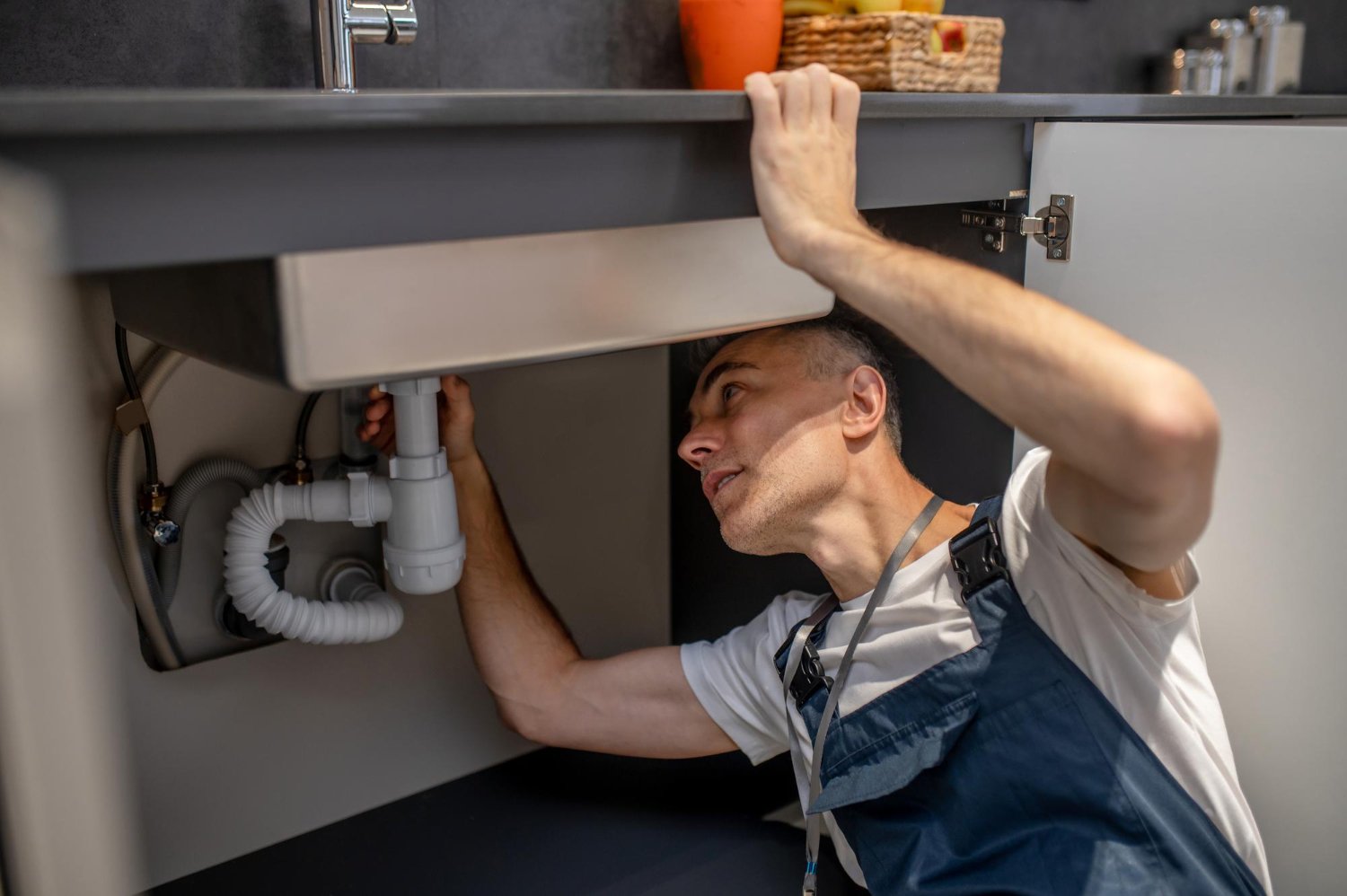
Your pipes are probably older than you think. And they’re losing ground quietly, behind walls, under slabs, and beneath your yard while your water bill creeps upward and your drain slows down just enough for you to ignore it another week. Most homeowners don’t think about their sewer line until sewage backs up into the basement.By that point, the repair bill tends to start at four figures and climb fast. The smarter move is understanding what’s happening below the surface before the system fails, and that means knowing the real age problem, the real warning signs, and the real tool that changes the whole game.
The Aging Pipe Problem Is Bigger Than Your Street
It’s tempting to assume your pipes are fine because the house “isn’t that old.” But pipe age is relative, and the infrastructure underneath American neighborhoods tells a complicated story.
According to ASCE’s 2025 Infrastructure Report Card, the average number of collection system failures has increased from 2 to 3.3 per 100 miles of pipe in recent years, a direct consequence of systems aging faster than they’re being replaced. The nation holds over 800,000 miles of public sewers, and a significant portion of that network is running well past its originally intended service life.
Your home’s lateral sewer line, the pipe connecting your house to the public main, is your responsibility. Not the city’s. Not the county’s. Yours. And if it was installed with clay or cast iron during a major suburban build-out, it may be decades into a lifespan that has no fixed expiration date stamped on it.
Clay pipe was the standard in most American residential construction through the 1970s. It doesn’t fail all at once. It shifts. It cracks at the joints. Tree roots push through hairline gaps and build slow blockages that get worse every season. By the time a clog appears at your sink, the structural damage may already be significant.
What Water Leaks Are Quietly Doing to Your Budget
Pipe problems aren’t limited to sewer lines. Supply-side leaks, the kind hiding inside walls and beneath concrete, add up at a scale most homeowners never stop to calculate. The U.S. EPA reports that household leaks nationwide waste nearly 1 trillion gallons of water annually, with the average household losing around 9,300 gallons per year to leaks alone. That’s not a statistic about other people’s houses. It’s an average, which means half of all homes are losing more than that.
A slow leak under a slab adds moisture to your foundation, encourages mold growth behind drywall, and inflates your water bill month after month while looking completely invisible from the surface. If your bill has crept up without explanation, or if one section of your yard stays green and wet when the rest doesn’t, these are not things to monitor casually. They’re signals.
The 3-Question Pre-Inspection Checklist
Before calling anyone out, run through this quick framework. Call it the PRP Check: Pipes, Recurrence, and Purchase.
- Pipes: Do you know what material your lateral sewer line and main supply line are made of? If the answer is no, and the house was built before 1985, you have a gap in your home knowledge that’s worth closing.
- Recurrence: Have you had a slow drain, backup, or unexplained wet patch more than once in the past two years? One incident is a clog. Two incidents are a pattern. Patterns don’t fix themselves.
- Purchase: Are you buying the home, or did you buy it in the last two to three years without a sewer scope? If so, you’re operating on assumption, not information.
If you answered yes to any of these, the next step is a camera inspection, not another bottle of drain cleaner.
What a Camera Inspection Actually Shows You
This is where things get concrete. A waterproof camera mounted on a flexible cable travels through your drain or sewer line in real time, recording everything it passes: cracks, root intrusions, pipe belly sags, joint separations, and full collapses. You see the footage. You know exactly what’s there and where it is.
Consider what happened to Marcus, a homeowner in Daly City who’d been fighting slow drains in his downstairs bathroom for two years. He’d had two different plumbers snake the line, each time with short-term success. The third plumber suggested a camera inspection instead of another snake. What it showed: a 4-inch clay pipe with three separate root entry points and a partial collapse 22 feet from the house. Every snake job had cleared the immediate symptom and left the cause untouched. One targeted trenchless repair replaced the damaged section without digging up his yard. He hasn’t had a backup since. That’s what visual confirmation does that guesswork can’t. It ends the cycle of treating symptoms.
If you’re on the Northern California coast and want this kind of inspection handled by a licensed local team, a CCTV Drain Survey Pacifica, CA gives you that real-time video evidence for your specific property rather than a generic estimate based on the neighborhood’s pipe age.
When to Schedule One (and When You’re Already Late)
There’s no universal rule that fits every home. But here’s how I’d think about it:
| Home Situation | Recommended Action | Urgency |
|---|---|---|
| Built before 1980, never inspected | Schedule a sewer scope this season | High |
| Large trees within 20 feet of sewer line | Annual camera inspection | High |
| Recurring slow drains or backups | Camera inspection before next repair attempt | Immediate |
| Buying a home, pre-purchase stage | Sewer scope as part of due diligence | Before closing |
| New construction, no prior issues | Inspection every 3 to 5 years | Routine |
The homes that scare me most are the ones in the “new construction, no prior issues” row that are now 25 years old and have never had a camera inside the sewer line. That’s just enough time for tree roots to do real damage and for a homeowner to have no reason to look.
What the Inspection Report Gives You
Beyond solving immediate problems, a clean inspection report has real practical value in two other scenarios. First, if you’re selling your home, having documentation that your sewer line was inspected and cleared removes a negotiating chip from every buyer who wants to knock money off the price for “unknown pipe condition.” Second, if you’re in the middle of a dispute with an insurance company or a contractor about the source of water intrusion, video footage of the pipe is actual evidence.
Plumbing is one of those systems where visual confirmation costs far less than discovering the truth through a failure. A camera inspection typically takes less than an hour. The footage lives on a report you can reference months or years later. That’s not a luxury for people who can afford to be careful. That’s basic home ownership practice.
“The most expensive repair is always the one you didn’t see coming. A camera doesn’t prevent all problems, but it eliminates the ones that hide.” Common consensus among licensed drain engineers, as reflected in professional drainage inspection guidance from ASCE and independent inspection trade groups.
Your pipes are working right now, probably. But “probably working” is not a maintenance strategy. Run the PRP Check on your home this week. If any answer gives you pause, stop guessing and get eyes inside the line. You’ll either confirm everything is fine, or you’ll find out something you needed to know before it got worse.Your pipes are probably older than you think. And they’re losing ground quietly, behind walls, under slabs, and beneath your yard while your water bill creeps upward and your drain slows down just enough for you to ignore it another week. Most homeowners don’t think about their sewer line until sewage backs up into the basement.By that point, the repair bill tends to start at four figures and climb fast. The smarter move is understanding what’s happening below the surface before the system fails, and that means knowing the real age problem, the real warning signs, and the real tool that changes the whole game.
The Aging Pipe Problem Is Bigger Than Your Street
It’s tempting to assume your pipes are fine because the house “isn’t that old.” But pipe age is relative, and the infrastructure underneath American neighborhoods tells a complicated story.
According to ASCE’s 2025 Infrastructure Report Card, the average number of collection system failures has increased from 2 to 3.3 per 100 miles of pipe in recent years, a direct consequence of systems aging faster than they’re being replaced. The nation holds over 800,000 miles of public sewers, and a significant portion of that network is running well past its originally intended service life.
Your home’s lateral sewer line, the pipe connecting your house to the public main, is your responsibility. Not the city’s. Not the county’s. Yours. And if it was installed with clay or cast iron during a major suburban build-out, it may be decades into a lifespan that has no fixed expiration date stamped on it.
Clay pipe was the standard in most American residential construction through the 1970s. It doesn’t fail all at once. It shifts. It cracks at the joints. Tree roots push through hairline gaps and build slow blockages that get worse every season. By the time a clog appears at your sink, the structural damage may already be significant.
What Water Leaks Are Quietly Doing to Your Budget
Pipe problems aren’t limited to sewer lines. Supply-side leaks, the kind hiding inside walls and beneath concrete, add up at a scale most homeowners never stop to calculate. The U.S. EPA reports that household leaks nationwide waste nearly 1 trillion gallons of water annually, with the average household losing around 9,300 gallons per year to leaks alone. That’s not a statistic about other people’s houses. It’s an average, which means half of all homes are losing more than that.
A slow leak under a slab adds moisture to your foundation, encourages mold growth behind drywall, and inflates your water bill month after month while looking completely invisible from the surface. If your bill has crept up without explanation, or if one section of your yard stays green and wet when the rest doesn’t, these are not things to monitor casually. They’re signals.
The 3-Question Pre-Inspection Checklist
Before calling anyone out, run through this quick framework. Call it the PRP Check: Pipes, Recurrence, and Purchase.
- Pipes: Do you know what material your lateral sewer line and main supply line are made of? If the answer is no, and the house was built before 1985, you have a gap in your home knowledge that’s worth closing.
- Recurrence: Have you had a slow drain, backup, or unexplained wet patch more than once in the past two years? One incident is a clog. Two incidents are a pattern. Patterns don’t fix themselves.
- Purchase: Are you buying the home, or did you buy it in the last two to three years without a sewer scope? If so, you’re operating on assumption, not information.
If you answered yes to any of these, the next step is a camera inspection, not another bottle of drain cleaner.
What a Camera Inspection Actually Shows You
This is where things get concrete. A waterproof camera mounted on a flexible cable travels through your drain or sewer line in real time, recording everything it passes: cracks, root intrusions, pipe belly sags, joint separations, and full collapses. You see the footage. You know exactly what’s there and where it is.
Consider what happened to Marcus, a homeowner in Daly City who’d been fighting slow drains in his downstairs bathroom for two years. He’d had two different plumbers snake the line, each time with short-term success. The third plumber suggested a camera inspection instead of another snake. What it showed: a 4-inch clay pipe with three separate root entry points and a partial collapse 22 feet from the house. Every snake job had cleared the immediate symptom and left the cause untouched. One targeted trenchless repair replaced the damaged section without digging up his yard. He hasn’t had a backup since. That’s what visual confirmation does that guesswork can’t. It ends the cycle of treating symptoms.
If you’re on the Northern California coast and want this kind of inspection handled by a licensed local team, a CCTV Drain Survey Pacifica, CA gives you that real-time video evidence for your specific property rather than a generic estimate based on the neighborhood’s pipe age.
When to Schedule One (and When You’re Already Late)
There’s no universal rule that fits every home. But here’s how I’d think about it:
| Home Situation | Recommended Action | Urgency |
|---|---|---|
| Built before 1980, never inspected | Schedule a sewer scope this season | High |
| Large trees within 20 feet of sewer line | Annual camera inspection | High |
| Recurring slow drains or backups | Camera inspection before next repair attempt | Immediate |
| Buying a home, pre-purchase stage | Sewer scope as part of due diligence | Before closing |
| New construction, no prior issues | Inspection every 3 to 5 years | Routine |
The homes that scare me most are the ones in the “new construction, no prior issues” row that are now 25 years old and have never had a camera inside the sewer line. That’s just enough time for tree roots to do real damage and for a homeowner to have no reason to look.
What the Inspection Report Gives You
Beyond solving immediate problems, a clean inspection report has real practical value in two other scenarios. First, if you’re selling your home, having documentation that your sewer line was inspected and cleared removes a negotiating chip from every buyer who wants to knock money off the price for “unknown pipe condition.” Second, if you’re in the middle of a dispute with an insurance company or a contractor about the source of water intrusion, video footage of the pipe is actual evidence.
Plumbing is one of those systems where visual confirmation costs far less than discovering the truth through a failure. A camera inspection typically takes less than an hour. The footage lives on a report you can reference months or years later. That’s not a luxury for people who can afford to be careful. That’s basic home ownership practice.
“The most expensive repair is always the one you didn’t see coming. A camera doesn’t prevent all problems, but it eliminates the ones that hide.” Common consensus among licensed drain engineers, as reflected in professional drainage inspection guidance from ASCE and independent inspection trade groups.
Your pipes are working right now, probably. But “probably working” is not a maintenance strategy. Run the PRP Check on your home this week. If any answer gives you pause, stop guessing and get eyes inside the line. You’ll either confirm everything is fine, or you’ll find out something you needed to know before it got worse.