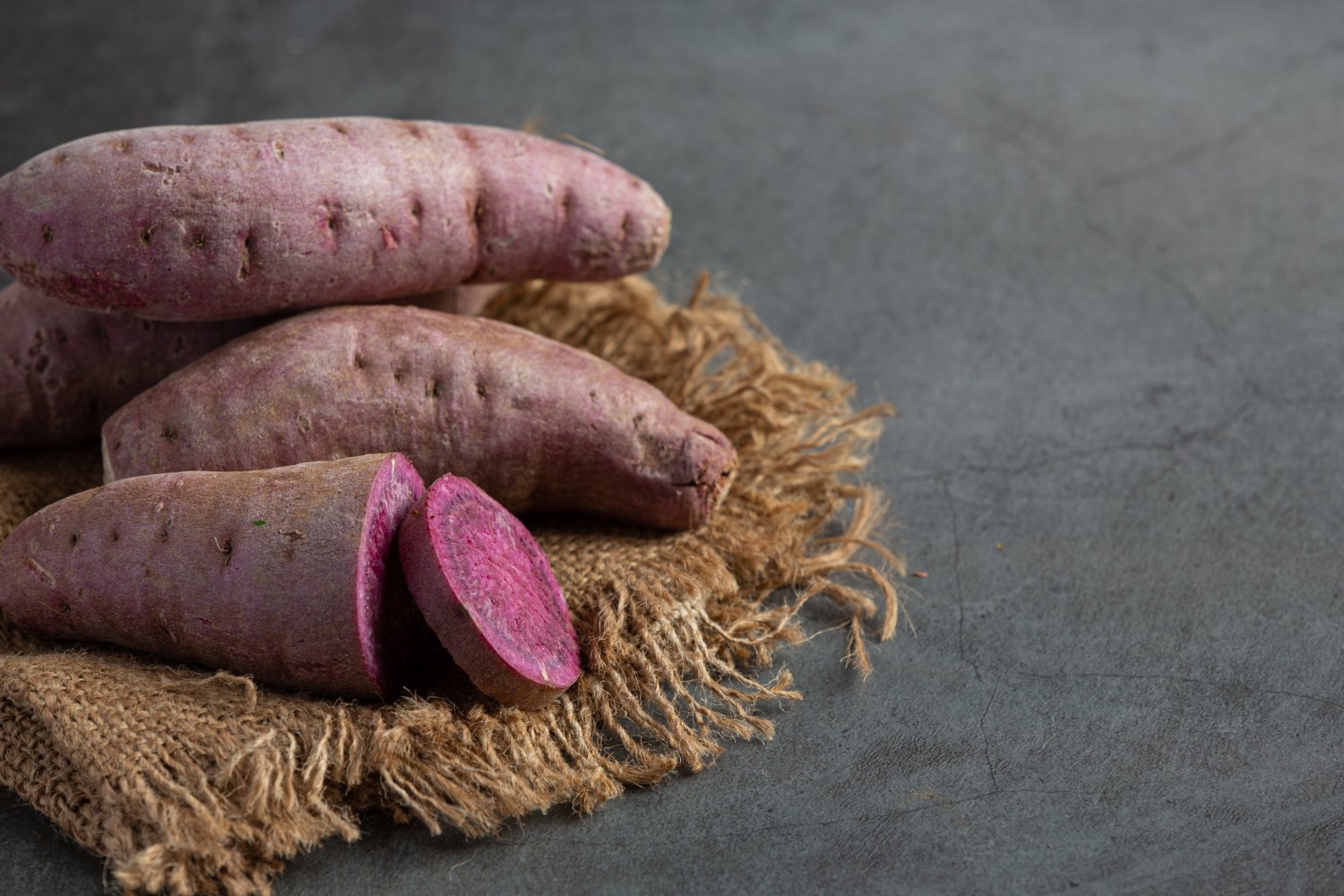
People often think of purple yam and ube as two different foods, but the difference isn’t as big as most people think. People in the Philippines call Dioscorea alata, a type of yam, “ube.” The meat of this plant can be a light lavender color or a strong violet-purple color. When people talk about real Filipino ube in the context of food, they usually mean this purple yam.
There is confusion because the flesh of a number of different root vegetables can also be purple. When cooked or turned into treats, Okinawan sweet potatoes, purple sweet potatoes, and some types of taro may look the same. But in terms of botany, they are in different plant groups. They also don’t have the same tastes, textures, or nutritional values. Because of this, color alone is not a good way to tell what is on your plate.
For shoppers and home cooks, the terms are like different roads on a map that are all the same color but go to different places. When you buy powders, extracts, jams, or treat mixes, it’s still a good idea to look at the ingredient list. Products that say “ube purple yam” usually mean Dioscorea alata or an ingredient made from it. If you know what real ube is, it’s easier to tell it apart from other violet-colored tubers, enjoy its flavor, and use it properly.
Are purple yam and ube really the same thing?
Yes, but with an important caveat. Even though ube is a purple yam, the term “purple yam” is sometimes used to refer to other purple vegetables in grocery stores, recipes, and online chats. Dioscorea alata, a real yam from the Dioscoreaceae family, is usually what is meant by “authentic ube.”
Just the word “yam” is part of the problem. It’s sometimes used to talk about sweet potatoes in everyday English, even though they are botanically different. Sweet potatoes are in the Ipomea genus, while ube is in the Dioscorea genus. This difference is important for more than just scientific names. The two plants have different tastes, smells, and textures when they grow.
Dioscorea alata is grown in many tropical places, mostly in Southeast Asia, the Pacific, and some parts of Africa. Filipino food has a lot to do with ube. For a long time, ube has been used to make sweets like ube halaya, cakes, pastries, and frozen treats.
The flesh isn’t always a bright purple color. Some types are very dark violet, while others are paler or have white spots on them. This natural difference is important because commercial treats often have extra coloring, which can lead people to think that every fresh ube tuber should have a very bright purple inside.
How do you tell the difference between a black sweet potato and ube?
It’s easy to get purple yam and purple sweet potato mixed up. They are both starchy and can have flesh that is very brightly colored. They are both found in sweets. Still, they are two different vegetables that can be told apart if you know what to look for.
How something looks and feels can help.
The outside of a fresh ube fruit is usually rough and bumpy, like the bark-like skin that many true yams have. The tuber can be long, round, or unevenly shaped, depending on the type and how it was grown. When you cut it open, the flesh might look white with purple spots, lavender, or very violet.
Most of the time, a purple sweet potato looks like any other sweet potato. Its skin is usually smoother and thinner, but the way different types look can be different. For instance, Okinawan sweet potatoes often have beige or light-colored skin around purple meat.
When they are cooked, the difference is even more clear. For the most part, cooked ube is dense and starchy, but it can be mashed to make it smooth. Purple sweet potatoes, especially those that are high in starch, tend to be drier and harder.
Neither of the visual clues is 100% sure to work. Natural variation happens in agriculture, and most of the things that make something unique are taken away when it is handled. When you buy powder or puree in a package, the botanical name or list of ingredients is more accurate than the color.
It doesn’t taste quite the same.
People often describe the smell of ube as slightly nutty, earthy, and reminiscent of vanilla. It has a mild sweetness. It has a mild sweetness rather than a strong sweetness. A lot of the strong “ube flavor” in store-bought cakes and drinks might not come from the tuber itself, but from sugar, flavorings, and concentrated extracts.
It tastes more like regular sweet potatoes when you eat purple sweet potatoes. They might taste sweet and earthy, but they don’t usually have the unique smell of traditional Filipino ube. In simple recipes where the tuber is steamed or boiled without many other seasonings, this difference is especially clear.
This is why a purple sweet potato can be used instead of ube to make a treat look the same but not taste the same. It’s possible that the substitution will still work in some recipes, but the end result will taste different.
Taro is easier to tell apart by how it tastes. It’s usually more neutral, has a hint of nuts, and is a lot paler on the inside. If a finished drink or dessert is violet, that doesn’t mean that purple-speckled taro is definitely ube.
What kinds of nutrients purple yam has
Fresh purple yam is mostly a starchy food that is high in carbohydrates. It gives you energy mostly through complex carbohydrates, like other yams, and also gives you fiber and small amounts of protein. Its exact nutritional make-up depends on the type, the soil, the age, and the way it is cooked.
Ube also has a number of micronutrients, such as vitamin C and potassium. As part of a varied diet, these nutrients help the body do its usual things. So, instead of seeing fresh ube as a concentrated supplement or magic food, you should think of it as a healthy root vegetable.
From a nutritional point of view, the purple color is especially interesting. Anthocyanin pigments, which are part of the polyphenol family, give plants their violet color. Foods like blueberries, blackberries, dark cabbage, and black rice also have anthocyanins in them.
In a lab setting, these compounds have antioxidant qualities. That doesn’t mean that ube will keep you from getting or treat a certain illness. People’s health is affected by many things, including their genes, lifestyle, and what they eat. The most practical reason to eat purple yam is that it can change up your diet and add fiber, carbohydrates, and plant compounds.
Does ube always mean it’s healthy?
The answer is very much based on how it is made. Even though they may both have the word “ube” in their names, freshly cooked ube and a milkshake with ube taste are not at all the same in terms of nutrition.
You can easily add steamed, boiled, or baked purple yam to a healthy meal. Along with vegetables and protein, it can be a source of carbs. It may also help you feel fuller than foods high in processed carbohydrates because they have more fiber.
The yam is often mixed with sugar, condensed milk, coconut milk, butter, or cream in both traditional and store-bought ube desserts. These ingredients give ube desserts their rich texture and taste, but they also make the desserts higher in sugar and calories. That is still true even though purple yam is there.
It’s the same for ube powders and drink mixes. A sweetened instant latte mix with sugar, flavoring, and coloring is not at all like pure dehydrated yam powder. The best way to figure out what you’re buying is to read the list of ingredients.
How to cook with purple yam
Most of the time, fresh ube is cooked first. It is not usually eaten raw as a snack, like many other real yams. Its texture gets better when you cook it, and you can use it in both sweet and savory recipes.
One of the easiest ways is to boil or steam it. The meat can be mashed and used in cakes, breads, pancakes, fillings, or traditional dishes once it’s soft. If you want a firmer, slightly drier texture, you can also bake it.
Ube halaya is a sweet purple yam jam or pudding that is usually made by cooking mashed ube with things like milk and sugar until the mixture gets thick and smooth. It is one of the most famous Filipino dishes. People can eat ube halaya by itself or add it to baked goods and sweets.
When fresh roots aren’t available, powdered ube is easier to use. Some powders are made from purple yam that has been dried out and needs to be wet again before they can be used. Others are manufactured ingredients that have extra ingredients added to them. Once more, ube extract is not the same. Its main purpose is to make ube taste and look better, not to give it the texture and nutritional value of the whole tuber.
What makes the ube look so much better than the fresh yam?
Natural ube can be a beautiful purple color, but the almost bright violet color you see in some ice creams, cakes, and bubble teas isn’t always made by the tuber by itself. To keep the look the same, commercial preparations might use ube extract, flavoring, or food coloring.
This doesn’t always mean that the product doesn’t have any real ube in it. To make up for the natural changes between harvests, manufacturers may mix real yam with flavoring. Fresh farm ingredients are very different, but when people buy an ube dessert, they usually expect it to be the same bright purple color.
So, color shouldn’t be used to judge how healthy something is. If you make your own pale mixture mostly from real yam, it might have more ube in it than a bright purple drink with very little of it.
When it comes to packaged foods, the ingredients are more telling than how the food looks. If you want to buy something that really has the tuber, look for words like “purple yam,” “ube,” or “Dioscorea alata.”
Ube isn’t the same as every other purple root veggie.
Sometimes ube, purple sweet potato, and taro can be used in the same way in cooking, but treating them as the same thing causes more confusion than it needs to. Ube is a real yam that is Dioscorea alata and has a mild, sweet taste that makes it stand out. There is a different plant family that purple sweet potatoes are from, and they usually taste more like regular sweet potatoes. Taro is a different species, and it tastes and feels different.
When a recipe calls for a lot of real ube taste, the difference is most important. If you use a different purple vegetable, the taste might change but the look and starchiness might stay the same. If color is more important than smell in a recipe, the substitution might not be as noticeable.
In terms of nutrition, all of these things can help you out by giving you fiber, carbohydrates, and micronutrients. There is no need to treat any of them as superfoods. What’s more important is the shape of the food, how much is eaten, how it’s prepared, and the rest of the diet.
Then, are ube and purple yam really the same thing? When it comes to Dioscorea alata, “purple yam” is correct. Filipinos call this kind of yam “ube,” which is the name that is most closely linked to it. The confusion starts when the label is put on purple sweet potatoes or other violet-colored roots that are not related.