
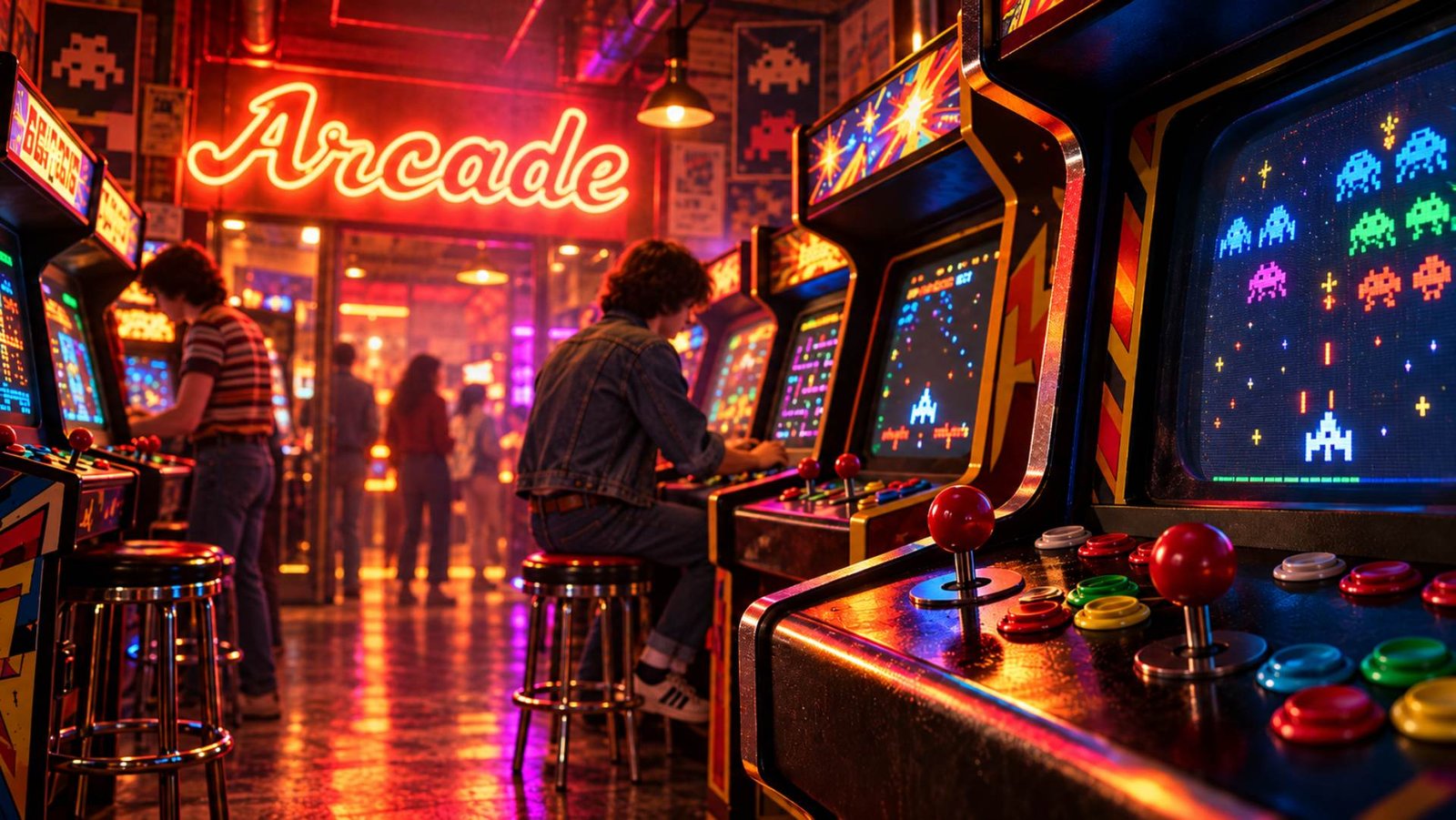
Picture a dim room glowing with screens, the air full of electronic bleeps, and a crowd gathered around one machine to watch someone chase a high score. For millions of people in the late 1970s and early 1980s, that was the arcade, and it was the center of the gaming world.
This period is often called the Golden Age of Arcade Games. In just a few years, arcade machines went from a novelty to a global craze, introducing characters and gameplay ideas that still shape video games today.
This beginner’s guide explains how the arcade boom started, what made it so special, which games defined the era, why the golden age faded, and how retro arcade gaming is thriving again. If you want to play these classics yourself, you will also find practical ways to get started.
Key Insights
- The Golden Age of Arcade Games began in the late 1970s, driven by major hits such as Space Invaders, Pac-Man, and Donkey Kong.
- Arcades became popular because they combined simple controls, challenging gameplay, high-score competition, and a strong social atmosphere.
- The decline of arcades in the mid-1980s was caused by market saturation, the 1983 video game crash, rising operating costs, and improving home consoles.
- Fighting games such as Street Fighter II helped revive arcade gaming in the 1990s by making competitive, face-to-face play popular again.
- Classic arcade gaming still influences modern games through retro design, leaderboards, short gameplay sessions, barcades, re-releases, and preservation projects.
Arcade History at a Glance
The golden age is usually dated from the late 1970s to the mid-1980s, but its roots and legacy stretch much further. These milestones mark the key turning points.
| Year | Milestone | Why it mattered |
|---|---|---|
| 1997 | The MAME emulation project begins | Volunteers start preserving arcade software so classic games are not lost |
| 1991 | Capcom releases Street Fighter II | Head-to-head fighting games bring crowds back to arcades |
| 1985 | The Nintendo Entertainment System launches in North America | Home gaming recovers and begins pulling players away from arcades |
| 1983 | The North American video game crash | The industry contracts sharply, hitting home consoles hardest |
| 1983 | Dragon’s Lair arrives in arcades | Laserdisc animation shows how ambitious arcade games could look |
| 1981 | Nintendo releases Donkey Kong | Introduces the character who would later become Mario |
| 1980 | Namco releases Pac-Man | A maze game with a character-driven design wins a huge, broad audience |
| 1978 | Taito releases Space Invaders | A massive hit that helps launch the golden age |
| 1972 | Atari releases Pong | The first widely successful arcade video game |
| 1971 | Computer Space is released | Generally recognized as the first commercial arcade video game |
How the Arcade Boom Began
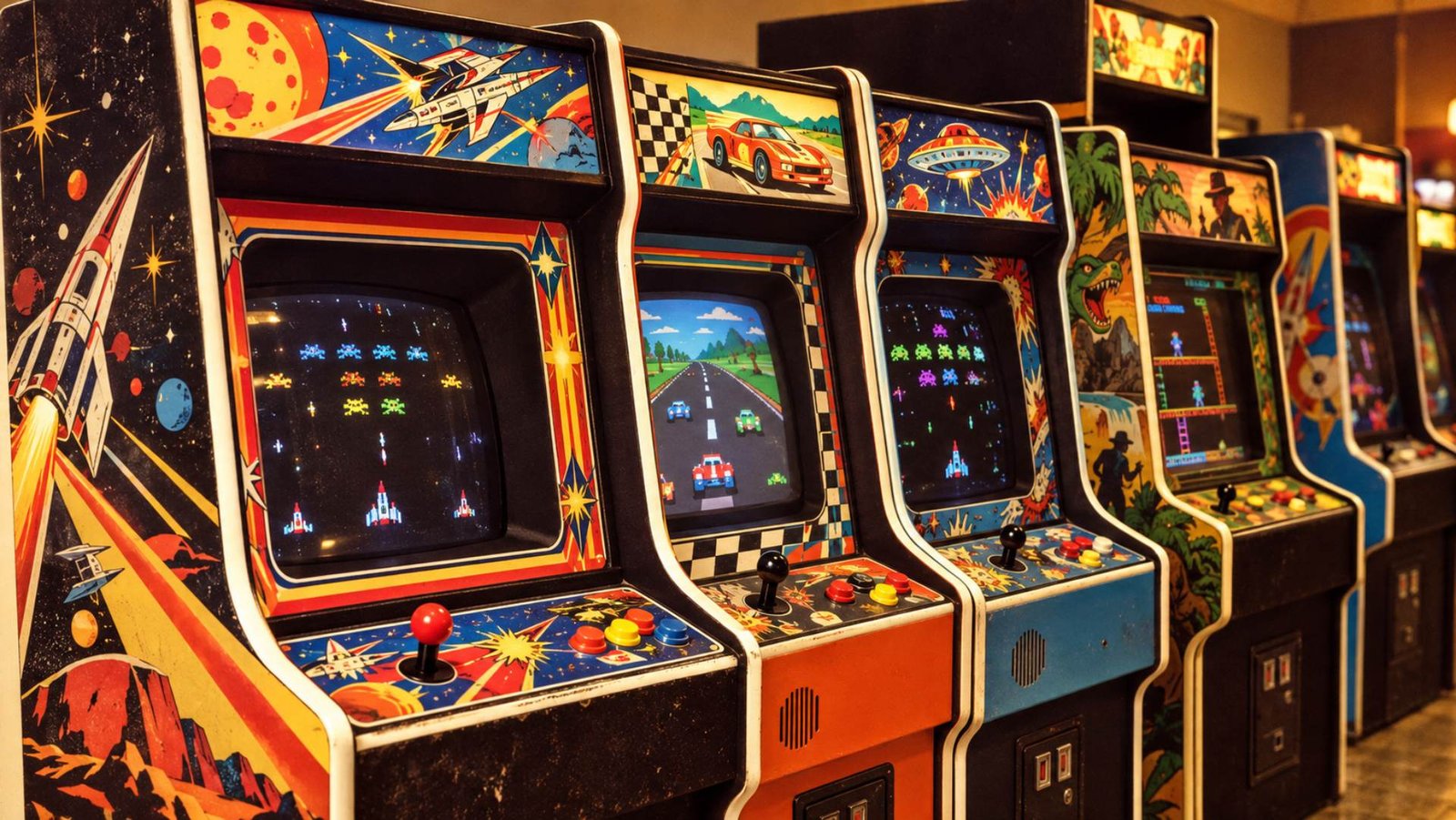
Looking back at Arcade Gaming History, early amusement halls were filled with pinball tables, shooting galleries, and other mechanical attractions before electronic games arrived as a curious new addition.
Computer Space, released in 1971, was an early attempt at a coin-operated video game, but its controls felt complex to casual players. A year later, Atari’s Pong offered something anyone could understand: a simple game of electronic table tennis. Its success showed that video games could earn real money in bars and arcades.
Through the 1970s, more video games appeared, but the true explosion came in 1978 with Taito’s Space Invaders. Players defended Earth against rows of descending aliens that sped up as they were destroyed. The game’s tension, sound, and high-score chase made it a phenomenon, and arcades worldwide raced to install more video machines.
Over the next few years, a wave of creative hits accelerated the Rise of Arcade Gaming. Games appeared in dedicated arcades, shopping malls, movie theaters, restaurants, and convenience stores. For a few years, it seemed like there was a game cabinet on every corner.
What Made Arcades So Special
Arcade games were not just early versions of home games. They had their own design logic and their own culture.
Easy to learn, hard to master
Arcade games had to explain themselves in seconds, often with a single joystick and one or two buttons. Yet they grew steadily harder, rewarding practice and skill. That balance kept players coming back.
Built around the coin slot
Every game was designed to earn money. Short sessions, rising difficulty, and the option to continue for another coin kept machines busy. Players learned to make each credit last as long as possible.
The high-score chase
High-score tables let players enter their initials for everyone to see. Beating a local champion became a goal in itself. Over time, competitive scoring developed into a serious pursuit, with organizations tracking and verifying record scores.
A social space
Early Arcade Gaming Culture was built around meeting friends, watching skilled players, and picking up tips. Even single-player games felt social because there was usually an audience.
Cutting-edge technology
Arcade hardware was often more powerful than home systems of the same period. For many players, the arcade was the only place to see the latest graphics and sound.
Iconic Arcade Games of the Golden Age
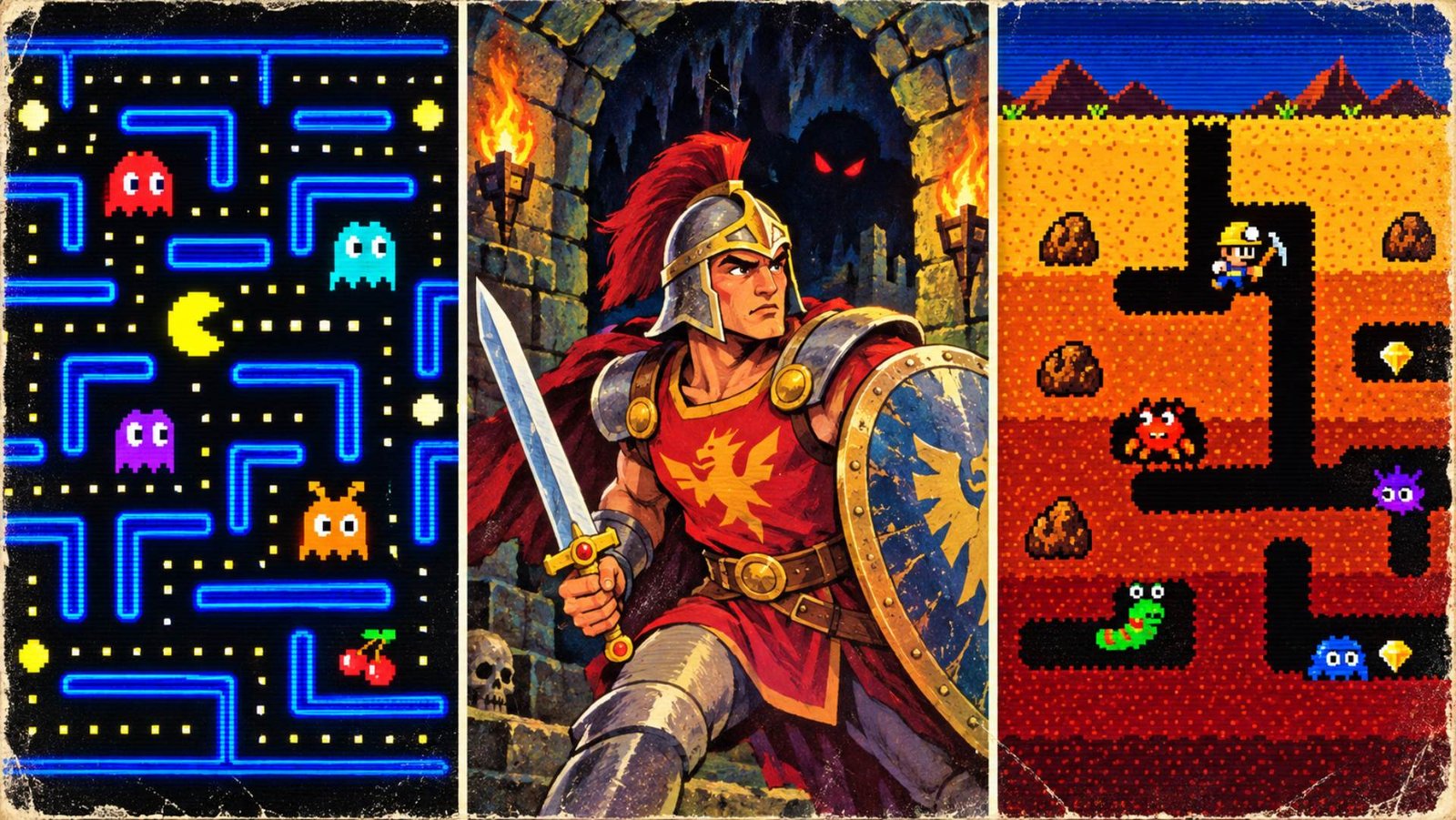
Hundreds of arcade games were released during the era. The games below were chosen for their influence on game design, their cultural reach, or the new ideas they introduced. They are listed in order of release, not ranked.
| Game | Year | Developer | Why it mattered |
|---|---|---|---|
| Space Invaders | 1978 | Taito | Popularized the shooting genre and the high-score chase |
| Asteroids | 1979 | Atari | Crisp vector graphics and free movement through space |
| Galaxian | 1979 | Namco | Brought full-color graphics and diving enemy attacks |
| Pac-Man | 1980 | Namco | Character-driven maze play that appealed to a broad audience |
| Missile Command | 1980 | Atari | Trackball controls and a tense defensive theme |
| Battlezone | 1980 | Atari | First-person tank combat with early 3D wireframe graphics |
| Defender | 1981 | Williams | Fast, demanding side-scrolling action with complex controls |
| Donkey Kong | 1981 | Nintendo | A story-led platform game that introduced the future Mario |
| Frogger | 1981 | Konami | A simple, charming goal anyone could understand |
| Galaga | 1981 | Namco | Refined shooter action with enemy capture and dual-ship play |
| Pole Position | 1982 | Namco | Brought a convincing behind-the-car racing view to arcades |
| Dragon’s Lair | 1983 | Cinematronics | Laserdisc animation that looked like an animated film |
| Gauntlet | 1985 | Atari | Four-player cooperative dungeon adventure |
If you are new to Classic Arcade Games, Pac-Man, Galaga, and Donkey Kong are good starting points. Each is easy to pick up and shows a different side of golden-age design.
Why the Golden Age Faded
By the mid-1980s, the Vintage Arcade Game Era was losing momentum, especially in North America. There was no single cause. Several pressures arrived at once.
- Market saturation. Arcades and game cabinets spread so quickly that supply outpaced demand. Many operators had too many machines and too few new players.
- Too many similar games. As the rush continued, plenty of releases copied earlier hits rather than offering fresh ideas, and players grew less excited.
- The 1983 crash. The North American video game market contracted sharply. The crash hit home consoles hardest, but it dampened enthusiasm and investment across the industry.
- Better home systems. Home consoles and personal computers steadily improved. Once players could enjoy strong games in their living rooms, the trip to the arcade felt less necessary.
- Rising costs. More advanced machines cost more to buy and maintain, which squeezed arcade owners’ profits.
It is worth noting that the decline was uneven. In Japan, arcades, known as game centers, remained a major part of gaming culture for much longer.
The Second Wind: Fighting Games and the 1990s
Arcades got a major boost in the early 1990s. Capcom’s Street Fighter II, released in 1991, turned head-to-head fighting into a social event. Players lined up coins on the cabinet to claim the next match, and rivalries formed in arcades everywhere.
The Evolution of Arcade Games continued with more fighting titles, racing machines, light-gun shooters, and large sit-down cabinets that home consoles could not easily copy. Arcades increasingly focused on experiences that felt bigger, louder, and more physical than anything available at home.
As home consoles gained powerful 3D graphics and online play over the following years, arcades in many Western countries declined again. But the second wave proved that a shared, in-person experience still had real appeal.
How Retro Arcade Gaming Lives On Today
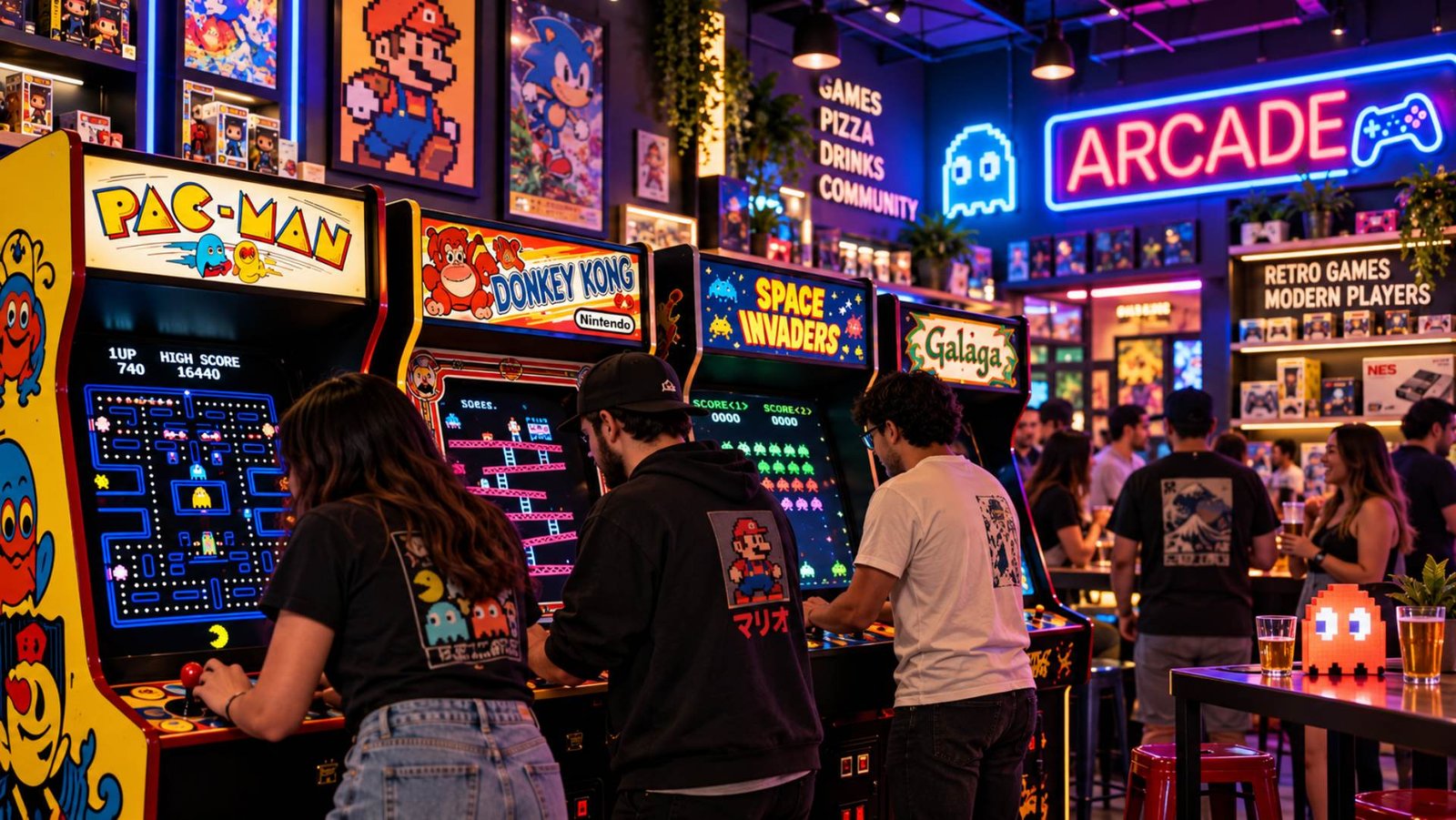
The golden age may be over, but its influence is everywhere. Retro Arcade Gaming has found new life through modern venues, official re-releases, replica cabinets, preservation projects, and dedicated gaming communities.
- Barcades and retro venues. Bars and entertainment venues that combine food, drinks, and classic cabinets have become popular in many cities. They mix nostalgia with a social night out.
- Official re-releases. Many classic arcade games are available on modern consoles, PCs, and mobile devices through official collections and digital stores.
- Replica cabinets and mini consoles. Scaled-down cabinets and plug-and-play devices bring licensed classics into homes, often with original-style controls.
- Preservation efforts. Museums, archives, and emulation projects such as MAME work to preserve original arcade software and hardware for future generations.
- Competitive high-score culture. Players still compete for record scores on classic games, and that world has inspired documentaries and dedicated online communities.
- Design influence. Modern indie games often borrow arcade ideas such as short runs, rising difficulty, pixel art, and leaderboards.
The arcade’s visual style has also become a staple of retro-inspired design, from neon-lit branding to the AI-generated ’80s imagery filling social feeds.
How to Start Playing Classic Arcade Games Today
You do not need a warehouse full of cabinets to enjoy golden-age classics. For anyone looking for Arcade Games for Beginners, there are several simple and affordable ways to start playing today.
- Visit a retro arcade or barcade. Playing on original hardware, with real joysticks and screens, is the most authentic experience. Search for retro arcades in your city.
- Buy an official collection. Look for licensed arcade compilations on the console, PC, or phone you already own. They are affordable and legal.
- Try a replica cabinet or mini console. If you want a home gaming setup, licensed replicas offer an arcade feel without the cost or upkeep of original machines.
- Learn one game deeply. Pick a single classic and practice. You will quickly see how much strategy is hidden in seemingly simple games.
- Join a community. Online forums and local groups share tips, tournament news, and maintenance advice for collectors.
A quick note on legality: copyright rules for downloading game files vary by country. Official releases and licensed products are the safest way to play.
FAQs
Q.1 When was the golden age of arcade games?
+
Q.2 What was the first arcade video game?
+
Q.3 What were the most popular ’80s arcade games?
+
Q.4 Why did arcades decline?
+
Q.5 Are arcades still popular today?
+
Final Thoughts: Game Over, but Never Forgotten
The History of Arcade Games shows how a relatively short golden age changed entertainment for good. It gave the world iconic characters, introduced the thrill of the high score, and turned gaming into a shared social experience.
Today, those same ideas live on in barcades, official re-releases, indie games, and retro-inspired design. Whether you grew up feeding coins into cabinets or are discovering these classics for the first time, they are easier to enjoy now than ever.
There is a lesson in that history for businesses, too. Arcades thrived when they offered something people could not get anywhere else, and faded when that edge slipped away. At Megrisoft, we help brands stay discoverable as technology shifts, through SEO, AI search optimization, and modern web development. If you want your business to stay visible wherever your audience goes next, get in touch with our team.