A loose board or small crack in your deck may not seem urgent. After all, the deck is still standing, and the damage may affect only one area. However, minor defects rarely remain minor when exposed to Edmonton’s changing weather. Moisture, snow, ice, temperature swings, and regular foot traffic can turn a simple repair into a serious structural problem.
Deck damage often develops gradually and out of sight. Water may enter through a narrow crack, corrode hidden fasteners, or soften the wood beneath the surface. By the time the problem becomes obvious, several connected components may already be affected. Understanding how damage progresses can help Alberta homeowners act before their deck becomes unsafe or requires complete replacement.
Small Surface Problems Allow Water to Enter
Most serious deck problems begin with water intrusion. Cracked boards, peeling coatings, open joints, and exposed screw holes allow rain and melting snow to penetrate the wood. Once moisture enters, it can remain trapped for long periods, especially in shaded areas or between tightly spaced boards.
Edmonton’s freeze-thaw cycles make this problem worse. Water that enters a crack can freeze and expand, forcing the opening to widen. When temperatures rise, the ice melts and moves deeper into the material. Repeated cycles gradually weaken boards, posts, stairs, and railings.
Early warning signs include:
- Dark stains that remain after the deck dries
- Peeling or bubbling paint and stain
- Green algae or mould growth
- Cracks around screws and nails
- Boards that appear swollen, warped, or cupped
- Water collecting instead of draining away
Surface treatments can help protect sound wood, but stain or paint should never be applied over active rot. Damaged material must first be identified, repaired, and allowed to dry properly.
Loose Boards and Fastener Corrosion Create Safety Hazards
A slightly loose board can become a tripping hazard, particularly near stairs, entrances, and high-traffic areas. Movement also places additional pressure on nearby screws, nails, and supporting joists. As people continue walking over the area, the opening may grow and surrounding boards may begin to shift.
Fasteners are especially vulnerable to moisture. Rusted nails and screws can lose their holding strength even when their heads still appear intact. Corrosion may also stain the wood, enlarge fastener holes, and cause connections to loosen. In some cases, incompatible metals can corrode more quickly when they come into contact.
Homeowners should pay close attention to raised nail heads, missing screws, squeaking boards, visible rust, and sections that move underfoot. Replacing one corroded fastener may be straightforward, but widespread corrosion can indicate a larger moisture or installation problem.
Railings deserve immediate attention. A cracked, loose, or leaning railing may fail when someone places weight against it. This is particularly dangerous on elevated decks, where a fall could cause a serious injury. Temporary tightening is not always enough if the posts or attachment points have started to deteriorate.
Soft Spots May Signal Hidden Rot or Insect Damage
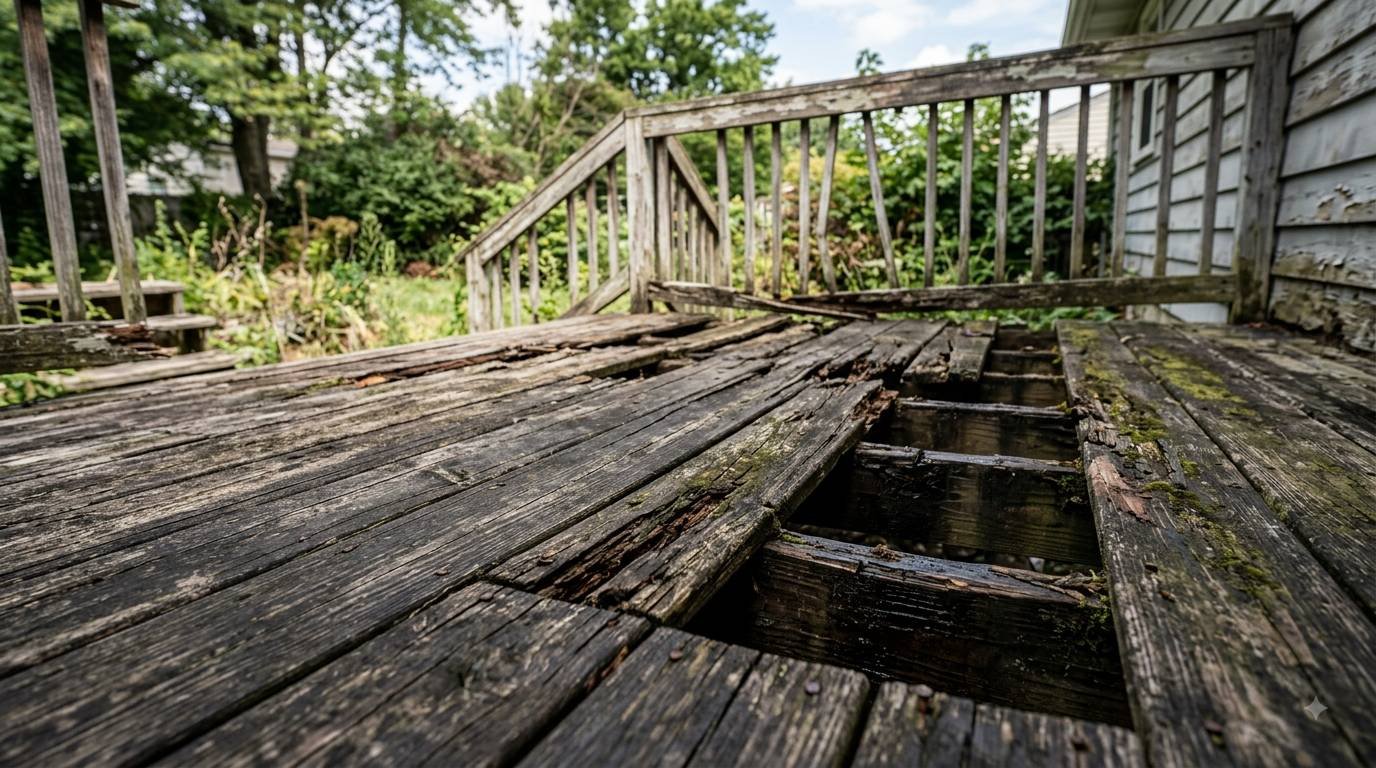
Soft wood is one of the clearest signs that deck damage has progressed beyond the surface. If a screwdriver can easily penetrate a board, post, stair stringer, or joist, the wood may be decaying internally. The visible area may represent only a small portion of the affected material.
Rot commonly develops around areas where water collects, including post bases, stair connections, ledger boards, and locations beneath planters or outdoor furniture. Insects may also enter through damp or damaged wood, creating channels that further reduce its strength.
When soft spots, widespread cracking, or movement appear, contacting a professional deck repair company Edmonton homeowners can rely on is a sensible next step. A professional assessment can determine whether the problem is limited to individual boards or extends to joists, beams, posts, stairs, or the deck-to-house connection.
Homeowners should avoid covering questionable areas with rugs, mats, new boards, or surface coatings. Concealing the damage may trap additional moisture and delay the repair, while deterioration continues beneath the surface.
Structural Weakening Can Spread Beyond the Damaged Area
A deck functions as a connected structure. Boards transfer weight to joists, joists transfer it to beams, and beams transfer it to posts and footings. When one part weakens, the remaining components may carry more weight than intended.
Damage to the ledger board—the component that often connects the deck to the house—is particularly serious. Water intrusion near this area can affect both the deck and the building. Loose bolts, missing flashing, rot, or separation from the exterior wall may increase the risk of partial or complete collapse.
Other structural warning signs include:
- A deck surface that slopes or sags
- Posts that lean, split, or move
- Beams pulling away from supports
- Stairs that bounce or shift
- Gaps forming between the deck and house
- Cracking around major connections
- Unusual movement when several people use the deck
These symptoms should not be treated as cosmetic issues. Restrict access to the affected area and arrange an inspection promptly.
Delayed Repairs Usually Cost More
Early deck repairs often involve replacing a few boards, correcting drainage, securing railings, or renewing damaged fasteners. Once moisture and rot reach the supporting structure, the work becomes more extensive. Contractors may need to remove surface boards to access joists, rebuild stairs, replace posts, or correct the ledger connection.
Delays can also reduce the number of repair options available. A board that could have been secured today may need replacement later. A localised joist repair can become a larger framing project if decay spreads. Eventually, the safest and most economical choice may be complete deck replacement.
There may also be insurance and liability concerns. Homeowners are generally responsible for keeping walking surfaces and railings reasonably safe. If a guest, tenant, delivery worker, or contractor is injured because of a known hazard, the homeowner could face a claim. Insurance coverage depends on the policy and circumstances, and damage caused by gradual deterioration or neglected maintenance may not be treated the same as sudden accidental damage.
Early Action Protects Your Deck and Your Household
Inspect your deck at least twice a year—ideally after winter and before periods of heavy summer use. Check boards, stairs, railings, posts, visible framing, drainage points, and connections to the home. After major storms or unusually harsh freeze-thaw conditions, perform an additional check.
Minor deck damage is easiest and least expensive to manage when it is found early. Do not wait for a board to break, a railing to fail, or the structure to begin sagging. If you notice softness, movement, corrosion, persistent moisture, or visible separation, limit use of the affected area and schedule a qualified inspection. Acting now can protect your family, preserve your property, and prevent a manageable repair from becoming a complete rebuild.