Key Takeaways
- A small, isolated issue may be a good candidate for repair.
- Recurring leaks, broad material wear, and soft decking can make replacement the more practical option.
- Roof age is a useful context, but it is not a decision in itself.
- Water stains indoors can appear some distance from the original entry point.
- Detailed inspection notes and photographs are more useful than a price alone.
- Storm-related insurance coverage depends on the policy, the cause of damage, and the condition of the roof before the event.
For Baltimore homeowners, deciding whether to repair or replace a roof usually comes down to more than just a visible stain or a few missing shingles. A roof works as a system that includes the covering, flashing, underlayment, decking, ventilation, gutters, and drainage. Learning how these parts work together can make conversations about roofing more productive and help homeowners focus on the condition of the entire system rather than on a single symptom.
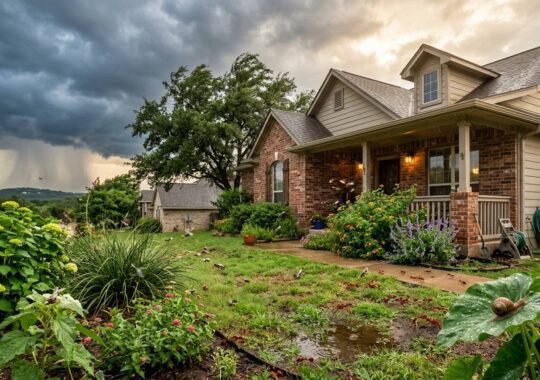
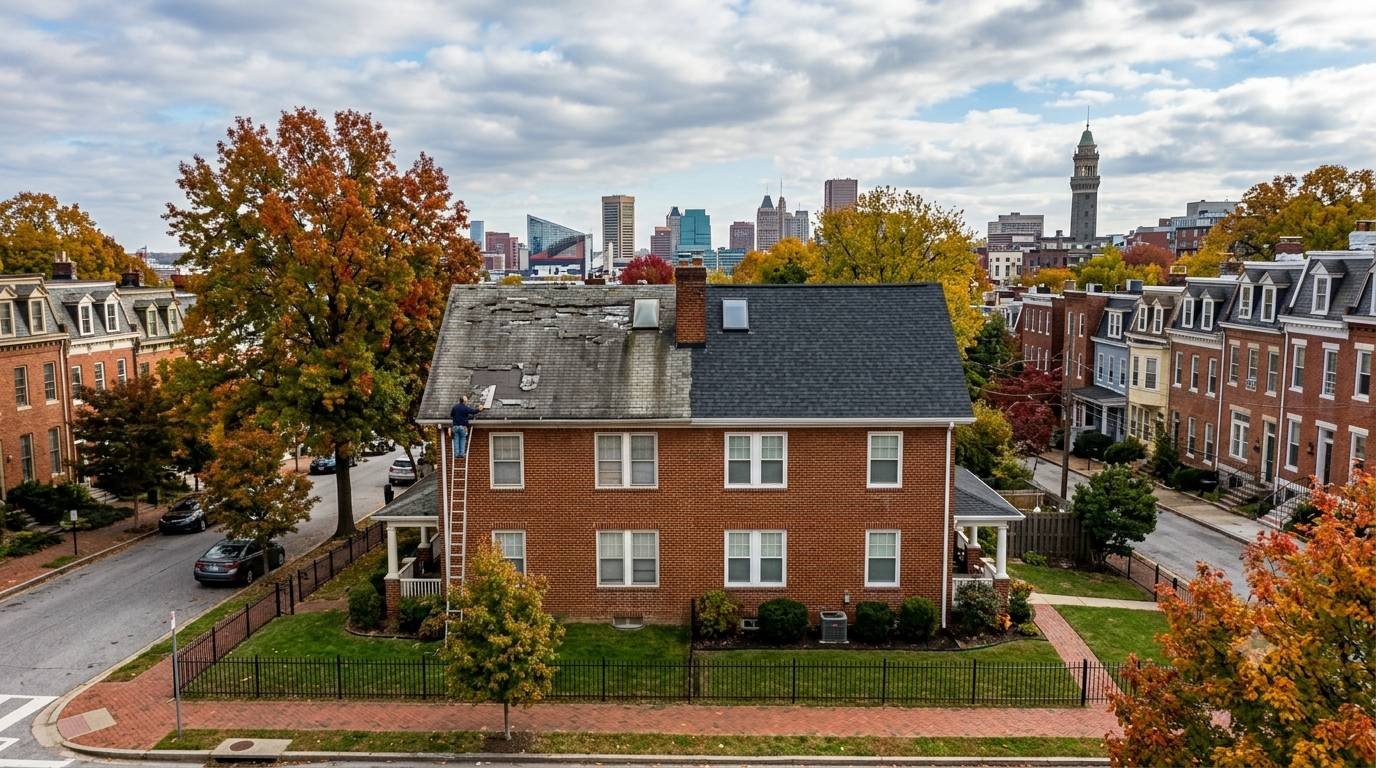
Baltimore’s rowhomes, detached houses, flat-roof sections, and older properties can all develop different roofing concerns. Rain, wind, branches, clogged gutters, snow, and cycles of freezing and thawing can expose weak points over time. The best decision is based on the location and scope of damage, the roof’s remaining useful life, and whether moisture has reached materials below the roof surface.
Why the Repair-or-Replace Decision Matters
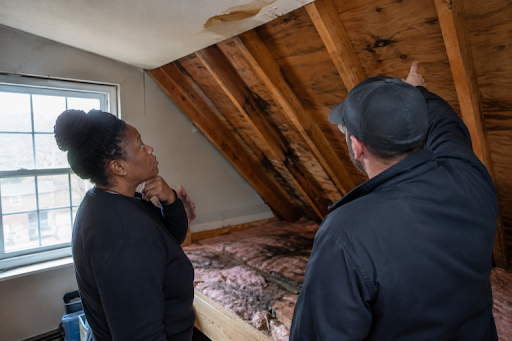
A leak is not always caused by the roofing material directly above the wet ceiling. Water can enter around a flashing, vent, chimney, valley, skylight, or pipe penetration, then travel along the decking or framing before becoming visible inside. A targeted repair can be effective when a single failed component has a clear cause, whereas more extensive damage may require roof installation or replacement. A roof with several leak locations, however, may need a broader solution.
Acting early helps limit the chance that water will affect insulation, ceiling finishes, wall materials, or wood decking. Homeowners should avoid climbing onto a roof to investigate. A ground-level look, attic check, and interior review can identify concerns worth documenting before a professional inspection.
Warning Signs to Watch For
Some signs are easy to notice from the yard or inside the home, while others require closer evaluation. Missing, cracked, curled, lifted, or visibly worn shingles can indicate exposure to wind or aging. In low-slope areas, ponding water or seams that appear lifted should be assessed promptly.
Inside, look for new ceiling stains, peeling paint near upper walls, damp insulation, a persistent musty odor, or daylight visible from the attic. Sagging rooflines, soft areas in the ceiling, rusted flashing, and an unusual buildup of granules in the gutters also deserve attention. If replacement is the appropriate path, a carefully defined scope should address related details such as flashing, ventilation, and drainage rather than only the visible roof covering.
When Roof Repair May Make Sense
Repair is often reasonable when the problem is limited, and the surrounding roof remains in sound condition. Examples include several wind-damaged shingles in one area, a cracked pipe boot, localized flashing damage, or a small defect near a vent. The key question is whether the repair corrects the source of water entry.
Material matching also matters. A repair should be compatible with the existing roof in type, profile, and installation method. Color differences can occur as older materials weather, but appearance is only one consideration. Repeated patches in different locations may signal a broader underlying issue that warrants a replacement comparison.
When Replacement May Be Wiser
Replacement may be the stronger long-term choice when wear is widespread or repairs are no longer isolated. Brittle materials, recurring leaks on separate roof slopes, numerous failed flashing points, deteriorated decking, and long-term moisture exposure can all change the calculation.
A Quick Comparison
- Repair may be appropriate when damage is confined to one area, the decking is dry and stable, and there is a single identifiable leak source.
- Replacement may be warranted when damage appears across multiple sections, leaks return in new locations, or major components are nearing the end of their serviceable life.
- Further evaluation is needed when the roof looks acceptable from the ground, but attic moisture, poor ventilation, or hidden decking damage is suspected.
A roof’s age can help frame the discussion, but it should not control it. Some younger roofs need significant work after a damaging event, while some older roofs can remain repairable if the issue is contained and the underlying structure is sound.
What an Inspection Should Cover
A useful roof inspection explains what was found, where it was found, and why it matters. It should review the roof material, slope, visible wear, flashing, valleys, penetrations, drainage paths, gutters, and any accessible attic areas. Interior moisture evidence, insulation condition, ventilation concerns, and signs of soft decking should also be noted.
Ask for photographs and a written distinction between urgent work and maintenance that can wait. The report should explain whether a recommendation addresses the likely source of the problem or simply covers the visible symptom.
Baltimore Weather and Roof Wear
Baltimore roofs must shed rain efficiently while also handling wind, winter weather, and seasonal temperature changes. Tree cover can deposit leaves and twigs in valleys and gutters, especially on tightly spaced properties in cities. Shaded roof areas may remain damp longer after rain, making regular debris removal and drainage checks important.
Attic ventilation also affects roof performance. Excess moisture or trapped heat can contribute to uneven aging and condensation concerns. After a major storm, an exterior and attic check can be worthwhile even if no indoor leak is immediately visible.
Comparing Roofing Costs Without Focusing Only on Price
Two estimates can differ because they include different work. Compare roof size and pitch, material type, removal of existing layers, decking repairs, flashing, ventilation, drainage improvements, access, disposal, cleanup, and permit responsibilities. In Baltimore City, the building code lists replacing roof shingles among work exempt from a permit, but broader construction or alteration may involve different requirements, so homeowners should review the local permit exemptions and requirements for the actual project scope.
Storm Damage, Insurance, and Records
After a storm, take photographs from a safe location, record the date, and keep receipts for reasonable, temporary measures taken to prevent additional damage. Homeowners should review their policy before authorizing major work when practical. The Maryland guidance on roof-replacement claims explains that coverage may depend on the policy terms, the cause of the damage, the deductible, and the pre-existing roof condition.
Keep inspection reports, estimates, invoices, warranty information, and storm photographs in one place. These records can help when comparing scopes of work, discussing a claim, or documenting maintenance for future buyers.
Questions to Ask Before Work Begins
- What is the likely cause of the problem?
- Is the damage isolated or part of a larger pattern?
- Has moisture reached the decking, insulation, or framing?
- Does the scope include flashing, ventilation, and drainage details?
- What happens if concealed damage is found after work begins?
- Which materials and workmanship warranties apply?
- Who is responsible for cleanup, disposal, permits, and final inspection?
Final Decision Checklist
Start by identifying visible warning signs, confirming the roof’s age and repair history, and arranging a detailed inspection. Then compare a focused repair with replacement based on the condition of the entire roof system. The right choice is the one that addresses the underlying source of the problem, protects the home from further moisture intrusion, and provides a clear scope for the work ahead.