
TURN IT OFF! How Smartphones Are Rotting Our Brains and Killing the Great Outdoors
Smartphones have transformed how people communicate, work, learn, and entertain themselves. Yet growing concerns about smartphone addiction, endless scrolling, excessive screen time and social media brain rot have also led many people to question whether constant digital stimulation is affecting attention, creativity and everyday relationships.
But imagine if today’s smartphone suddenly appeared in 1986.
How would a newspaper columnist from the era of BMX bikes, arcade machines, cassette tapes and rotary phones react to infinite scrolling, social media likes and short-form videos?
The following fictional newspaper column explores that idea. It is satire, not an authentic article from 1986, but its warnings about Screen Addiction and digital distraction may sound surprisingly familiar today.
TURN IT OFF! Why the New “Smartphone” Craze Is Rotting American Brains and Killing the Great Outdoors
By Arthur “Art” McGlynn
The Daily Chronicle — Op-Ed Section • September 1986
Look out your window right now. Go ahead. I’ll wait.
What do you see?
If you live in a decent neighborhood, you ought to see kids riding Schwinn BMX bikes, tossing a baseball, building ramps from scrap wood or scraping their knees on a concrete curb like generations before them.
But if the corporate technologists have their way, that familiar American scene may someday disappear.
The culprit?
A strange pocket-sized machine its inventors are calling a “smartphone.”
I recently got my hands on an experimental version of this electronic contraption. Its creators promise global connectivity, instant communication, portable entertainment, computerized photography and access to enormous amounts of information.
They call it progress.
I call it a television set, telephone, arcade machine, camera and electronic slot machine squeezed into one glowing rectangle.
And people may never look up again.
The Infinite Scroll: A Shopping Mall with No Exit
The most disturbing feature is something engineers describe as an algorithm-driven feed.
With ordinary television, a program eventually ends.
The credits roll. The station cuts to a commercial. You get up, stretch your legs and raid the refrigerator.
This machine apparently has a different philosophy.
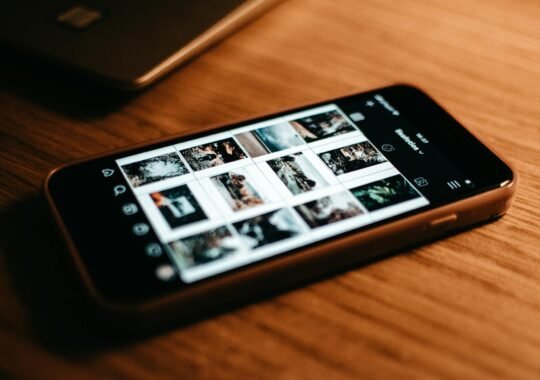
The screen provides a continuous stream of photographs, messages, advertisements and tiny moving pictures.
You move your thumb once, and another appears.
Then another.
Then another.
There is no obvious stopping point.
They call it infinite scroll.
Imagine entering your local shopping mall and discovering that every time you walk past one shop, five more instantly appear.
Flashing signs demand your attention.
Music comes from every direction.
Somebody you have never met tries to sell you something.
And every time you think about leaving, the mall quietly builds another hallway.
That is the genius—and the danger—of endless scrolling: a form of digital overload in which there is always another image, message, video or advertisement waiting for attention.
A colleague tried the device for what he claimed would be “five minutes.”
Nearly an hour later, he was still staring at the screen with the vacant expression of a man waiting for instructions from outer space.
Trading Real Friends for Digital Likes
Back in my day, if you wanted your friends’ approval, you had to earn it.
You hit a home run in Little League.
You told a genuinely funny joke at the diner.
You played guitar well enough that somebody asked you to join a garage band.
Or, if all else failed, you spent an entire Saturday afternoon trying to get your initials onto the high-score board at the local arcade.
The smartphone proposes something much stranger.
People publish photographs, thoughts and ordinary moments for an invisible audience.
Other users then press a small button to show approval.
These electronic signals are called “likes.”
Apparently, people may someday photograph their dinner before eating it so complete strangers can weigh in on the meatloaf.
Imagine explaining that to your grandfather.
Instead of talking to the person sitting across the table, diners could spend half the evening checking whether somebody three states away approved of their dessert.
The danger is not necessarily that technology eliminates friendship.
The danger is that people may begin confusing attention with friendship.
Real friendship requires conversation, patience, laughter, disagreement and occasionally helping somebody move a sofa.
A digital counter requires a thumb.
The Smartphone and the Death of Boredom
There is another casualty nobody seems worried about:
Boredom.
I happen to believe boredom has done more for American creativity than half the universities in the country.
A bored kid builds a treehouse.
A bored teenager starts a rock band.
A bored adult repairs the lawn mower, reads a novel, paints the garage or finally figures out how the second setting on the barbecue works.
But imagine carrying a machine that can entertain you every second of the day.
Waiting for a bus?
Screen.
Standing in line?
Screen.
Sitting on the porch?
Screen.
Commercial break?
Another screen.
The smartphone promises to fill almost every empty moment.
That sounds convenient until you remember that empty moments are often where ideas begin. Questions about the effects of smartphone use become especially relevant when every spare moment can be filled with another video, notification or game.
If every pause becomes an opportunity for another video, game or notification, when exactly are we supposed to think?
Welcome to “Brain Rot”
The strangest material on these experimental networks consists of tiny bursts of entertainment lasting only a few seconds.
People dance.
People shout.
People repeat jokes.
People lip-sync to songs.
People perform increasingly ridiculous stunts because ridiculous things attract attention.
Future generations may eventually invent a phrase for this kind of mental junk food.
For the purposes of this column, I suggest “brain rot.”
It is fast.
It is loud.
It is amusing.
And five minutes later you probably cannot remember most of what you watched.
One clip leads to another.
Then another.
Then another.
You may begin by watching somebody demonstrate a recipe and somehow end up twenty minutes later watching a man dressed as a banana argue with a household appliance.
Progress, apparently.
Can Endless Scrolling Become an Addiction?
The engineers behind this machine appear to have discovered something remarkable.
Human curiosity has no off-switch.
Give people one interesting photograph and they want another.
Give them one funny video, and they want the next.
Give them a little electronic notification announcing that somebody somewhere has reacted to something they posted, and they immediately want to know who.
A machine that delivers these tiny rewards throughout the day could become remarkably difficult to ignore.
People might start checking it during dinner.
During conversations.
While watching television.
Perhaps even while walking down the street.
Imagine owning a device so convenient that you eventually can’t tolerate being separated from it for ten minutes. Future observers might describe that habit as Modern Screen Dependency—a growing difficulty in leaving the screen alone even when nothing urgent requires attention.
That sounds less like owning a machine.
It sounds like the machine owns a small part of you.
Goodbye to the Great Outdoors?
The greatest loss may happen outside the home.
Think about what childhood looks like now.
Bicycles abandoned on front lawns.
Baseball gloves hanging from handlebars.
Kids disappearing after breakfast and returning when the streetlights come on.
Now imagine those same children carrying an entertainment machine containing thousands of games, television programs, messages and videos.
Why climb a tree when a glowing rectangle promises unlimited amusement?
Why explore the woods when computerized entertainment has already figured out exactly what keeps you interested?
Technology does not physically prevent anyone from going outdoors. But excessive screen time could make indoor entertainment increasingly difficult for bicycles, parks, woods and ordinary outdoor play to compete with.
But the competition is hardly fair.
A tree has leaves.
The smartphone has games, videos, photographs, music, messages, flashing notifications and an electronic system deciding what you might want to see next.
Mother Nature may need a better advertising department.
What Happens to Real Conversation?
One more strange possibility is worth considering.
The smartphone is supposed to be a communication device.
Yet it could make people communicate less with those physically closest to them.
Imagine four friends sitting together at a restaurant.
Each person has access to thousands of distant conversations, photographs and entertainment choices.
The person sitting across the table suddenly has to compete with the entire world for attention.
Family dinners could become quieter.
Waiting rooms could become silent.
People standing in elevators might no longer exchange awkward comments about the weather.
Perhaps some people would consider that progress.
But spontaneous conversation with the people around us has value.
Not every interaction needs to be efficient.
Not every silence needs filling.
And not every moment needs an audience.
The Critic’s Smartphone Tally
| Category | Score | Verdict |
|---|---|---|
| Human Interaction | 2/10 | Convenient communication, questionable conversation |
| Mental Peace | 2/10 | Far too many reasons to keep checking |
| Outdoor Activity | 1/10 | Tough competition for bicycles and baseball |
| Entertainment | 9/10 | Disturbingly difficult to put down |
| Practical Usefulness | 8/10 | Unfortunately, the thing is rather useful |
Final Recommendation: Reject the Glow—Sometimes
So what should America do when this strange handheld digital future arrives?
Destroy the machines?
Probably not.
I admit the contraption is impressive.
A portable telephone would be useful.
Instant maps could save marriages during long road trips.
A camera you could carry everywhere sounds wonderful.
Having an encyclopedia in your pocket could settle arguments before somebody throws a punch.
The problem is not necessarily the machine itself.
The problem begins when the machine becomes the place where we spend our lives.
So turn it off occasionally.
Leave it in a drawer.
Talk to the person sitting beside you.
Let children complain that they are bored.
Hand them a baseball, a Rubik’s Cube or a bicycle and point towards the front door.
Let them wander around long enough to invent something to do.
Technology may make the future faster, smarter and more connected.
But if we are not careful, we may eventually build a machine capable of connecting us to everyone in the world while distracting us from the person sitting three feet away.
And that would be a very peculiar kind of progress.
What This Fictional 1986 Warning Gets Right About Smartphone Culture
The fictional columnist obviously uses exaggerated language for comic effect. Smartphones also provide genuine benefits, including navigation, communication, photography, emergency information, education, and access to useful services.
The broader question, however, remains relevant: how much attention should we give our phones? Discussions about smartphones and brain health often focus on attention, habitual checking, sleep, and how people divide their time between screens and offline activities.
Terms such as smartphone addiction, doomscrolling, brain rot, screen time and digital detox have become part of modern conversations about technology. The impact of smartphones on the brain is also frequently discussed in relation to concentration, repetitive checking and highly stimulating online content, although experiences and effects can vary from person to person.
The useful distinction is between using a smartphone as a tool and letting habitual smartphone use fill every spare moment.
Simple habits can help restore that balance, such as keeping phones away during meals, disabling unnecessary notifications, setting aside screen-free periods, and deliberately making time for outdoor activities, hobbies, and face-to-face conversations.
The smartphone is unlikely to disappear.
The more practical challenge is learning when to put it down.
Frequently Asked Questions
What does “smartphone brain rot” mean?
“Brain rot” is an informal expression commonly used to describe the feeling that excessive consumption of repetitive, low-value or highly stimulating online content is affecting concentration or mental sharpness. It is not a formal medical diagnosis.
What is endless scrolling?
Endless or infinite scrolling is a design feature that continuously loads additional content as a user moves down a feed. Because there is no obvious finishing point, people can sometimes spend longer browsing than they originally intended.
Why are smartphones so difficult to put down?
Modern smartphones combine communication, entertainment, news, games, photographs, social networks and notifications in one device. The constant availability of new information can encourage frequent checking.
Can reducing smartphone use improve daily life?
For some people, establishing boundaries around smartphone use can create more time for sleep, exercise, hobbies, outdoor activities and face-to-face conversations. The right balance differs from person to person.
What is a digital detox?
A digital detox usually refers to deliberately reducing or temporarily avoiding digital devices or specific online activities. It might involve leaving a phone outside the bedroom, avoiding social media for a weekend or creating screen-free periods during the day.
Are smartphones bad for everyone?
No. Smartphones are useful tools and can support communication, education, navigation, work, creativity and access to information. When considering technology and mental well-being, the more useful question is whether someone’s use interferes with sleep, concentration, relationships, or other important activities.