Key Takeaways
- AI upscaling enhances image resolution by intelligently adding detail, improving visual quality.
- It benefits industries such as e-commerce, media, and education by providing clearer and more engaging visuals.
- Leading software like Adobe Photoshop and VSCO have integrated AI upscaling features to streamline workflows.
- AI upscaling is accessible to both professionals and casual users, democratizing high-quality image enhancement.
Table of Contents
- Understanding AI Image Upscaling
- Applications in Digital Content Creation
- Leading Tools and Technologies
- Benefits for Professionals and Casual Users
- Future Trends in AI Upscaling
- Conclusion
Artificial Intelligence (AI) is fundamentally changing how we enhance, share, and use digital images. One of the biggest advancements in this realm is AI-powered image upscaling, a technology that enables users to improve image quality and resolution without sacrificing crucial details. This has major implications for anyone working with digital photos or graphics, opening the door to techniques such as how to enlarge image without losing quality and providing practical solutions for both professionals and casual users. As AI upscaling becomes more accessible, industries ranging from e-commerce to entertainment are quickly adopting these innovations to provide clearer, more engaging visual experiences.
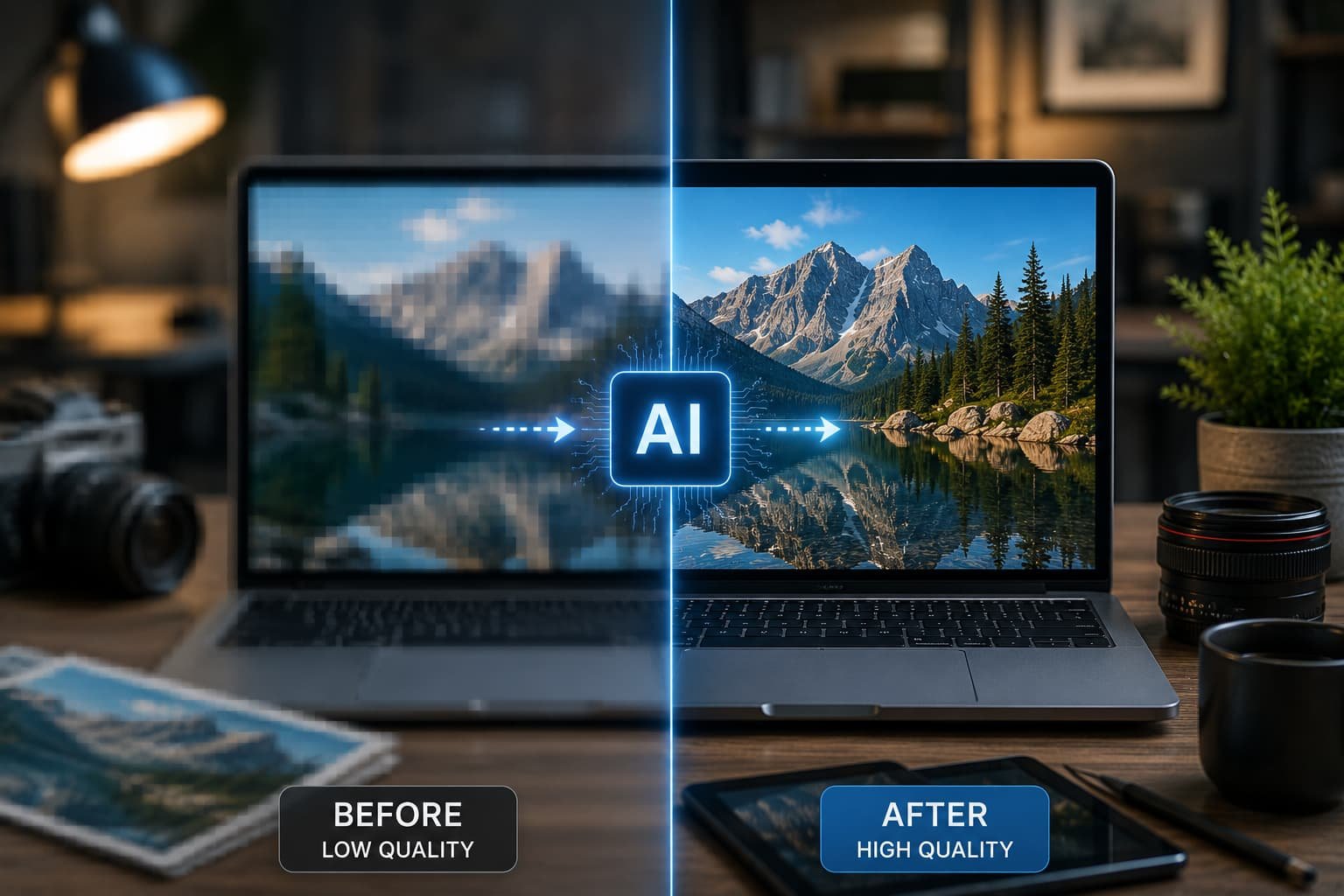
Unlike traditional upscaling methods, which often yield blurry or pixelated results, AI-driven solutions are powered by machine learning algorithms trained on vast image datasets. These advanced tools are designed to fill in details and reconstruct textures, enabling the upgrade of old or low-resolution images to meet contemporary standards. This shift is not only creating new workflows for designers and content creators but also bringing high-quality image editing capabilities to the masses.
AI upscaling technology stands at the intersection of convenience and quality. Whether you want to restore cherished family photos, prepare assets for online sales, or enhance video footage for streaming, this approach can deliver results that were once impossible with ordinary software. The technology’s reach continues to grow as it becomes an integral part of popular editing tools and platforms.
For a deeper dive into the recent breakthroughs driving digital imaging and computational photography, authoritative sources such as Wired provide comprehensive coverage of how AI is shaping the future of visual content creation.
Understanding AI Image Upscaling
Traditional image upscaling methods, such as bicubic or nearest neighbor interpolation, often result in a noticeable decline in image clarity. These basic algorithms attempt to increase size by duplicating pixels or estimating adjacent colors, which frequently leads to pixelation and blurred edges. By contrast, AI-powered upscaling uses sophisticated machine learning techniques to analyze and synthesize image data. The algorithms are trained on millions of example images, allowing them to recognize complex structures and patterns. This enables the software to intelligently generate new pixels and restore lost details, producing high-resolution images that maintain or even enhance the original’s sharpness and authenticity.
Applications in Digital Content Creation
The adoption of AI upscaling stretches across numerous sectors, each benefiting in unique ways:
- E-commerce: High-quality product imagery is crucial for digital marketplaces. AI upscaling enables retail platforms to showcase sharper, more accurate images, helping consumers inspect product details and boosting conversion rates.
- Media and Entertainment: Content creators, filmmakers, and streaming platforms use AI upscaling to remaster or upgrade older archives and videos. This ensures that even classic content can meet the sharpness and definition expected of today’s HD and 4K displays.
- Education: Enhanced images support better engagement and comprehension. By upscaling historical documents, scientific images, and educational graphics, students and researchers gain access to clearer, more useful visual information.

Leading Tools and Technologies
The growing demand for high-quality digital content has led several major software solutions to incorporate AI upscaling capabilities:
- Adobe Photoshop: Adobe’s recent updates feature AI-enhanced tools, including the “Harmonize” and “Generative Upscale” functions. These enable users not only to improve resolution but also to ensure realistic object blending, with color and lighting adjustments based on Firefly models. This allows seamless integration of images into professional projects and creative works.
- VSCO: Known for its intuitive design, VSCO’s AI Upscale tool lets users boost their photo resolution by up to four times. This is particularly valuable for restoring old snapshots, enhancing social media posts, or preparing mobile images for print quality without visible degradation.
Benefits for Professionals and Casual Users
One of the defining aspects of AI-powered image upscaling is its accessibility. Traditionally, high-quality editing was the realm of trained designers using complex software. Today, anyone with a smartphone or computer can access similar results through user-friendly AI tools. For professionals, this means faster workflows, the ability to repurpose existing assets, and fewer hours spent on manual touch-ups. For everyday users, AI upscaling removes technical barriers, allowing for effortless restoration or enhancement of cherished photos and digital memories.
Future Trends in AI Upscaling
Ongoing improvements in AI and machine learning point toward even more transformative possibilities in image editing. Researchers and developers are focused on creating algorithms that can process full-motion video in real time, handle more complex image types, and maintain natural appearances across a variety of contexts. As these technologies make their way into consumer hardware, users can expect seamless workflows and automatic upscaling in everything from smartphone cameras to web applications. For updates on emerging AI innovations and their implications for content creation, platforms like Wired provide expert insights.
Conclusion
AI-powered image upscaling is shifting the landscape of digital content creation. With intuitive tools, widespread adoption, and continued research, anyone can enhance image quality with unprecedented ease and precision. As technology continues to advance, the role of AI in producing and enjoying high-quality digital media will only become more central, offering new creative and commercial opportunities across every sector.