Table Of Contents
- Stay Safe At The Crash Scene
- Call For Help And Report The Collision
- Gather Key Details And Evidence
- Get Medical Care Even If Symptoms Seem Mild
- Deal With Insurance Companies Carefully
- Preserve Evidence After Leaving The Scene
- How Fault Can Affect A Tennessee Claim
- Check For Available Insurance Coverage
- Watch Tennessee Filing Deadlines
- When Professional Legal Help May Be Useful
- Common Questions After A Memphis Crash
A car crash can leave anyone shaken, even when the damage initially appears minor. The first priorities are safety, medical care, and accurate documentation. If injuries, disputed fault, insurance problems, or major losses complicate the situation, speaking with a Memphis car accident lawyer may help a person better understand the options available under Tennessee law.
The actions taken in the first minutes, days, and weeks after a collision can affect physical recovery, insurance communications, and the ability to preserve important evidence. This checklist offers practical steps for Memphis drivers, passengers, and families after a crash.
Stay Safe At The Crash Scene
First, assess immediate danger. Check yourself, passengers, and others for injuries, then call 911 if anyone may need emergency help. Turn on hazard lights and, if the vehicles can be moved safely, pull out of active traffic. Do not stand between vehicles, in travel lanes, or near leaking fuel. Avoid moving a seriously injured person unless fire, traffic, or another immediate threat makes staying in place more dangerous.
Call For Help And Report The Collision
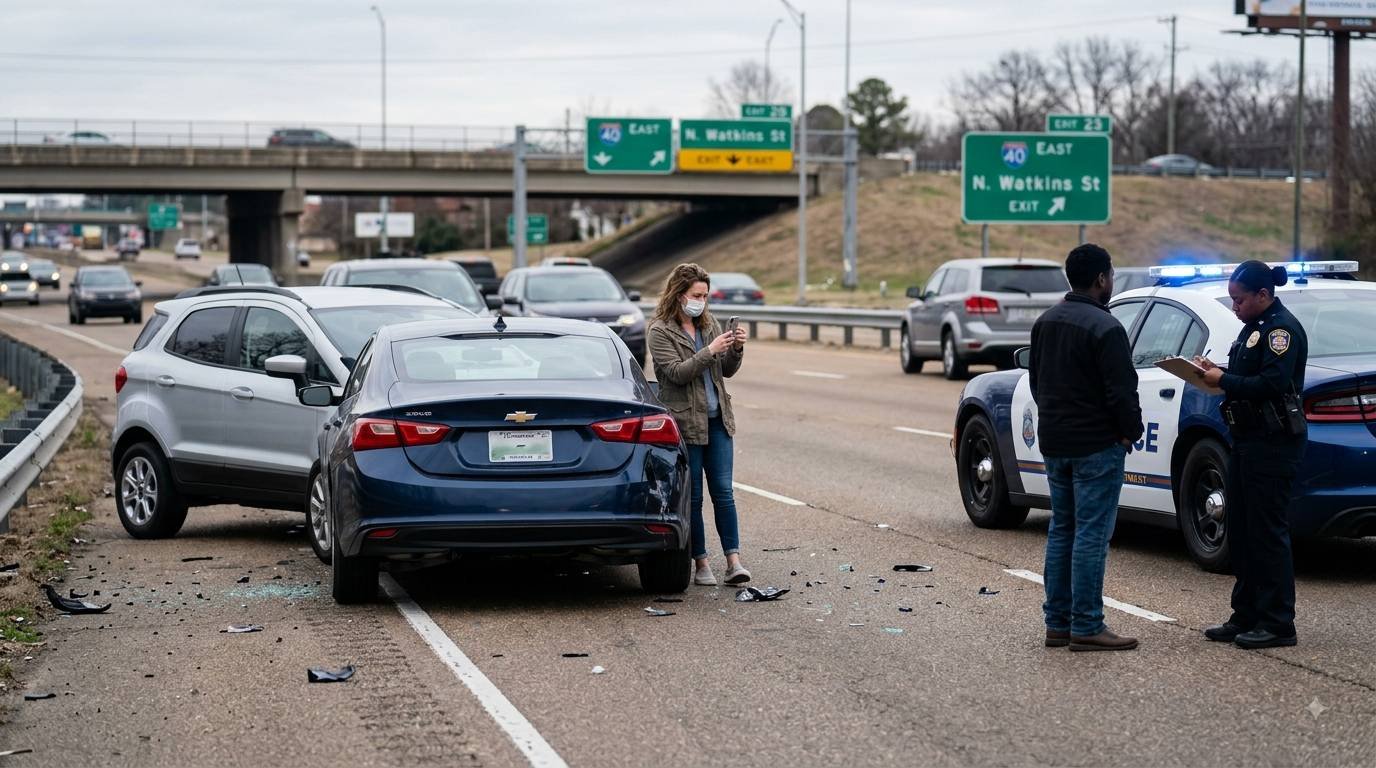
Call emergency services after a crash involving injuries, suspected impairment, a hit-and-run, major damage, blocked traffic, or unsafe road conditions. An officer’s report may document the location, time, involved vehicles, witness information, and visible roadway conditions. Afterward, drivers may use the Memphis Police Department Central Records page to learn how to obtain an auto crash report.
Gather Key Details And Evidence
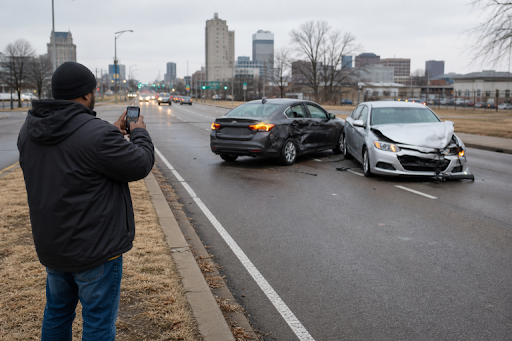
When it is safe, exchange information without arguing about blame. Keep the conversation factual, calm, and brief. Take photographs before vehicles are moved, if doing so does not create a safety risk. Details that seem unimportant at the scene can become valuable later.
Information To Collect
- Names, phone numbers, addresses, and insurance details for each driver.
- Driver’s license information, vehicle descriptions, and license plate numbers.
- Names and contact information for independent witnesses.
- The responding officer’s name, badge number, and report or incident number.
Photos And Notes To Take
- Damage to every vehicle, from close and wide angles.
- Traffic lights, lane markings, signs, weather, and road surface conditions.
- Debris, skid marks, nearby construction, and vehicle positions.
- Visible injuries, damaged clothing, and personal property damage.
Get Medical Care Even If Symptoms Seem Mild
Adrenaline can hide pain after a collision. Headaches, neck pain, dizziness, numbness, back pain, and concentration problems may develop hours or days later. Seek prompt medical attention when symptoms appear, follow the treatment plan, and attend recommended follow-up visits. Keep copies of medical records, prescriptions, bills, test results, work restrictions, and mileage related to treatment.
Deal With Insurance Companies Carefully
Report the crash to your insurer as required by the policy, but do not guess about fault or minimize symptoms before the facts are clear. Be cautious with recorded statements and early settlement offers, particularly when medical treatment or repair estimates are still incomplete. Social media posts and casual comments can also be reviewed during a claim, so avoid posting details that could be misunderstood.
Preserve Evidence After Leaving The Scene
Create one physical or digital crash file as soon as possible. Save photos, dashcam footage, repair estimates, receipts, medical records, pay stubs, correspondence, and notes about missed work or daily activities. Write a timeline while your memory is fresh, including the route, traffic conditions, what you saw, and what was said after the crash.
Simple Evidence-Folder Checklist
- Back up photographs and videos in more than one location.
- Request the police report when it becomes available.
- Keep every medical, repair, rental, and insurance document.
- Record calls, emails, letters, and settlement offers by date.
- Save proof of lost income and missed appointments or activities.
How Fault Can Affect A Tennessee Claim
Tennessee uses a modified comparative fault approach. More than one person can share responsibility, and a claimant’s recovery may be reduced by that person’s assigned percentage of fault. For example, if proven losses total $50,000 and the injured person is found 20 percent at fault, the potential recovery could be reduced by $10,000. The evidence and facts of the individual case control the outcome.
Check For Available Insurance Coverage
The other driver’s liability policy may not be the only potential source of coverage. Review your policy promptly to determine which benefits may apply, while paying attention to notice requirements, exclusions, deductibles, and policy limits.
- Other driver’s liability coverage.
- Uninsured or underinsured motorist coverage.
- Medical payments coverage.
- Collision coverage and rental reimbursement benefits.
Watch Tennessee Filing Deadlines
Do not assume insurance negotiations extend a legal deadline. Tennessee claims may have different time limits depending on whether they involve personal injury, property damage, wrongful death, or a government entity. Deadlines can be affected by the parties involved and other case-specific facts, so it is wise to identify the applicable deadline early with qualified Tennessee legal guidance.
When Professional Legal Help May Be Useful
Legal guidance may be especially useful when injuries are serious, fault is disputed, multiple vehicles are involved, a commercial driver is involved, or an insurer delays or denies coverage. Extra attention may also be needed when there are permanent limitations, lost earning capacity, a fatal injury, unavailable insurance, or evidence from traffic cameras, vehicle data systems, and mobile devices.
Common Questions After A Memphis Crash
Should A Driver Always Call The Police?
Call 911 for injuries, roadway hazards, suspected impairment, a hit-and-run, or significant damage. For a minor collision, confirm the appropriate local reporting procedure rather than leaving without exchanging information.
What If The Other Driver Apologizes?
An apology is not a substitute for evidence. Exchange information, document the scene, and obtain medical care when needed.
What If The Other Driver Has No Insurance?
Review your uninsured motorist coverage immediately. Many policies require prompt notice, and delays can create unnecessary complications.
How Long Should Crash Records Be Kept?
Keep records until the claim is fully resolved and all relevant insurance and legal deadlines have passed. Digital backups can prevent an accidental loss of important documents.
Final Checklist
- Move away from danger when it is safe.
- Call for emergency help when injuries or hazards are present.
- Gather names, insurance details, witness information, and photographs.
- Seek medical care and follow recommended treatment.
- Save every record connected to the crash.
- Review coverage carefully and avoid missing important deadlines.