A dashcam records the impact instantly. An event data recorder documents the five vital seconds leading up to it. Combining both, car accident claims are being handled, hashed out and even taken to court with disputes no longer based upon which version of events is the most convincing, but on concrete, timed-and-dated science. Knowing how this evidence operates and how simple it can be to lose could be one of the most valuable pieces of knowledge any driver has.
Two Different Kinds Of Truth
Before we delve into the legal nitty-gritty, let’s break down what each of these potential sources actually is.
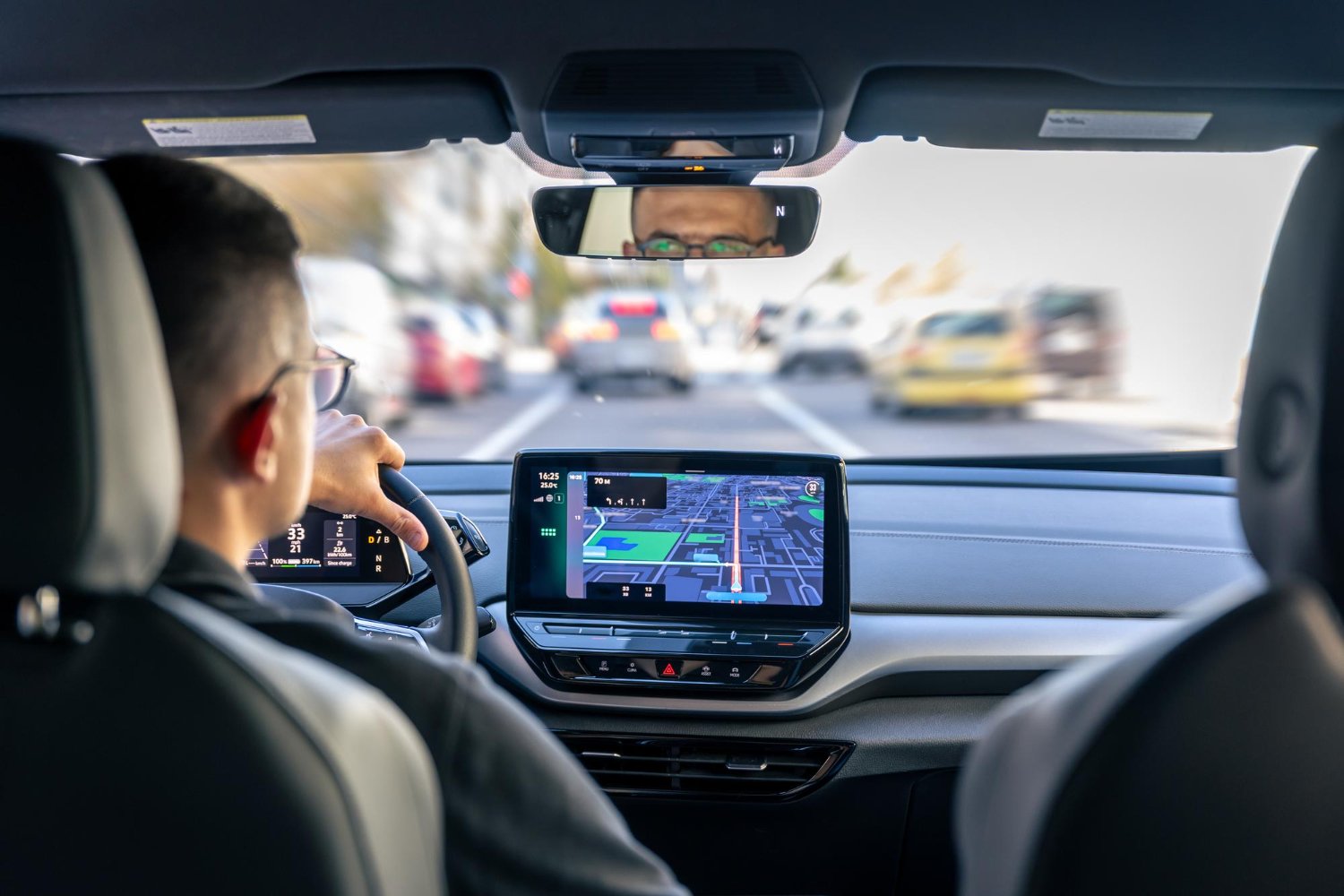
A dashcam records what’s externally happening. It’s what you see and hear from your viewpoint as a driver – maybe the road in front of you, other traffic, signals, the behaviors of others on the road, or people walking on the street. Regardless, it’s a point of view. Maybe something happened outside the camera angle, perhaps there’s a distortion in the lens impacting distances, and certainly, video quality will differ dramatically between a $40 clip-on and a professional-grade dual channel unit.
An Event Data Recorder (EDR) is something altogether different. It represents what your vehicle itself was doing at the time – generally, the five to ten seconds just before an event that triggered the collision. This is the car’s internal narrative, so to speak: how fast it was going, how hard the gas pedal was being pushed, force applied to the brakes, how far the steering was turned, if the driver or passenger had their seatbelt buckled, and if the airbags were activated in response to the crash. This has nothing to do with what a driver knows or says – it’s all logged by the car’s internal computer.
From “He Said, She Said” To Empirical Physics
Historically, accident claims heavily relied on eyewitness testimony, which even included the drivers involved. However, human memory is not recorded. It has been consistently proven through studies that stress can lead to less accurate recall, and regardless, people’s accounts can differ from each other as well as differ from the actual events.
With digital evidence, you don’t have to worry about any of this. It can’t feel stress. It doesn’t forget. And it can’t be pressured into changing what it “remembers” (stores).
If an insurance adjuster has access to EDR data that indicates the claimant’s vehicle speed was 15 mph above the limit just two seconds before the impact, that one piece of information can influence the settlement amount more than the statements of three witnesses. If a dashcam records the fact that the other driver crossed over the center line four seconds before the crash, the liability of the dispute is no longer a real issue.
This increased addition of real, objective information to the process has made resolving simple claims quicker and the disputed ones more technical in nature. Both of these implications ultimately benefit the party whose legal claim is consistent with the available objective data.
How EDR Data Is Actually Extracted
Nearly 96% of all new passenger vehicles sold in the United States since 2014 are equipped with EDRs (NHTSA) making them a nearly universal feature of modern crash investigations. However, the presence of an EDR does not mean their data is discoverable.
EDR data is downloaded via proprietary hardware known as the Bosch Crash Data Retrieval (CDR) tool, an industry-standard hardware device that interfaces with the vehicle’s on-board diagnostic (OBD-II) port and downloads the data directly from the computer module. An improper download attempt can corrupt the module by overwriting data, render the data unreadable, or provide defense counsel with ammunition to challenge the data.
The extraction window is critical. EDR data is pre-crash data stored in the vehicle’s system and can be over-written by normal ignition cycles. In some makes and models, the download window is exceptionally short. Once the damaged vehicle is repaired or hauled to the junkyard without the benefit of a download, the data is lost. That’s why timing the preservation, not just of the EDR equipped vehicle, but its download, can be a strategic issue.
The Legal Threat Of Spoliation
Spoliation of evidence occurs when evidence is destroyed, altered, or hidden that should have been saved to be used in a lawsuit. In terms of digital vehicle data, spoliation usually results from oversight rather than intention, but the legal consequences are the same.
For instance, if a motor carrier repairs and puts a damaged vehicle back in service without immobilizing it until the EDR can be downloaded, or if a rideshare driver “accidentally” loses critical dashcam video within a few days of the crash, that records deletion may constitute spoliation. Courts can react to spoliation by giving juries adverse inference instructions regarding the destroyed data, by excluding testimony on related defenses, or in the most egregious situations, by dismissing the entire defense.
A spoliation letter is a post-crash, written legal notice to all potential parties who might possess electronic evidence. It puts recipients on legal notice that the evidence must be preserved and is used to establish later that the evidence was willfully or grossly negligently destroyed.
Because extracting and legally admitting EDR data requires specialized technical knowledge and formal legal subpoenas, injured victims should consult an experienced Philadelphia car accident lawyer who understands how to secure this evidence before it is overwritten or lost.
Fleets and rideshare companies are under no duty to volunteer the data, and they vigorously resist Subpoena Duces Tecum requests for production. These court orders must specifically describe the records sought and are governed by deadlines and the scope and cost of their production. For a physically and financially exhausted crash victim applying for justice on their own, gaining timely access to EDR data without an attorney is nearly impossible.
Admissibility Isn’t Automatic
Just because you have a recording doesn’t mean it will ever make its way in front of a jury. Digital evidence is subject to an authentication requirement – the party introducing it must prove that the evidence offered is what they claim it to be, that it has not been altered, and that its chain of custody is intact.
Every digital video file contains metadata; a timestamp or file creation data can establish the timeframe of the video, the device ID can identify the recording device, and when present, GPS coordinates can verify that the file was recorded in the claimed location and orientation. Post-process modifications such as edit time will often show against the original creation time. Phone recording timestamps are often the local time of the phone which can easily be off by hours, they generally do not contain GPS or device IDs and the orientation will most likely be perfectly vertical portrait mode.
A clean chain of custody means documenting who possessed the recording device from the moment of the accident through the point of evidence submission, and confirming that the footage wasn’t edited, compressed, or transferred in a way that could alter its original data. For professional dashcam systems, this is straightforward. For phone-based recordings or consumer dash cameras where footage may have been moved between devices, it requires more careful documentation.
If the chain of custody has a gap, the evidence faces a real risk of exclusion.
The Double-Edged Nature Of Your Own Data
This is the aspect that is often overlooked.
Digital evidence can be presented from all perspectives. For instance, the claimant’s dashcam footage can reveal that they had crossed the intersection during a yellow light. Or, the footage can show that the claimant was looking at the phone and distracted two seconds before the collision. EDR data can confirm that the other driver rear-ended the claimant. Or, the data can reveal that the claimant was driving ten miles above the speed limit.
In comparative negligence states, liability is not always an “all-or-nothing” issue. If it is revealed by digital data that the claimant was at-risk behind the wheel, their settlement can be reduced proportionately. Defense lawyers have realized that and often demand that claimants send their vehicle EDR data recordings from any in-car cameras as part of disclosure.
This also works the other way around. If the EDR of the defendant indicates that they never hit the brake and were speeding 30 miles over the limit, no matter what the witnesses say, this data can be used by the plaintiff in court.
The takeaway is that digital evidence doesn’t take sides. It records what happened. Whoever that favors is determined by the facts.
How Accident Reconstructionists Use The Data
An accident reconstructionist takes the data from all these sources and models it in a specialized program that’s part digital design tool and part physics engine. They program in the make and model of the vehicles, along with their weight, speed, and physical dimensions. Then the software rapidly runs through thousands of possible configurations, iterating over and over until it produces a scenario where the digital events perfectly match the physical aftermath. From there, the reconstructionist can extrapolate the most likely sequence of actions that preceded that scenario.
A good lawyer won’t present this as infallible – reconstruction is an inexact science because there’s always a margin for error in measurements and sample rates and some unaccounted-for variable that perturbed the final conditions. But that margin for error has to be smaller than the one associated with “there was nothing I could do.” A team of expert recon people and experts in EDR maintenance reviewing each other’s work will generally mute any attempt to claim “single-bit flip in the EDR” or “rounding error in the reconstruction” if there’s any real negligence to argue.
But there’s a huge difference between negligence on the part of a driver and negligence on the part of the vehicle manufacturer. Which is why those involved in accidents caused by software failure will continue to clamor for inside access to the EDR data, and why the manufacturers will push back just as hard to prevent it.
Making The Evidence Work For You
It is not raw data that settles cases. It is preserved, forensically sound, expert verified, and strategically presented data that settles cases. The difference between those two occurrences resolves the vast majority of digital evidence litigation. The automobiles on the road today are producing more usable crash data than ever before. The use made of that data will largely depend on how quickly the data is obtained, the care with which chain-of-custody procedures are implemented, and the ease with which the results can be translated into a legal position. None of those things occur by accident. They must be consciously pursued, and in most cases, within days of the collision.